

Every few years the same headline makes the rounds: someone buys a plain government proof set at an estate sale, pries it open, and finds a single coin worth more than a car. Those stories are true, but they are rare, and they distract from a more practical question most holders actually face. If you own a few modern U.S. proof sets, you are probably not sitting on a six-figure error. You are wondering whether the sealed set in the drawer is worth more kept whole or broken into its individual coins. The honest answer, most of the time, is keep it whole. The exceptions are worth knowing, because getting this decision wrong can cost you real money.
What breaking up a proof set actually means
A U.S. Mint proof set is a themed package: the year’s circulating designs struck as proofs on polished planchets, sealed in original government packaging with a certificate of authenticity. The Mint has sold annual clad proof sets and, separately, silver proof sets for decades, along with the Prestige sets of 1983 to 1997 that tucked a commemorative coin inside. To break up a proof set is to do what the packaging quietly discourages: remove the coins from their holder to sell, grade, or trade them one at a time. Once you do, the set is no longer a set. The certificate and the sealed lens lose their purpose, and assembling a matched, untouched set again later is difficult and often impossible.
Why the default answer is leave it alone
For the large majority of modern proof sets, the whole is worth at least as much as the sum of its parts, and frequently more. Collectors who buy proof sets want the set: the complete year, the intact packaging, the certificate. Pull the coins out and you are left with a handful of common proofs that each trade for a modest premium over face value, plus a now pointless plastic case. You have also traded one tidy package for the chore of selling five or six little coins. Condition compounds the problem. Proofs are fragile, mirror-surfaced things, and every time a coin leaves its holder it risks a fingerprint, a hairline, or a milk spot. On a proof those flaws are permanent and glaring. This is the same collector premium that separates a graded rarity from its metal content, the boundary explored in our look at bullion versus semi-numismatic coins. The safest thing you can usually do to protect a proof set’s value is nothing at all.
When breaking up a proof set makes sense
There are four situations where parting a set out is the rational move rather than a beginner’s mistake. If none of them applies to your set, the case for cracking it open is weak.
1. The set hides a genuine error coin
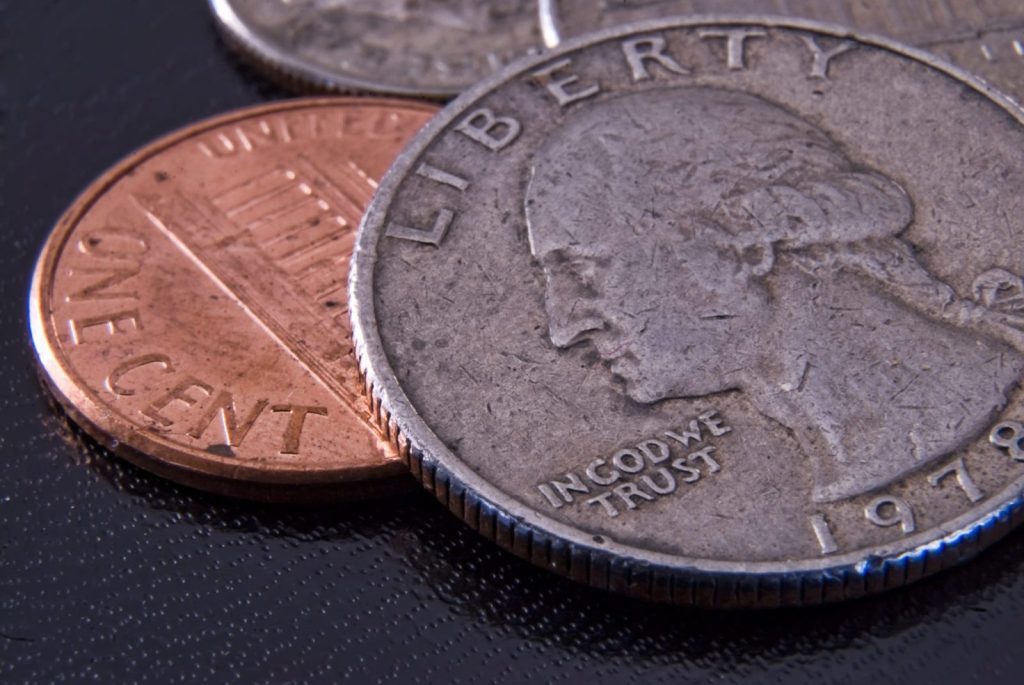
This is the estate-sale headline, and it is real. The most famous cases are the No S proof coins, struck at San Francisco but missing the S mint mark because a working die reached the presses without it. The 1975 No S Roosevelt dime is the trophy: only two are known, both from ordinary proof sets, and one graded PR68 sold for 456,000 dollars at Heritage in 2019, with a PR67 example bringing 506,250 dollars at GreatCollections in 2024. The 1990 No S Lincoln cent proved scarcer than it first appeared, with fewer than roughly 200 believed to exist, found in both regular and Prestige 1990 proof sets; the Mint even confirmed destroying 145 of them. Other years, including 1968 and 1983 No S dimes, tell similar stories. When a set holds one of these, a single coin can be worth hundreds or thousands of times the entire package, and it belongs in a certified holder, not a Mint lens. That is the clearest example of a coin crossing from ordinary to collectible on the strength of one detail.
2. One coin is worth grading and the rest are not
Almost every modern proof grades PR69 Deep Cameo, a grade so ordinary it adds little value. The real money sits in PR70, the flawless tier, and in the registry-set competitions where collectors chase the single finest known examples. If one coin in a set looks like a legitimate PR70 candidate, submitting that coin alone to a grading service can make sense, while grading the other four or five would simply burn fees. But grading is a gamble and it is not free. On an inexpensive modern coin the fee can rival or exceed what the coin is worth even when it grades well, so this path pays only when a standout coin has a real shot at the top grade.
3. It is a silver set and the metal matters
Silver proof sets are a different animal from the clad sets, because the dime, the quarters, and the half dollar carry real silver. Through 2018 those coins used the old 90 percent silver alloy; in 2019 the Mint switched them to .999 fine silver, ending a silver standard that had held since 1837. When spot silver runs high, the metal value tucked inside a silver set starts to matter, and a type collector may want one silver quarter more than the whole set. Even so, a proof carries a collector premium above its metal, so melting one is almost always the wrong move. The metal is the floor, not the ceiling. If you want to see where that floor sits on a given day, watch the metals market rather than a sticker on the case.
4. You need to sell part and keep part
Sometimes the reason is purely practical. You want to raise cash from one coin, or hand a grandchild the quarter from their birth year and keep the remainder. That is a perfectly good reason to open a set, provided you go in clear-eyed that the packaging premium is gone for good once the seal is broken.
How to decide before you break up a proof set
Start by pinning down exactly what you have: the year, whether it is a clad or silver set, and whether it is a regular or Prestige issue. Check the mint mark on every coin, because that is where the No S errors hide in plain sight. Look up whether any coin from that specific year carries independent collector demand or a known variety. Then weigh what an intact set is worth against what the loose coins would bring after grading fees, selling effort, and the lost packaging premium. A reputable dealer can tell you quickly whether a given year holds anything special, and tools that show current values, like the ones behind how FMV Gold works, help you compare set value against part value before you commit. For most sets from the 1970s onward, that arithmetic favors leaving the set sealed. For a small number of years and a small number of coins, it does not.
The urge to crack open a proof set and hunt for treasure is understandable, and once in a long while it pays off spectacularly. But treating every set that way is how good coins pick up fingerprints and packaging premiums get thrown in the bin. A modern proof set is usually worth the most in precisely the condition the Mint sold it, which fits the patient, do-no-harm spirit of our rules of gold. Break one up only when a specific coin, a specific error, or a specific need gives you a reason the intact set cannot. If you are still curious what else is out there, you can always browse the coins first and let the research, not the impulse, make the call.