

Same metal, different price
Walk into any coin shop and you can find two one-ounce gold coins side by side with wildly different price tags. The metal inside is identical. The difference lives entirely in a single concept: how much of the price is metal value and how much is collector value.
Sorting that out starts with two terms. Spot price is the live global market price of the raw metal. Melt value is simply the spot price multiplied by the metal a coin contains — what the coin would be worth if reduced to its bullion. Every coin’s price sits somewhere above its melt value, and the gap between the two is the premium. The entire bullion-versus-numismatic question is really a question about what is driving that premium.
Bullion coins: priced for the metal
A bullion coin is valued primarily for its precious-metal content. It is mass-produced by a mint specifically as a way to own metal in a recognizable, government-guaranteed format, and it trades at a relatively small, predictable premium over melt value — often in the low-single-digit to low-double-digit percent range, depending on the coin, the metal, and market conditions.
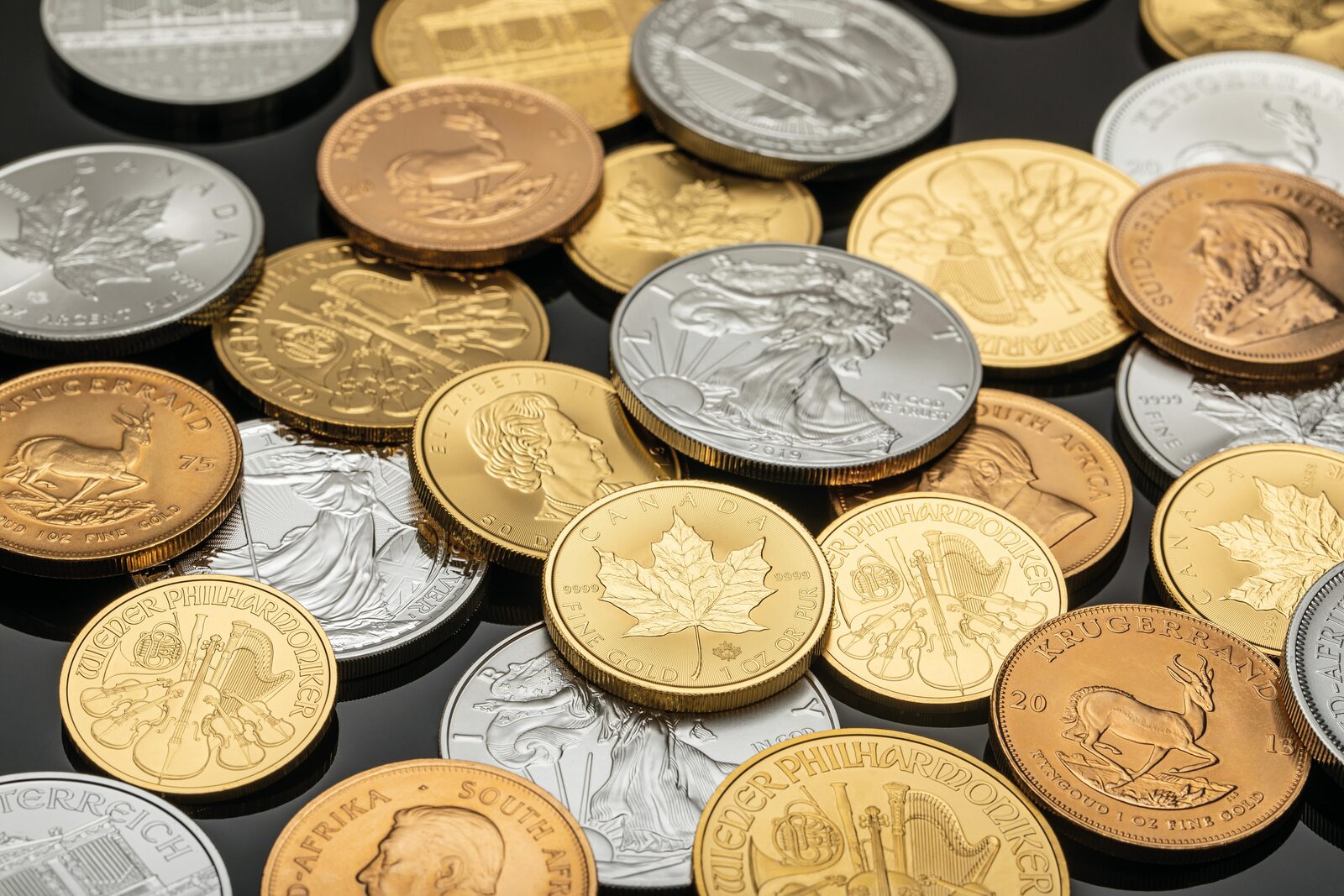
The flagship sovereign programs are the clearest examples: the American Gold and Silver Eagle, the Canadian Maple Leaf, the South African Krugerrand, the British Britannia, and the Austrian Philharmonic, among others. These coins are minted in large, ongoing quantities, are highly liquid worldwide, and are bought and sold close to the metal price. For a bullion buyer, the premium is essentially the cost of convenience, recognizability, and the mint’s guarantee of weight and purity.
The defining feature: a bullion coin’s price tracks the metal. When spot moves, the coin moves with it, and the premium stays relatively stable.
Numismatic coins: priced for everything but the metal
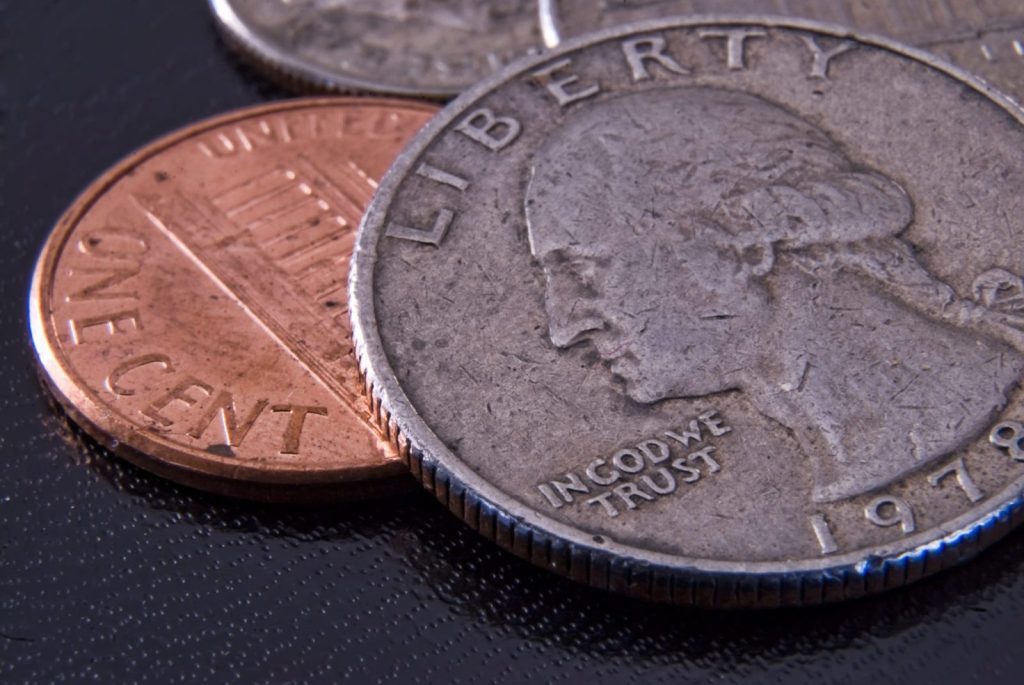
At the opposite end sits the true numismatic coin — valued for rarity, condition, historical significance, mintage figures, and collector demand rather than its metal content. A scarce 19th-century gold piece or a key-date coin can be worth many multiples of its melt value, sometimes vastly more. Here the metal is almost incidental; the price is set by how few exist, how well-preserved this particular example is, and how much collectors want it.
Numismatic values are driven by the collector market, which behaves more like a market for art or collectibles than for commodities. Prices can be far less correlated with spot, more dependent on specialized knowledge, and considerably less liquid — selling a rare coin for full value can require the right buyer at the right time.
Semi-numismatic: the middle ground
Between these poles sits the category that confuses retail buyers most: the semi-numismatic coin. These are typically bullion-type coins that carry an additional premium beyond the metal because of some collectible characteristic. They are not rare classics, but they are also not priced purely on metal.
Several features push a modern coin into semi-numismatic territory:
- Limited mintage. Special or capped-production issues carry scarcity value that ordinary bullion strikes do not.
- Special finishes. A proof coin (struck on polished dies for a mirror-like finish) or a burnished/uncirculated collector version commands more than the standard bullion version of the same coin.
- High certified grade. Third-party grading services such as PCGS and NGC authenticate coins and assign a condition grade on the 70-point Sheldon scale. A modern coin certified at the top grades (such as MS70 or PF70 — flawless under magnification) can trade well above an ungraded equivalent.
- Key dates and first-year issues. Certain years, special privy marks, or anniversary designs attract collector demand and a premium.
- Low surviving populations. Even a once-common coin can become semi-numismatic if few high-grade examples remain.
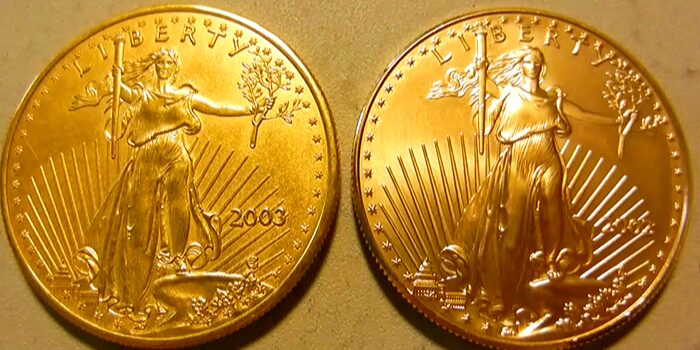
A useful way to picture it: a standard bullion Eagle is metal with a small convenience premium; a graded, first-year, proof Eagle in a top grade is the same ounce of gold wrapped in several layers of collectible premium.
Why the distinction matters for retail investors
The category determines what you are actually buying — and how the coin will behave.
What your money buys. With a bullion coin, most of the price is metal; with a semi-numismatic or numismatic coin, a meaningful and sometimes dominant share is premium. Two buyers spending the same amount can walk away with very different quantities of actual gold.
Liquidity and spreads. Bullion coins are easy to sell near the metal price with tight buy-sell spreads. Semi-numismatic and numismatic coins can carry wider spreads and depend on finding a buyer who values the same collectible traits — a slower, less certain process.
Price drivers. Bullion tracks spot. Numismatic value tracks the collector market. Semi-numismatics are pulled by both, which means their premiums can expand in collector-enthusiasm phases and compress when that enthusiasm fades — even if the metal price is unchanged.
Premium risk. This is the crucial, often-overlooked point. The collectible portion of a price is not guaranteed to persist. A coin bought largely for its premium can lose value if that premium erodes, regardless of what spot does. By contrast, a bullion coin’s downside is anchored much more closely to the metal.
A practical lens
Consider three buyers, each spending the same sum. One buys standard bullion coins and ends up holding the most metal, closely tracking spot. One buys proof or low-mintage versions and holds less metal but gains exposure to collector demand. One buys a certified top-grade modern issue and is paying substantially for condition and scarcity. None of these is inherently “right” — they are different objectives. The bullion buyer is expressing a view on the metal; the semi-numismatic buyer is blending a metal position with a collectible bet; the numismatic buyer is primarily a collector. Problems arise mainly when a buyer thinks they are doing one and are actually doing another — paying a heavy collectible premium under the impression they are buying cheap metal exposure.
Key takeaways for coin buyers
- Know what share of the price is metal versus premium before buying. Compare the asking price to the coin’s melt value to see what you are paying for.
- Match the coin to the objective. Metal exposure points toward low-premium bullion coins; collecting and the chance of collectible appreciation point toward semi-numismatic or numismatic pieces, with the trade-offs that come with them.
- Treat collectible premiums as a separate, less predictable layer of value that can expand or compress independently of spot — not as guaranteed appreciation.
- Account for liquidity. Bullion sells fast and near spot; the further into numismatics you go, the more selling depends on the right buyer and the wider the spreads tend to be.
- For grading claims, lean on recognized third-party services (such as PCGS or NGC) rather than a seller’s description, since certification is what the resale market prices on.
The bullion-to-numismatic spectrum is not about which coin is “better.” It is about understanding precisely what you own — metal, a collectible, or a blend — because that is what determines how the coin trades, how easily you can sell it, and what makes its value rise or fall.
This article is educational information and scenario analysis, not investment advice. It does not recommend buying or selling any coin and makes no guarantee of value or future returns.