

On July 21, the U.S. Mint opened orders for the 2026 American Eagle One Ounce Silver Enhanced Uncirculated Coin, a one-year-only issue tied to the country’s 250th birthday. If you have been trying to sort out where it fits among the bullion coins, proofs, and privy-marked releases stacking up this year, here is the plain version of what it is and what makes it different.
What an enhanced uncirculated Silver Eagle actually is
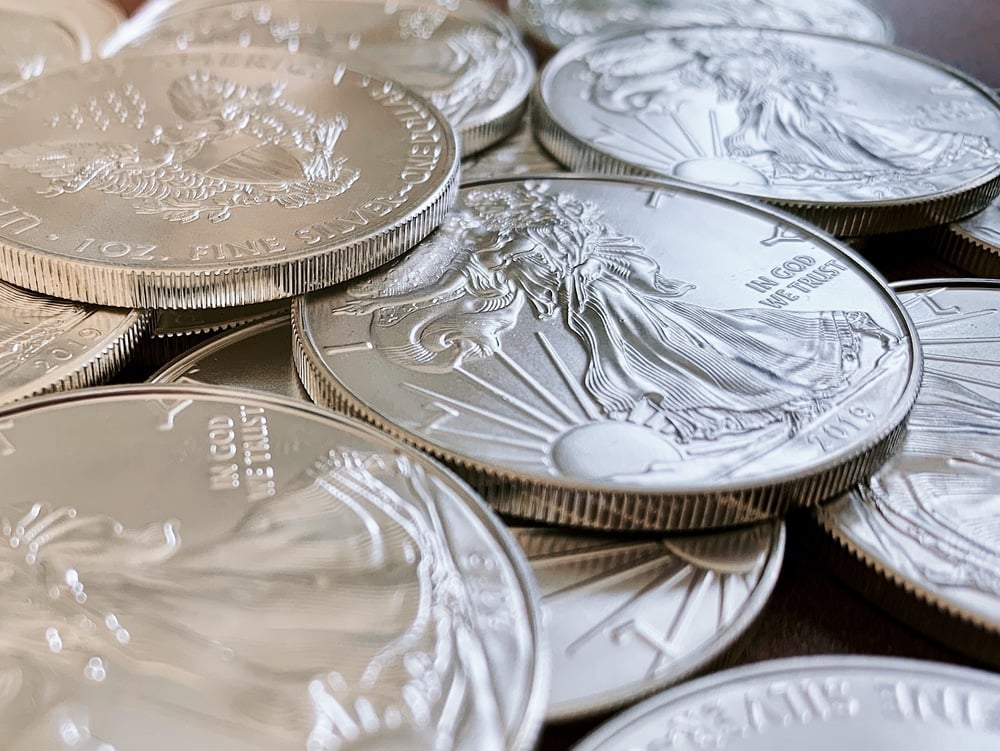
Every American Silver Eagle contains the same metal: one troy ounce of .999 fine silver, struck with Adolph Weinman’s Walking Liberty on the obverse and, since 2021, Emily Damstra’s eagle coming in to land on the reverse. What changes from one version to the next is the finish, meaning how the Mint treats the surface of the coin.
A standard bullion Eagle gets a plain brilliant strike. A proof coin gets deeply mirrored fields and frosted devices, the dressed-up look most people picture when they think of a collector coin. The enhanced uncirculated finish sits between those two. The Mint uses laser frosting on selected areas and leaves the field unpolished, so the coin shows several levels of brightness and texture rather than one flat sheen. It gives the design more visual separation without the mirror-bright background of a proof. That is the whole idea behind an enhanced uncirculated silver eagle: same ounce of silver, a different surface treatment meant to make the details pop.
This finish is rare on the series. The 2013-W coin in the West Point Two-Coin Set was the first American Silver Eagle to wear it. The 2026 issue is only the second. That scarcity of the finish, more than anything stamped on the coin, is what gives this release its collector interest.
The dates, the mint mark, and the privy
Three details set this coin apart from an ordinary Eagle. It carries the dual date “1776 ~ 2026,” marking the span from independence to the Semiquincentennial. It is struck at the United States Mint at West Point and carries the “W” mint mark, the small letter that tells you which facility produced it. And it wears a Liberty Bell privy mark bearing the numeral “250.” A privy mark is a small added device, historically used to identify a mint or an assayer, now used by modern mints to flag a commemorative theme.
None of those three features changes the metal content. A privy mark, a mint mark, and a special date are reasons a coin can trade above its metal value on collector demand, but the silver inside is still a single ounce. It helps to keep the melt value, the raw value of the metal, separate in your head from whatever a finished collector coin sells for. If you want to track where silver itself is sitting on any given day, the live metals markets page is the cleaner reference than any single product’s sticker.
How it fits the 250th anniversary lineup
The Mint has built a full slate around the Semiquincentennial, and this Silver Eagle is one piece of it. It has a companion in the enhanced uncirculated Gold Eagle that came out on May 28, carrying the same dual date and the same “250” Liberty Bell privy. Collectors who follow the gold Eagle series may recognize the pairing: matching finishes across the gold and silver flagships is a habit the Mint returns to for big anniversaries.
Earlier in the year the Mint also released a 1776-2026-W Proof Silver Eagle with the same Liberty Bell privy, which is a separate coin with a proof finish rather than the enhanced uncirculated treatment described here. We covered that one and the questions around its premiums in an earlier piece on the 1776-2026 privy Silver Eagle, and the same caution applies: the anniversary is real, but the packaging around it usually matters more emotionally than financially.
The most eye-catching part of the 250th program is not an Eagle at all. On July 16 the Mint launched its Freedom Ringing series, three pieces physically shaped like the Liberty Bell instead of the usual round format: a one-ounce gold coin at a $250 face-value denomination, a half-ounce gold coin at a $125 denomination, and a half-ounce silver medal. The gold pieces are 99.99 percent pure and the medal is 99.9 percent silver. Each is capped at just 2,026 units, among the lowest mintages the Mint has issued in the modern era. The Mint says they were individually hand-loaded and struck on a hydraulic press at the Philadelphia research lab, with the dies aligned to within the width of a human hair. Whatever you think of novelty shapes, that is a genuinely unusual production story.
What the numbers tell you about scarcity
The enhanced uncirculated Silver Eagle is capped at 125,000 units. For the first 24 hours of sales the Mint held orders to 10 coins per household, a limit it uses to spread early availability rather than let a handful of buyers clear the shelf. A 125,000-coin cap is modest by Silver Eagle standards, where annual bullion output runs into the millions, but it is generous next to the 2,026-piece Liberty Bell items.
Mintage caps are worth understanding because they set the outer boundary on how scarce a coin can ever be, though early sellout talk is not the same thing as long-term scarcity. Plenty of limited issues settle back toward their metal value once the launch rush passes. If you are new to reading these releases, our explainer on how FMV Gold values coins walks through why a mintage number is only one input, and browsing the broader Silver Eagle listings gives a sense of how ordinary bullion Eagles behave when no anniversary is attached.
Should this be on your list?
That depends on why you buy. If you collect Silver Eagles by finish and date, a second-ever enhanced uncirculated coin with a one-year-only privy is an easy box to check, and the 125,000 cap means it will not be trivially common. If you are stacking silver for the metal, the finish adds a premium you pay for looks, not for ounces, and a plain bullion Eagle gives you the same silver for less over spot. Neither answer is wrong. The trap is paying a collector premium while telling yourself it is a metal purchase.
Whatever you decide, buy with the numbers in front of you rather than the anniversary language. Compare any release against live metal value and against what similar coins have actually done after past launches. You can start from the full coin catalog and work outward from there. The 250th is a real milestone worth marking. The smart move is marking it with a coin you understand, at a value you have checked.