
There is an old temptation in coin collecting to skip straight to the finished product.
Collectors want to know what the coin will look like, how many will be made and whether they should put one away. But the 2028 American Innovation $1 program gives us a chance to watch something more fundamental: how an American idea becomes an American coin.
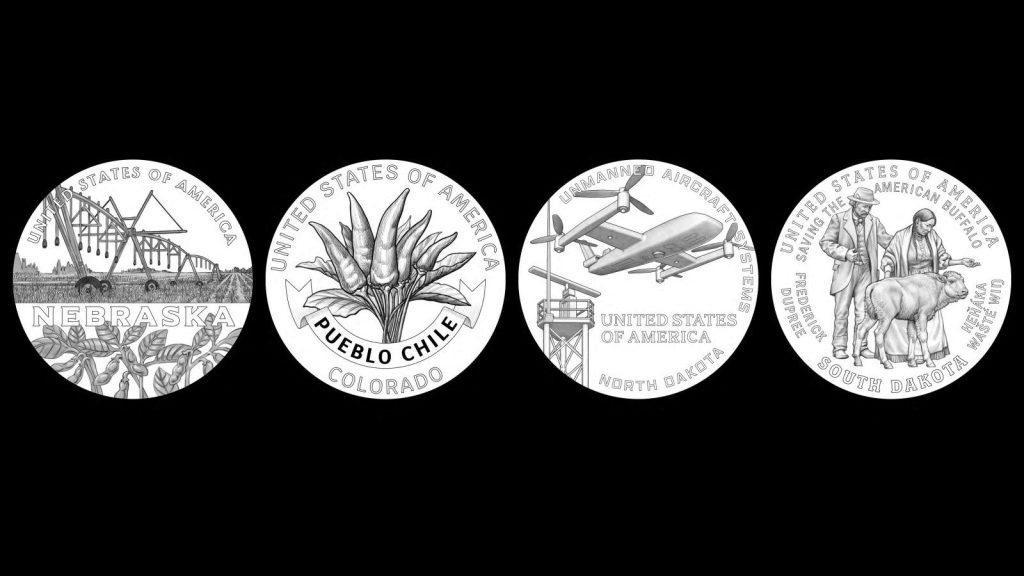
The U.S. Mint has developed candidate reverse designs for Nebraska, Colorado, North Dakota and South Dakota: two for Nebraska, five for Colorado, four for North Dakota and two for South Dakota. The Commission of Fine Arts reviewed the portfolios September 17, and the Citizens Coinage Advisory Committee had them on its October 6 meeting agenda. As of this writing, the committee’s recommendations have not been published.
That word candidate matters.
These are proposed designs, not final approved coins. Advisory bodies can make recommendations, but the Secretary of the Treasury makes the final design selection. There is no responsible basis yet for predicting sales, mintages, scarcity or premiums. (For how a coin gets from idea to authorization in the first place, see How the U.S. Mint Decides Which Coins to Make.)
What we do have is a fascinating design exercise.
Four States, Four Completely Different Problems
Nebraska’s theme is center-pivot irrigation, developed by Frank Zybach, the technology responsible for those enormous green circles anyone who has flown over farm country has probably seen.
Colorado’s subject is the Pueblo Chile, specifically the Mosco variety, connecting agriculture with a distinctive part of the state’s identity.
North Dakota tackles unmanned aircraft systems, taking the program into modern aviation technology.
South Dakota recognizes the Dupree family’s efforts to help save the American buffalo, bringing wildlife and conservation history into the mix.
Now try putting each of those stories onto a dollar coin.
That is harder than it sounds.
A beautiful illustration can fail miserably when reduced to coin size. Fine lines disappear. Background elements compete with the central subject. Lettering consumes valuable real estate. Relief must be practical enough to strike while still producing enough depth to make the design readable.
A coin is not a miniature poster.
The best designs usually understand that.
Liberty Holds the Series Together
While the reverse changes from state to state, the American Innovation program maintains its common obverse featuring the Statue of Liberty.
That gives the series a visual backbone. One side says America; the other gets to explain one particular piece of American ingenuity.
And that may be the strongest feature of the program.
These coins do not need every innovation to involve rockets, computers or laboratories. Irrigation can change American agriculture. A regional crop can become part of a state’s cultural identity. Aviation technology can create an emerging industry. Conservation can preserve something inseparable from the American landscape.
That breadth makes the design process worth following.
It also gives collectors an opportunity to develop a better eye.
Instead of asking which candidate looks most impressive when enlarged on a computer monitor, ask which one is likely to remain understandable at actual coin size.
Where does your eye go first? Is the subject recognizable? Does the background support the story or clutter it? Can the design survive the loss of tiny details?
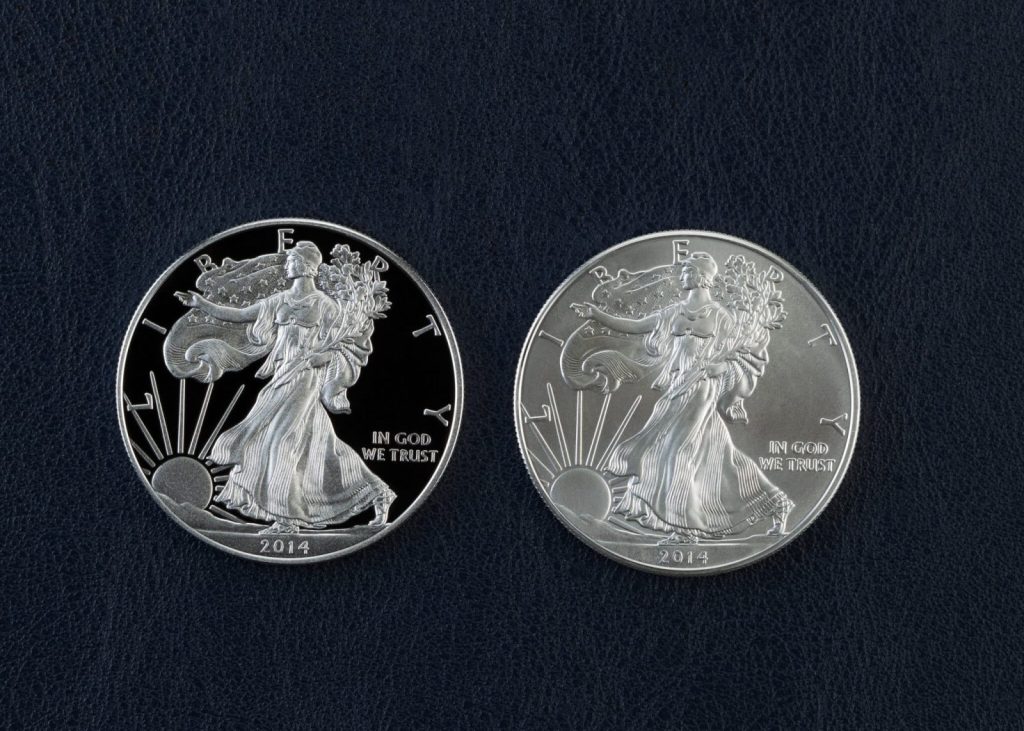
Those questions eventually matter in the marketplace, too. Two coins can share a grade and still produce very different reactions because technical grade and visual appeal are not identical concepts. FMV Gold covers that distinction further in its guide to coin eye appeal and why same-grade coins can sell differently.
The 2028 candidates are not bullion releases, and they are not finished coins waiting for a price tag.
They are something collectors rarely stop long enough to appreciate: the workshop stage of American coinage.
Before there is a coin to buy, there has to be an idea worth striking.
Image: candidate reverse designs NE-01, CO-07, ND-05 and SD-02 (left to right), four of the 13 under review; none has been selected. U.S. Mint artwork from the CCAC portfolios (U.S. Government work, public domain).