
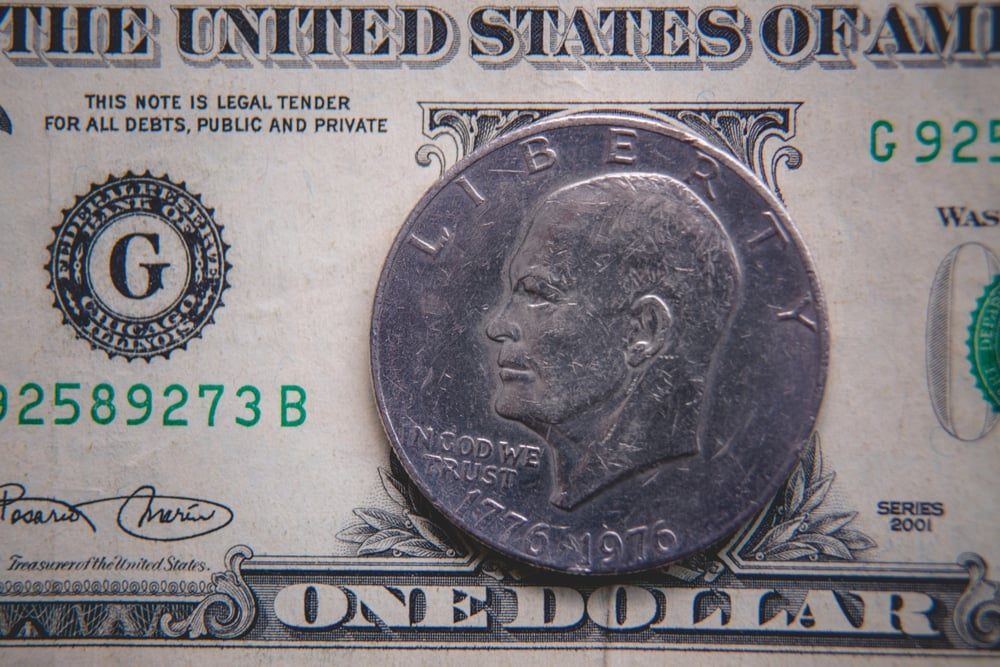
Walk into any coin show and you will find a table of modern commemoratives, still in their original Mint boxes, priced barely above what the metal alone is worth. They are beautiful coins, struck to honor everything from national parks to civil rights pioneers, and they sit at the exact seam this desk cares about: the line between bullion you buy for metal and coins you buy for what they are. So the fair question a buyer should ask is not whether they are handsome (they usually are) but whether they hold value. Are commemorative coins a good investment, or are they mainly keepsakes with a silver lining?
What a modern commemorative coin actually is
The United States has struck commemoratives in two distinct waves. The classic era ran from 1892 until Congress wound down authorizations in 1939, with a few stragglers issued through 1954. Then the program went quiet for a generation. It restarted in 1982 with a 90 percent silver half dollar marking the 250th anniversary of George Washington’s birth, and that coin opened what collectors now call the modern era.
Unlike circulating coinage, a commemorative does not come from the Mint at face value and slip into your pocket change. Congress authorizes each program by law, sets a theme and a mintage limit, and the Mint sells the coins directly to the public at a set issue price. Most programs offer up to three denominations: a $5 gold coin, a silver dollar, and a copper-nickel clad half dollar. The subject is the whole point, so designs celebrate anniversaries, institutions, and people rather than the usual eagles and presidents. That is what pulls them toward the numismatic side of the ledger even when they contain precious metal.
Why the honest answer is usually no
Here is the part the glossy Mint catalog tends to underplay. When you buy a commemorative at issue, you are not paying for metal at spot. You are paying for the metal, plus the Mint’s production and marketing costs, plus a statutory surcharge baked into the price. Those surcharges are fixed by the authorizing law, commonly $35 on a gold coin, $10 on a silver dollar, and $5 on a clad half, and they flow to a designated organization such as a museum or a memorial fund. It is a worthy arrangement. Since 1982 the program has raised more than $506 million for such causes. But it means that on the day your coin arrives, its resale value is already below what you paid, because a buyer on the secondary market will not reimburse you for a donation you made to the Smithsonian.
The clad half dollars make the problem starkest. They contain almost no precious metal, so their entire value rests on collector demand. When that demand is thin, and for most modern issues it is, the coin has no metal floor to catch its fall. The gold and silver pieces are gentler cases. A $5 gold commemorative or a silver dollar will always be worth its melt value at minimum, and melt is the metal floor beneath any bullion-bearing coin, the same floor we describe in our guide to how fair market value works. The collectible premium on top of that floor, though, can evaporate.
The market learned this the hard way in the 1990s. Congress approved so many programs that collectors simply could not keep up, and the 1995 and 1996 Atlanta Olympics series, a sprawling set of sixteen designs across multiple denominations, became the emblem of the glut. Buyer fatigue set in. The result is that a great many modern commemoratives today change hands at or even below their original issue price. For a new collector that is a gift, a chance to own a genuine United States gold or silver coin near its metal value. For anyone who bought at issue hoping to profit, it has mostly been a lesson in the difference between a coin you love and a coin that grows.
The exceptions that prove the rule
A handful of modern commemoratives have rewarded their owners handsomely, and every one of them tells the same story: scarcity, not metal, drives the gain. The standout is the 1997-W Jackie Robinson $5 gold coin. Its uncirculated version had a mintage of just 5,174 pieces, the lowest of any United States commemorative struck between 1982 and 2009, and it became the most valuable modern commemorative of that entire span. Nothing about the gold content explains that. A tiny surviving population meeting steady collector demand explains all of it.
The 2001 American Buffalo silver dollar is the other classic case. It revived James Earle Fraser’s beloved bison design from the old Buffalo nickel, and collectors responded by clearing the entire authorized mintage of 500,000 coins in fifteen days. Roughly 227,000 uncirculated pieces came from Denver and 273,000 proofs from Philadelphia, each carrying a $10 surcharge for the Smithsonian’s National Museum of the American Indian. That sellout gave the coin lasting secondary-market strength, and the same Fraser motif lives on today in the 24-karat American Buffalo gold series. These winners are numismatic bets, closer in spirit to the low-mintage keys we cover in when a bullion coin becomes a collectible than to a stack of bullion.
What the 1996 reform changed
Congress noticed the oversaturation and acted. The Commemorative Coin Reform Act of 1996 capped the calendar at two commemorative programs per year and limited how many coins each program could strike. It also tightened the surcharge rules, requiring the sponsoring organization to raise matching funds from private sources and requiring the Mint to recover its own program costs before any surcharge money is paid out. The reform did not turn commemoratives into investments, but it did stem the flood, and post-1998 issues tend to hold value better than the mid-1990s deluge because the Mint stopped drowning the market.
Are commemorative coins a good investment for you?
Treat a modern commemorative as a collectible first and a metal holding a distant second. If you are drawn to the subject, or you want a specific low-mintage key like the Jackie Robinson gold coin, buy with open eyes and enjoy it. If your goal is to accumulate metal efficiently, a plain bullion coin gives you more ounces per dollar without the surcharge, and you can compare the trade-offs against numismatic pieces the way we lay out in bullion versus semi-numismatic coins. The surcharge itself is best understood as a donation attached to a coin, not part of an asset’s price.
For the precious-metal issues, remember that melt is your floor and the premium above it is the speculative part. When you shop the secondary market rather than buying at issue, someone else has already absorbed that first-day premium loss, which is why patient buyers often do best. You can watch metal levels on our markets page and keep the broader discipline in view with our rules of gold. And whatever you buy, know the coin: check the mintage, the mint mark, and the condition before you decide, because with commemoratives those three details separate the keeper from the also-ran. Browse verified listings in our coin catalog to see how the market values specific issues.
So, are commemorative coins a good investment? As a category, no. They are collectibles that happen to contain metal, sold at a premium that funds a cause, and most of them will not outrun that premium. But as individual pieces chosen with knowledge, the right low-mintage key or a coin you genuinely want to own, they can be a rewarding corner of the hobby. Just buy them for the story on the coin, and let the metal be the safety net rather than the reason.