
Most American stackers start with the coin their own Mint makes. Sooner or later, though, a tube of something foreign shows up in a collection, and one of the most common visitors is a coin with a helmeted woman holding a trident. The Silver Britannia is Britain’s flagship silver bullion coin, struck by The Royal Mint, and it has quietly become one of the most recognized one-ounce silver coins in the world. So are silver Britannias a good investment for someone who already knows the American Silver Eagle? Here’s what the coin is, how it changed, and where it fits.
What the Silver Britannia Is
The modern bullion Britannia carries a face value of two pounds and is legal tender in the United Kingdom. Since 2013 it has been struck in .999 fine silver, measuring 38.61 millimeters across and weighing 31.104 grams, which is exactly one troy ounce. The reverse shows Britannia standing with shield and trident, based on the interpretation by designer Philip Nathan. The obverse carries the reigning monarch.
That last detail is where the coin picked up some recent history. Every Britannia before 2023 bore a portrait of Queen Elizabeth II. The 2023-dated bullion Britannia was, in The Royal Mint’s own words, the first bullion coin to bear the official coin portrait of King Charles III, the effigy modeled by sculptor Martin Jennings. Collectors who like transitions tend to keep one of each.
The Early Years: Britannia Silver and Rotating Designs
The silver Britannia first appeared in 1997, initially offered as a proof set. For its first sixteen years it was not .999 fine at all. From 1997 through 2012 the coin was struck in .958 silver, a standard the British call “Britannia silver,” and it was a little heavier and wider to compensate: about 32.45 grams on a 40 millimeter planchet. Do the arithmetic and the pure silver comes out to roughly one troy ounce, so the coin delivered its ounce, just in a slightly less pure alloy.
Those early years also wandered artistically. Reference sources show the standing Britannia used in 1998 and the even years after it, while odd years from 1999 onward brought alternate designs from different artists. Supply was limited in that era, which is one reason some pre-2013 dates are treated as more collectible than a current-year coin.
Starting in 2013 the Mint changed two things at once. The fineness moved to .999, and the bullion version settled on the classic standing Britannia every year, with production no longer capped but set by demand. The Royal Mint has not published a single official reason for the purity switch that we could find, but the practical effect is obvious: it put the Britannia on the same .999 footing as most competing one-ounce silver coins, including the American Silver Eagle.
The 2021 Security Upgrade
If you’ve handled a recent Britannia, you may have noticed the coin seems to move under the light. In 2021 The Royal Mint added four security features to the bullion Britannia:
- A latent image near Britannia’s lower left that switches between a trident and a padlock as you tilt the coin.
- Surface animation in the background that gives the effect of moving waves.
- Tincture lines, the heraldic hatching that marks details such as the Union flag on the shield.
- Micro-text reading “Decus et Tutamen,” Latin for “an ornament and a safeguard.”
Industry accounts tie the upgrade to rising demand and growing concern about counterfeits, which have dogged popular bullion coins on both sides of the Atlantic. For a buyer, the benefit is concrete: a 2021-or-later Britannia gives you a few quick visual checks before you ever reach for a scale or a magnet. It doesn’t replace weighing and measuring, but it does make a crude fake easier to spot.
Are Silver Britannias a Good Investment for an American Buyer?
The honest answer depends on what job you want the coin to do. A Silver Britannia is a bullion coin first. Its floor is its metal value, and that floor moves with the silver spot price. As of mid-November 2026, spot silver was trading in the low $50s per ounce, noticeably below where it stood a month earlier, which is a fair reminder that the metal underneath any silver coin can swing hard in either direction. Melt value is the minimum, not the market price; what a buyer actually pays includes a premium over spot, and that premium varies with demand, supply, and the specific year.
Several points work in the Britannia’s favor for a U.S. holder:
Recognition. It is government-issued legal tender from a national mint, and it is widely stocked by American dealers. Recognition matters most on the day you sell.
Purity and IRA questions. The .999 coins from 2013 onward meet the silver fineness standard that U.S. retirement-account rules apply to bullion, and major dealers list them among IRA-approved products. The older .958 coins fall below that bar. If retirement accounts matter to you, check the year and confirm with your custodian before you buy.
Variety without leaving bullion. Owning a few Britannias alongside your Eagles spreads your holdings across issuers without stepping into the higher-premium world of rare coins.
A couple of points cut the other way. The tax advantage that makes Britannias especially popular in Britain does not travel. The Royal Mint notes that, because the coins are legal tender, they are exempt from capital gains tax for UK residents. An American selling a Britannia gets no such treatment, and U.S. tax rules on precious metals are their own subject worth discussing with a tax professional. Second, some American buyers, and a few local dealers, simply prefer the home team. In most markets the Britannia trades easily, but the Silver Eagle often enjoys the deepest domestic demand.
There’s also a collector layer on top of the bullion. Pre-2013 Britannia-silver dates, the alternate odd-year designs, and the 2023 transition coins can attract interest beyond metal value. That interest is real but uneven, and it should be treated as a bonus rather than the reason to buy a bullion coin. Graded and proof Britannias are a different product with their own markets.
How the Britannia Compares With Its Rivals
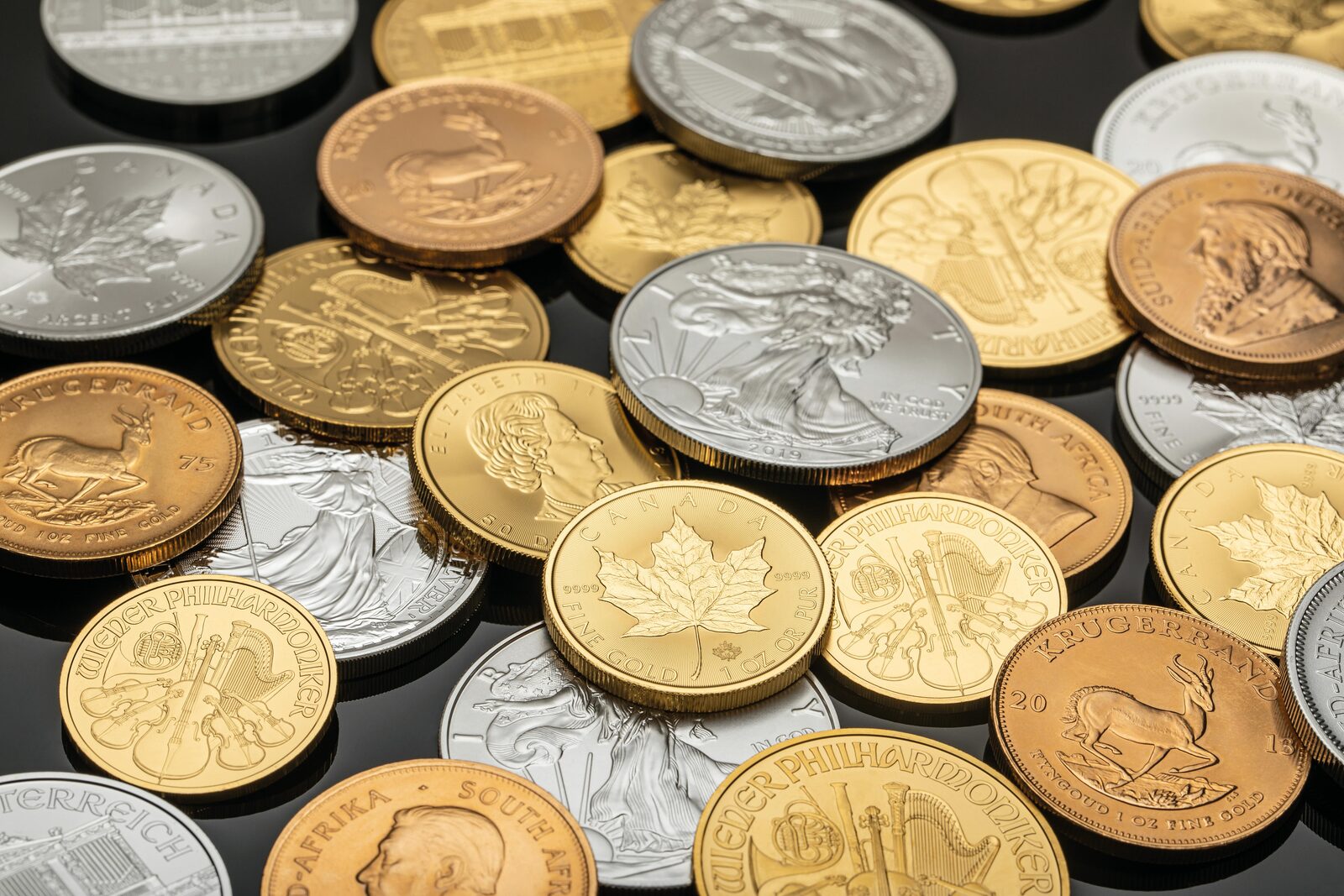
Among the government one-ounce silver coins, the Britannia sits comfortably in the mainstream. The American Silver Eagle is the domestic benchmark and usually the easiest coin to sell in the United States. Canada’s Silver Maple Leaf is the other big North American rival, with security features of its own. Mexico’s Silver Libertad leans further toward the collector side. The Britannia lands between them: fully bullion in the way it is priced, but with enough design history and security engineering to make it interesting to hold.
If you’re building a stack, a sensible approach is to anchor it with the coins you know you can sell locally, then add Britannias where you can buy them at a comparable premium over spot. You can browse the Silver Eagle series on FMV Gold for comparison, follow the metal itself on our markets page, and see how we value coins across the full coin catalog.
Buying Tips Before You Add Britannias
- Check the date. 2013 and later means .999 fine; 1997 through 2012 means .958 Britannia silver on a larger planchet.
- On 2021 and later coins, tilt the coin and look for the trident-to-padlock latent image. If it isn’t there, stop and verify.
- Weigh and measure: about 31.1 grams and 38.61 millimeters for modern coins.
- Compare the premium over spot, not the sticker price, and remember the selling side: the spread you pay to get out matters as much as the cost to get in.
- Keep the coins in tubes or capsules. Bright bullion finishes show handling marks and milk spots easily, and condition affects how buyers see the coin even when it trades as bullion.
The Silver Britannia won’t replace the Silver Eagle in most American collections, and it doesn’t need to. It’s a well-made, widely recognized ounce of silver with a bit of British character and some of the better anti-counterfeit work in the bullion market. As with any bullion coin, the metal sets the floor and your discipline on premiums decides the outcome. None of this is investment advice; it is a profile to help you decide whether the coin earns a place in your own holding.