
Every year a small envelope of news comes out of Western Australia: the Perth Mint has picked a new kangaroo. Sometimes it’s a lone red kangaroo against the outback, sometimes a mother looking over her shoulder, and for 2026 it’s two kangaroos bounding through shallow water. Collectors watch for the reveal. Stackers mostly shrug, because underneath the art sits one troy ounce of 99.99 percent gold, and that is the part they came for.
That split personality is the whole story of the coin. If you’re asking whether Gold Kangaroos are a good investment, the useful answer starts with what the coin is, where it came from, and how it behaves next to the gold coins Americans already know.
Where the Gold Kangaroo came from
The coin did not start life as a kangaroo at all. Gold Corporation, the Perth Mint’s parent and an entity wholly owned by the Government of Western Australia, launched the program in the mid-1980s as the Australian Gold Nugget. The first proof issues appeared in 1986 and bullion strikes followed in 1987. The reverses showed famous gold nuggets pulled from Australian soil during its gold rushes. The 1987 one-ounce coin carried the Welcome Stranger nugget, while the half-ounce of the same year showed the Hand of Faith.
Nuggets are a lovely piece of local history, but they don’t sell a coin in Tokyo or Chicago. By the 1989 proof issue the Mint had swapped in a kangaroo, a symbol the whole world recognizes, with the bullion version following by about 1990. For years the coin carried both identities, and you’ll still hear dealers and collectors call it the Nugget. In 2026 the Mint marked 40 years of the program with a small privy mark bearing the numeral 40 above the leaping kangaroo.
What you are actually holding
The specifications are the reason the coin earns a place in serious holdings:
- Purity: .9999 fine gold, the same 24-karat standard as the American Gold Buffalo.
- Weight and size: the 1-oz coin weighs 31.1 grams and measures 40.7 mm across.
- Sizes: the core lineup runs 1/10, 1/4, 1/2, and 1 ounce, with 2-oz, 10-oz, and kilo coins at the top end. A 1/20-oz size has also been struck in some years.
- Legal tender: the coins carry Australian dollar face values (100 dollars on the 1 oz, 50 on the half, 15 on the tenth). As with every modern bullion coin, face value is symbolic and far below the metal inside.
- Obverse: a portrait of the reigning monarch. Older coins show Queen Elizabeth II; the 2026 issue carries King Charles III by Daniel Thorne.
- Security: the 1-oz and kilo coins carry a micro-laser engraved letter on the reverse, visible only under magnification.
- Packaging: coins ship in individual protective capsules, a habit dating back to the original Nugget issues.
Because pure gold is soft, a Kangaroo marks and scratches more easily than a 22-karat Eagle, which is alloyed with copper and silver for hardness. Handle it by the edge, or better, leave it in the capsule. The same trade-off applies to the Buffalo, which we covered in our Gold Buffalo buyer’s profile.
Are Gold Kangaroos a good investment for a U.S. buyer?
For most American buyers, the honest framing is that a 1-oz Gold Kangaroo is a bullion coin first. Its value rests on its gold content, which tracks the spot price you can follow on our markets page. That metal value is the floor. What you pay on top of it, the premium, covers minting, distribution, and dealer margin, and it is where the Kangaroo differs from its peers.
A few points work in its favor:
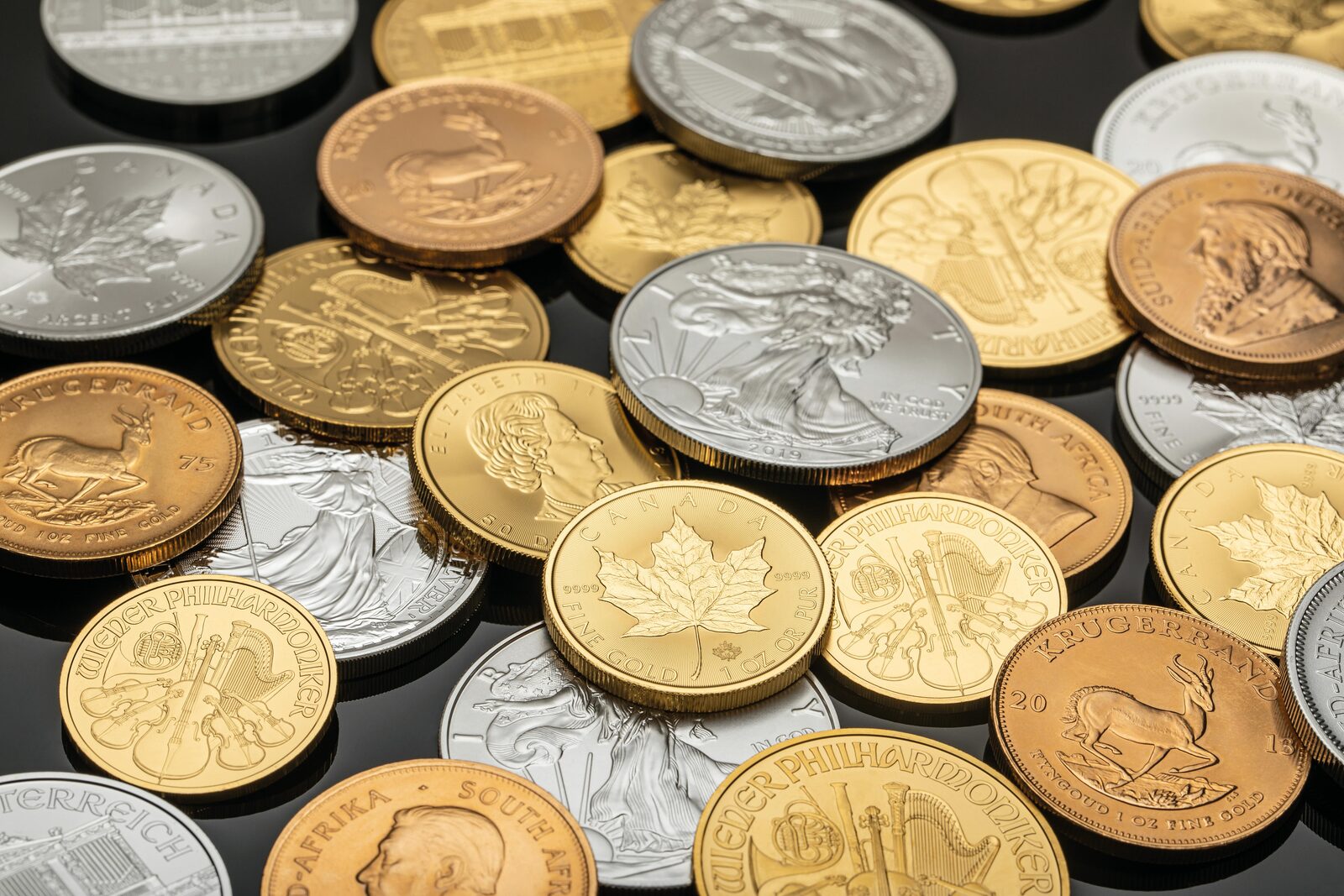
Recognition. The Kangaroo is one of the handful of sovereign gold coins that dealers worldwide know on sight. Recognition speeds authentication, and faster authentication usually means a tighter buyback. In the U.S. it isn’t as instantly familiar as the Eagle or Buffalo, but it is in the same league as the Canadian Gold Maple Leaf.
Purity and IRA eligibility. At .9999 fine, the Kangaroo comfortably clears the .995 fineness threshold that U.S. rules set for gold held in a self-directed IRA. It qualifies on purity alone, without needing the statutory carve-out the Gold Eagle relies on.
Sovereign backing. The issuer is a government-owned mint, and the coin is legal tender in Australia. That doesn’t guarantee a price, but it does settle questions of origin and content that a generic round can’t.
And a few work against it:
Thinner U.S. demand. American dealers move far more Eagles and Buffalos. On the secondary market, an American-made coin can sometimes sell back a little more easily, and the difference shows up in the spread rather than in the metal.
Changing designs can muddy the premium. Because the 1-oz and fractional reverses change every year, some buyers pay extra for a favorite year or a privy edition. That extra is a collector premium, not gold, and it may or may not be there when you sell. If you’re stacking for metal, buy whatever year carries the slimmest premium over melt.
The collector side: annual designs and capped fractions
Here is where the Kangaroo parts ways with the Gold Eagle. The Eagle has carried essentially the same design for decades. The Kangaroo hands collectors a new reverse every year on its 1-oz and smaller coins, while the larger 2-oz, 10-oz, and kilo pieces keep a static red kangaroo design.
Mintage policy adds a second layer. For the 2023 issue the Mint announced caps of 100,000 half-ounce coins, 150,000 quarter-ounce coins, and 200,000 tenth-ounce coins, with 1-oz and kilo mintages left unlimited to meet investor demand. The 2026 schedule kept the same pattern for the sizes it listed. So the fractional coins have a defined ceiling, while the one-ounce stays a true bullion workhorse.
Mintage history tells a quieter story. Official figures for the one-ounce coin ran well above 100,000 a year through much of the 1990s, then dropped sharply in the early 2000s, with 2001 recorded at about 31,000 pieces. Low-mintage years like that can carry a collector premium, but they remain gold coins first. Nobody should assume a rising premium on a modern bullion date; treat any extra as a bonus, not a plan.
How it fits next to American gold
If you already hold Eagles or Buffalos, a few Kangaroos add diversification by issuer and a little design variety, without giving up purity or recognition. If you’re starting from scratch in the U.S., the domestic coins remain the default for resale convenience, and you can compare them side by side in our American Buffalo listings and the wider coin catalog.
Whatever you choose, the same rules of gold apply: know the melt value before you buy, know the round-trip cost of selling, and don’t pay a collector premium unless you’re consciously buying the collectible. Our guide to how FMV Gold works walks through comparing what you’re offered against the metal floor.
So, are Gold Kangaroos a good investment? As a way to own pure, widely recognized gold from a government mint, they hold up well. As a speculation on annual designs, they’re a collector’s pleasure with a collector’s risk. Decide which of those two coins you’re buying, and the Kangaroo makes a lot more sense.
This article is for general information and is not investment advice.