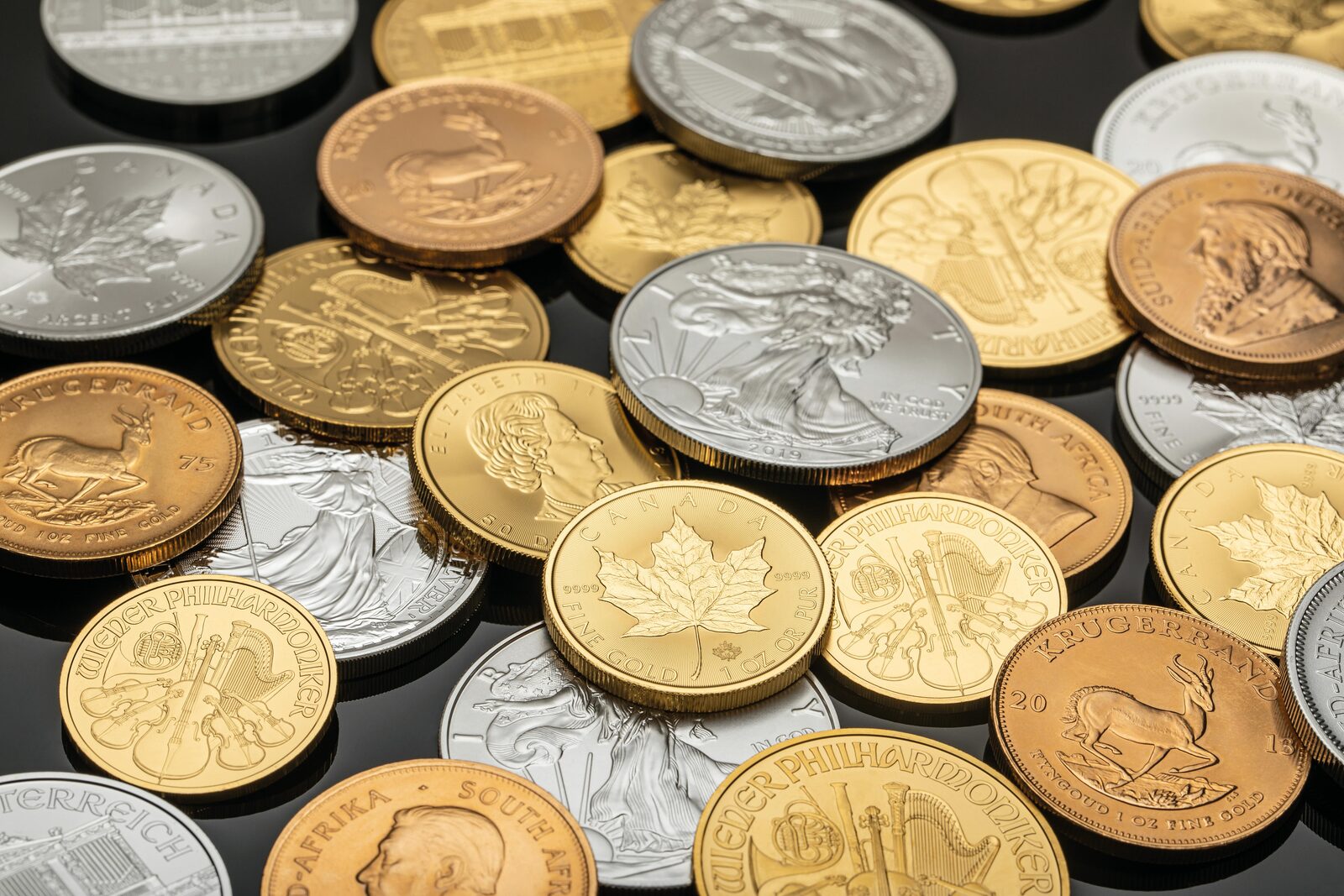

Set an American Silver Eagle next to a Canadian Silver Maple Leaf and the scale will not tell them apart in any way that matters. Each delivers a full troy ounce of silver. Each is legal tender struck by a national mint. Each is accepted almost anywhere bullion changes hands. Yet ask for a quote on both from the same counter and the Eagle will almost always cost more over spot, sometimes by a margin that surprises first-time buyers.
That gap is the whole story of the silver eagle vs silver maple leaf question. It is not about how much silver you get. It is about how each coin is made, distributed, and wanted, and it has been remarkably persistent.
Two coins, one ounce of silver
The Silver Eagle was authorized by Title II of Public Law 99-61, the Liberty Coin Act, approved July 9, 1985, and released to the public on November 24, 1986. It is 40.6 millimeters across, carries a nominal face value of one dollar, and is guaranteed to contain one troy ounce of .999 fine silver. The obverse borrows Adolph A. Weinman’s Walking Liberty, the design that graced the half dollar from 1916 to 1947. John Mercanti’s heraldic eagle filled the reverse from 1986 until 2021, when Emily Damstra’s eagle landing on a branch replaced it. Bullion Eagles have been struck at San Francisco, Philadelphia, and West Point over the years.
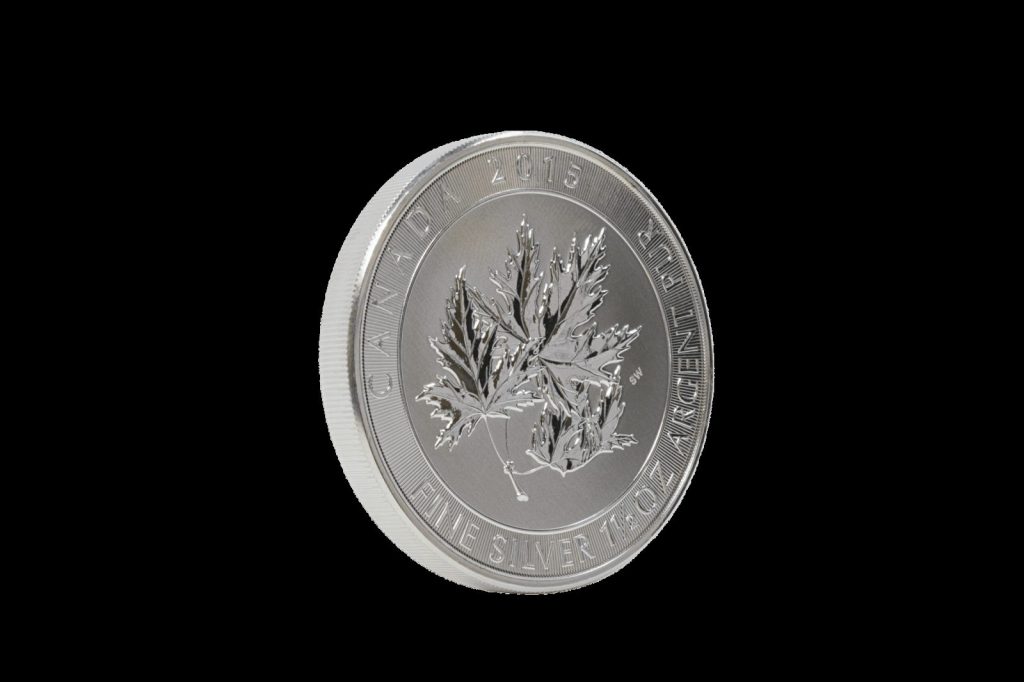
The Royal Canadian Mint introduced the Silver Maple Leaf in 1988. It is a little smaller at 38 millimeters, weighs 31.11 grams, and is struck in .9999 fine silver, one decimal place purer than the Eagle. Its face value is five Canadian dollars. Since 2014 it has carried radial lines across the field and a tiny laser-engraved maple leaf that shows the year under magnification, and the Mint says coins dated 2015 and later can be checked against its Bullion DNA authentication system.
For melt purposes the two are equals. Melt value is the metal floor, and an ounce is an ounce. If you want to see how that floor is calculated, our how it works page lays out the arithmetic, and current spot sits on the markets page.
Silver Eagle vs Silver Maple Leaf: why the premiums differ
The premium is everything a buyer pays above the metal: refining, blanking, striking, packaging, freight, and each layer of margin between the mint and your hands. Our explainer on what the premium over spot covers walks through those layers in general. Several of them work differently for these two coins.
The Mint’s own wholesale fee
The U.S. Mint does not sell bullion Silver Eagles to the public. It sells them only to a short list of firms called Authorized Purchasers, which then resell into the wholesale and retail market. Coin World counted 13 of them at the start of 2026. The Mint’s published terms charge those firms the LBMA Silver Price plus a flat fee per coin, with a minimum order of 25,000 ounces. Every bullion Eagle therefore leaves the Mint already carrying a markup before any dealer touches it, and because the fee is a fixed amount per coin rather than a percentage, it weighs heavier on the premium when silver is cheap and lighter when silver is expensive.
Allocation and limited supply
The Mint’s Authorized Purchaser page says the Silver Eagle “remains on allocation,” meaning the Mint rations how many coins each purchaser can buy rather than filling every order. The same page notes that applications to become a new silver purchaser are suspended for that reason. APMEX has attributed past Eagle supply limits partly to blank supply, describing a single domestic supplier of planchets. When a product is rationed at the source, scarcity shows up in the price of the finished coin even when the metal itself is plentiful. We looked at how thin new-coin flow has become in the Silver Eagle shortage nobody is watching yet.
Home-market demand
The Eagle is the national bullion coin of the United States. American buyers know it on sight, many simply prefer it, and that steady home demand lets sellers hold a higher markup without losing customers. The Maple Leaf is well known here too, but it competes with every other foreign coin and private round for the same buyer, and competition pushes premiums down.
The result is consistent across sources. APMEX’s buyer guide states that Silver Maples “have consistently had lower premiums than Silver Eagles,” and a February 2026 Money Metals comparison showed the Eagle with the wider spread over spot as well. The gold market shows the same pattern for the same reasons, which we covered in why Gold Eagles cost more than Krugerrands.
What the Maple Leaf does better
On paper the Maple Leaf has some technical edges. It is purer, and its security features are more elaborate. The radial lines are hard to reproduce cleanly, and the micro-engraved leaf gives a dealer something to check with a loupe. The Eagle’s 2021 redesign added some anti-counterfeiting elements, but the Maple has had its toolkit longer.
The Maple has also worked on a nagging cosmetic problem. Silver bullion coins can develop white blotches called milk spots, which do not change the silver content but can make a coin less appealing to the next buyer. The Royal Canadian Mint developed a surface treatment called MintShield to reduce them, and APMEX reports that Maples produced after 2018 carry it.
Then there is face value. Five Canadian dollars beats one U.S. dollar, though neither figure has anything to do with what the coin is worth. Both are far below melt.
What the Eagle does better
The Eagle’s strengths are recognition and familiarity in the American market. A buyer at a coin show in Ohio or a pawn counter in Arizona will not hesitate over one. That counts for something when it is time to sell, a subject we explored in which gold and silver coins are easiest to sell.
Both coins, it is worth noting, qualify for precious metals IRAs, so retirement-account eligibility does not separate them.
There is also the softer appeal that some readers will recognize. Weinman’s Walking Liberty is one of the finest designs the United States ever put on a coin, and plenty of stackers simply like holding it. There is no shame in paying a little more for a coin you enjoy, as long as you know that is what you are doing.
Which one makes sense for you
For most buyers, settling silver eagle vs silver maple leaf comes down to one question: what are you paying for? If your aim is the most silver for the least money, the Maple Leaf usually wins at purchase. You get the same ounce, a slightly purer one, for a smaller markup. That logic gets stronger the more ounces you buy, because the per-coin difference multiplies.
If you value maximum recognition at home and expect to sell to American buyers who may favor the Eagle, its extra premium buys you that familiarity. Whether all of it comes back when you sell is not guaranteed. Before choosing, ask a dealer for both the buy and the sell quote on each coin, and compare the round trip rather than the sticker. The difference between those two numbers is what owning the coin actually cost you.
Plenty of holders split the difference and keep some of each. That is a reasonable answer too. The metal is the same, and having two of the world’s most liquid silver coins in a holding is hardly a weakness.
You can browse the American Silver Eagle series to see how melt value tracks the coin over time. Nothing here is investment advice, and premiums move with supply and demand, so check current conditions before you buy.