
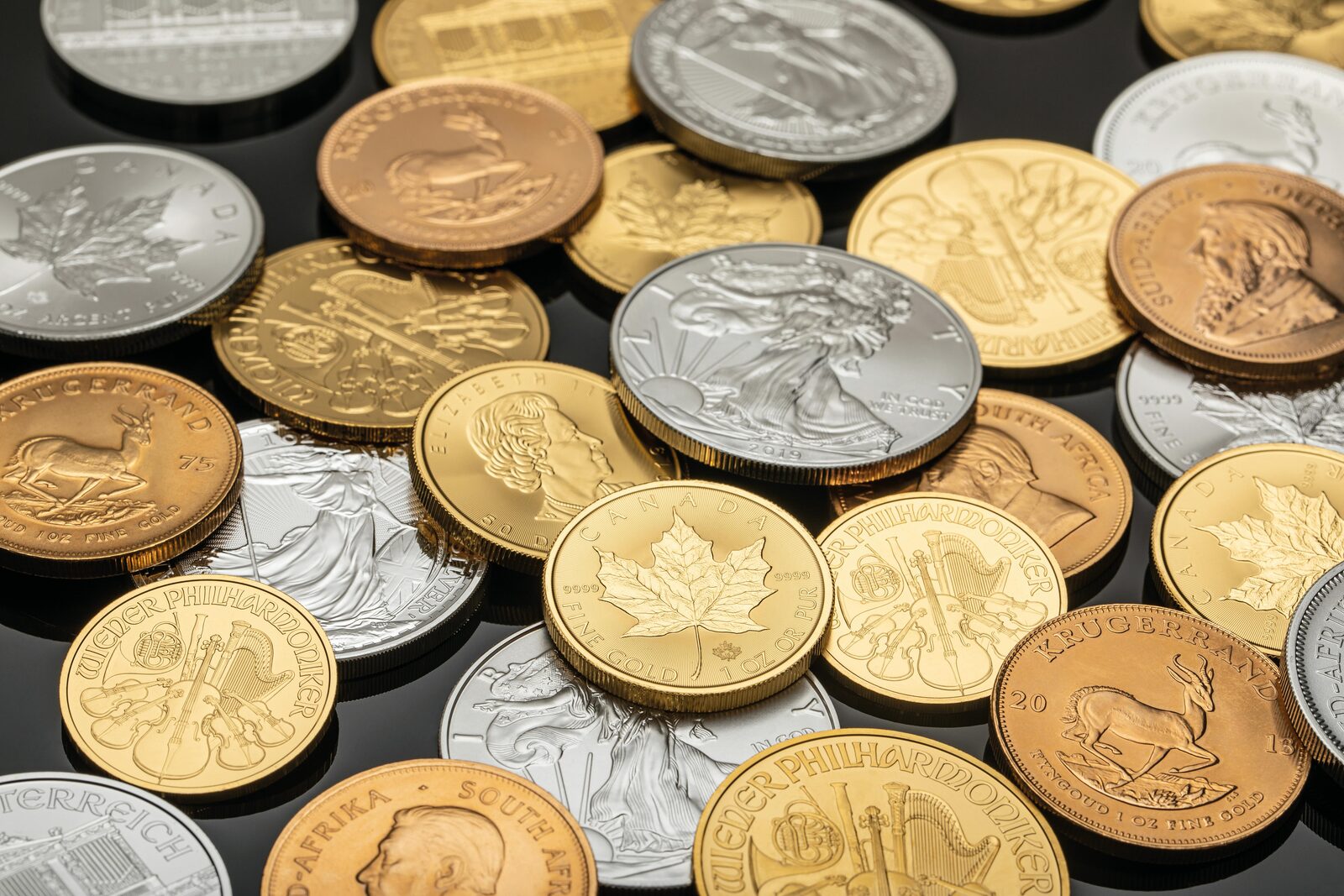
Most people who buy a Gold Eagle never think about customs codes. Then, on a Friday in August 2025, a ten-digit number in a letter from U.S. Customs and Border Protection pushed New York gold futures to a record and opened a gap of more than $100 an ounce between New York and London. So, do tariffs affect gold prices? They can. They just rarely do it the way the headlines suggest, and the past eighteen months gave coin holders an unusually clear look at how it works.
Why bullion has mostly been spared
Trade policy usually treats gold as money first and merchandise second. When the broad “reciprocal” tariffs arrived in April 2025, gold and silver bullion were left off the list. That mattered more than it sounds. Earlier that year, traders had rushed billions of dollars of metal into the United States because New York prices were trading at large premiums to London on tariff fears. Bloomberg reported that U.S. gold imports hit 43 tons in January 2025, roughly double the average monthly output of American refiners the year before. Once the exemption was clear, that trade “came to a crashing halt.”
The lesson from that first episode: the fear of a tariff moved more metal, and moved prices more, than any tariff actually collected on bullion.
The August 2025 gold bar scare
The second episode was stranger. In a ruling letter to a Swiss refiner, Customs classified one-kilogram and 100-ounce cast gold bars under heading 7108.13.5500, a “semi-manufactured” category, instead of the duty-free 7108.12.10 that the trade expected. On paper, that meant the big bars wholesale traders move between vaults would face country-based tariffs, including the 39% rate then applied to Swiss goods.
Markets reacted within hours. December Comex gold jumped to a premium of more than $100 an ounce over the London benchmark, and New York futures briefly set a record before giving the gains back. When a White House official said an executive order would clarify things, that premium fell to about $61. On August 11, 2025, President Trump posted “Gold will not be Tariffed!” and an executive order signed September 5 (effective September 8) added bullion-related tariff lines to the exemption list. The London Bullion Market Association called it a “welcome development” and said it would keep watching silver.
For a coin buyer, the striking part is how short-lived it all was. The scare lived mostly in the futures market and in the wholesale bar trade. Retail buyers who waited a week saw the whole thing unwind.
Silver’s turn: critical minerals and Section 232
Silver drew a different kind of attention. In November 2025, silver was added to the U.S. Geological Survey’s list of critical minerals, which pulled it into a Commerce Department investigation under Section 232 of the Trade Expansion Act, the national-security statute. Traders spent weeks bracing for a duty.
On January 14, 2026, the President issued Proclamation 11001. It imposed no tariff on processed critical minerals for now and instead directed Commerce and the U.S. Trade Representative to negotiate with trading partners over the next 180 days, leaving the door open to “alternative remedies” later. Kitco reported that silver, which had touched $93 an ounce overnight, slipped to about $90, down more than 3% on the day. The tariff premium that had been built into the price leaked out the moment the threat was deferred.
The trade trackers we checked in October and November 2026 reported no Section 232 duty on silver bullion. That can change, which is precisely why silver tariff talk keeps resurfacing.
Then the Supreme Court moved the ground
On February 20, 2026, the Supreme Court ruled in Learning Resources, Inc. v. Trump that the International Emergency Economic Powers Act does not authorize the President to impose tariffs. The reciprocal tariffs built on that law fell. Four days later, the administration imposed a temporary 10% global surcharge under Section 122 of the Trade Act of 1974, which is limited to 150 days. Its exclusions listed “metals used in currency and bullion.” That surcharge expired on July 24, 2026, and newer measures under other statutes have followed.
Trade trackers we reviewed report that bullion lines kept their carve-outs through those changes, but the rules now hinge on exact product codes and countries of origin. A finished product can be treated differently from raw bullion, and one country’s goods differently from another’s. Treat any blanket claim that “metals are exempt” as a starting point, not a guarantee.
Do tariffs affect gold prices for coin buyers?
Yes, through four channels, and only one of them is an actual duty.
- The spot quote itself. American price screens lean heavily on Comex futures. When tariff fear pushes New York above London, the “spot” a U.S. buyer sees rises too, even though nothing has been taxed. Our markets page shows that number moving in real time.
- Physical flows. Metal pulled into U.S. warehouses on tariff fears is metal that is not available in London. That can tighten borrowing markets abroad, a story told in what silver lease rates tell you about coin premiums.
- Dealer costs on imported products. If a duty ever lands on a foreign-struck coin or bar, it shows up in the premium over spot, the layer explained in our premium-over-spot guide.
- Uncertainty. When wholesalers cannot price their next shipment, they widen spreads, the same reflex seen in premium spikes during shortages.
The first and last channels did most of the work in 2025 and 2026. The third barely appeared for bullion, because bullion kept its exemptions.
What a sensible holder does with tariff news
When the question “do tariffs affect gold prices” comes up again, start by asking which market a headline touches. A ruling on kilo bars is a wholesale story. A proclamation on processed critical minerals may never reach a one-ounce coin. Reading the scope before reacting would have saved a lot of anxious buying in August 2025.
Next, remember where your coins come from. American Eagles and Buffaloes are struck by the U.S. Mint here at home, so an import duty on foreign product does not apply to them directly. Holders who want to keep tariff exposure to a minimum often lean toward American Gold Eagles for that reason, though their premiums still respond to spot and to demand.
Finally, compare the all-in cost per ounce rather than the headline spot move. A tariff scare can lift spot and premiums at the same time, then reverse both within days. Our how it works page explains how we track those numbers so you can see the gap before you buy.
None of this is investment advice. Tariff policy has changed direction several times in eighteen months and may change again. The steady habit is the old one: know what you are buying, know what you are paying over metal value, and let the headlines settle before you act on them.