

Most American buyers can name every coin on their own shelf before they can name Europe’s best seller. The gold Vienna Philharmonic has been struck since 1989, was voted the best selling gold coin in the world four separate years, and carries a face value denominated in euros. Yet it tends to show up in American holdings almost by accident: inherited in an estate, taken in on a trade, bought in a mixed lot for the metal and never really looked at.
It is worth looking at. The coin is also unusual in its subject. It does not show a head of state, an eagle, or an allegorical Liberty. It shows an orchestra.
A coin built around a concert hall
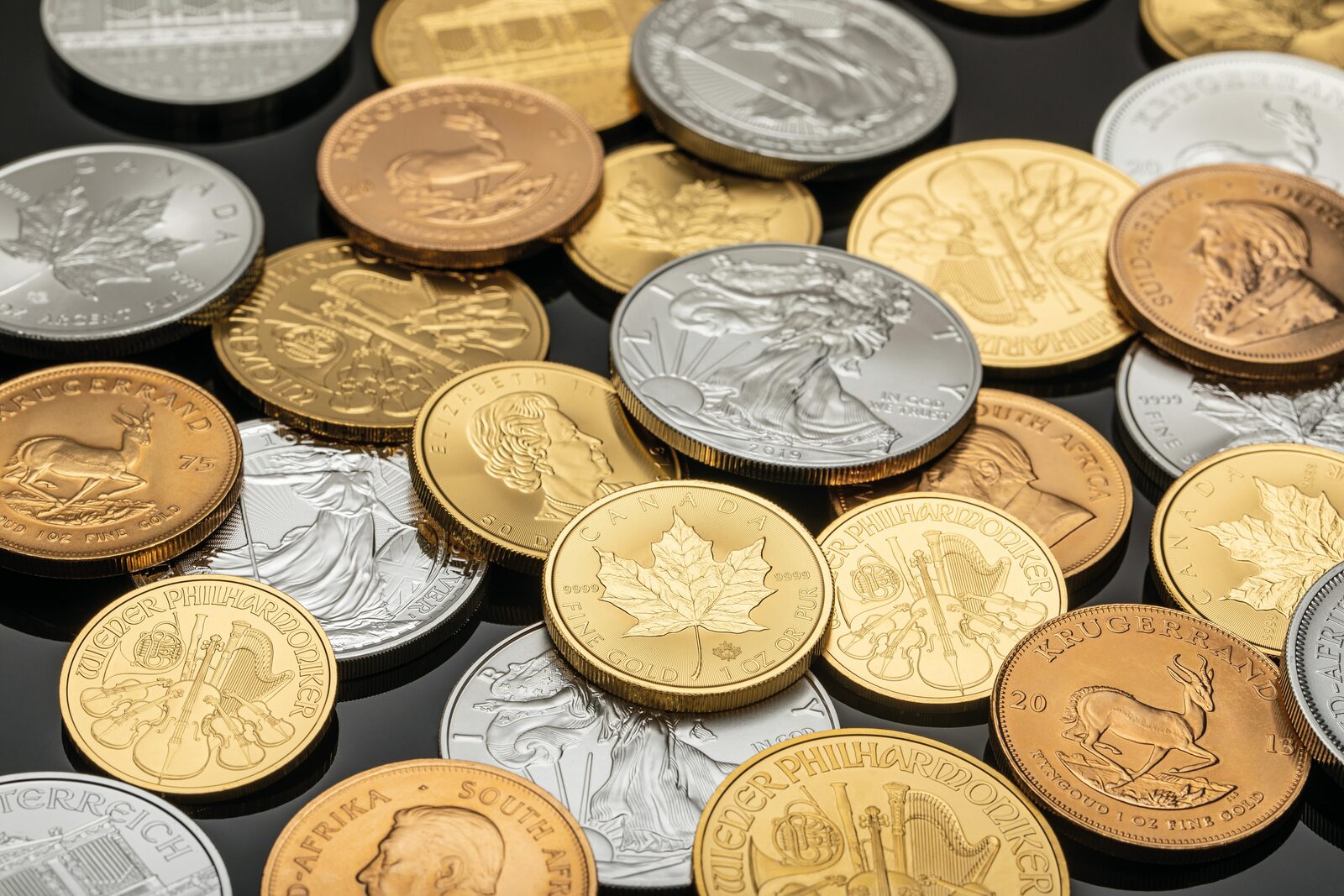
Thomas Pesendorfer, then chief engraver at the Austrian Mint, designed both faces in 1989. The obverse carries the great pipe organ of the Golden Hall in the Vienna Musikverein, the room the Vienna Philharmonic Orchestra calls home, treated as an architectural study rather than a portrait. The reverse gathers eight instruments: four violins arranged around a cello in the foreground, with a Vienna horn, a bassoon, and a harp set behind them.
The lettering is in German, which is uncommon among the world’s major bullion coins. The 1989 one ounce piece reads REPUBLIK OSTERREICH, then the weight line 1 UNZE GOLD 999.9, the date, and the denomination. The reverse simply says WIENER PHILHARMONIKER. There is no motto, no portrait, no heraldry. For a bullion coin, that is a quiet piece of design confidence.
Are gold Philharmonics a good investment? Start with the specifications
The Philharmonic is struck in .9999 fine gold, twenty four karat. The one ounce coin weighs 31.103 grams, measures 37.0 millimetres across, and runs 2.0 millimetres thick. The family filled out over twenty five years rather than arriving complete: the one ounce and quarter ounce came first in 1989, the tenth ounce followed in 1991, the half ounce in 1994, and a twenty fifth ounce size was added in 2014.
Face values today are 100, 50, 25, 10, and 4 euros, running from the one ounce down to the twenty fifth. Before the euro, the same coins were denominated in schillings, with 2,000 schillings on the one ounce piece and 1,000, 500, and 200 on the halves, quarters, and tenths. The Austrian Mint also issues a one ounce silver Philharmonic, introduced in 2008 with a face value of 1.50 euros, and a platinum version that arrived in 2016.
So the answer to the question people actually type into a search box is less about the coin and more about the metal. Anyone asking whether gold Philharmonics are a good investment is really asking two separate questions: whether they want gold, and whether this particular wrapper is a sensible way to hold it. The first question is the bigger one, and our rules of gold deal with it directly. The second has a fairly clean answer.
The euro face value is the real curiosity
When Austria adopted euro cash in 2002, the Philharmonic’s denomination converted with it, and the one ounce coin became a 100 euro piece. That left the Philharmonic as the only bullion coin in the entire eurozone carrying a euro face value, and it remains legal tender in Austria alone.
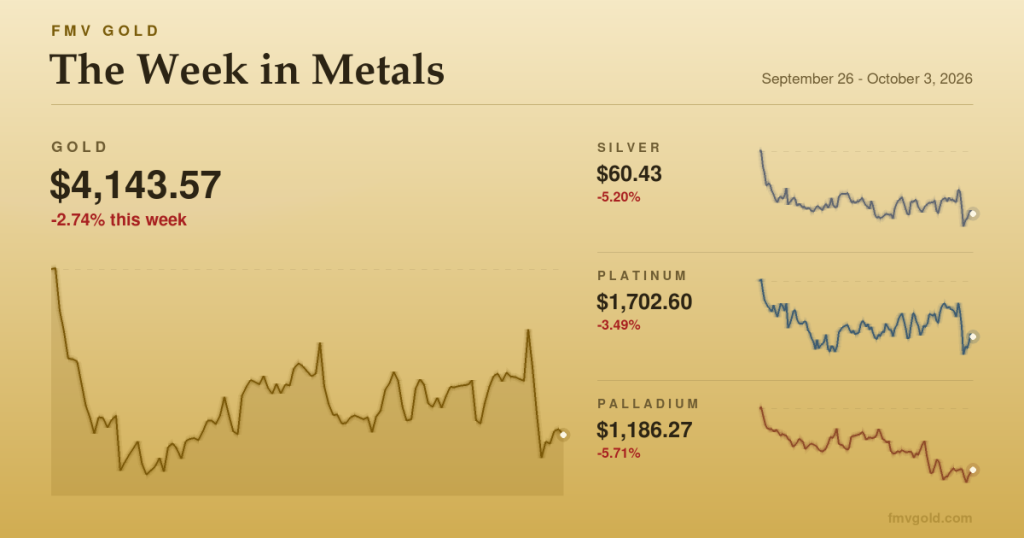
Treat that face value as a legal formality rather than a number that means anything. With spot gold trading near $4,140 an ounce in early October 2026, a 100 euro legal tender marking on a one ounce coin is a rounding error against the metal inside it. Face value exists so the coin qualifies as coinage. It has never been a floor under anything. The real floor is the metal value, and even that is a floor rather than a price, a distinction we walk through in how valuation actually works.
Where it sits next to the Eagle, the Krugerrand, and the Maple Leaf
The useful comparison is not aesthetic. It is metallurgical. The American Gold Eagle and the Krugerrand are twenty two karat coins, alloyed to make the surface harder and more forgiving of handling. The Philharmonic and the Canadian Maple Leaf sit at the other end, essentially pure gold.
Pure gold is soft. That is simply what the metal is, and it is why alloyed coins exist at all. A .9999 coin with large open fields will take a fingerprint, a bag mark, or a careless slide across a desk and keep the evidence. None of that touches the metal value, but it can matter if the coin is ever submitted for grading or sold into a market that cares about surfaces. The practical response is unglamorous: leave the coins in their tubes or capsules, handle them by the edge, and resist the urge to admire them often.
Among the European classics, the Philharmonic plays a different role from a gold sovereign. The sovereign is a nineteenth century circulating coin that became a bullion staple. The Philharmonic was purpose built for bullion buyers from its first year, which is why it comes in clean fractions of an ounce and the sovereign does not.
Big Phil, the 2004 outlier
In 2004 the Austrian Mint marked fifteen years of the program with a Philharmonic containing 1,000 ounces of gold, 37 centimetres across, carrying a face value of 100,000 euros. Fifteen were made. They were far too large for standard coining presses, so the relief was sculpted by computer and finished by hand, and Pesendorfer’s designs were carried over intact.
Nobody is buying one of those. The story matters for a different reason: it tells you the Austrian Mint treats this program as a flagship rather than a line item, which is part of why the design has gone untouched for more than thirty five years while other mints refresh their bullion reverses on a schedule.
What a buyer should actually weigh
If you have got as far as asking whether gold Philharmonics are a good investment, three things decide it, in order.
- Recognition. A coin is only as liquid as the dealers around you are willing to treat it. The Philharmonic has four years at the top of the global sales tables behind it, in 1992, 1995, 1996, and 2000, and decades as Europe’s volume leader. It is a known quantity on both sides of the Atlantic, though in the United States it is a step less familiar than the American Gold Eagle.
- Premium, not price. Philharmonics trade as bullion. They sit in the same tier as other high volume sovereign mint coins, which means the markup over metal is modest and the design is not something you are paying a collector premium for. Compare the spread you are quoted on the way in against what you would be offered on the way out, and compare that across more than one of the firms in our dealer directory. That round trip, not the design, is where the money is.
- Dates do not matter much. With a few exceptions, bullion Philharmonics are bought and sold on metal. Paying extra for a specific year, absent a documented reason, is usually paying for nothing.
One technical note for retirement accounts: at .9999 fine, the coin clears the .995 minimum fineness the tax code applies to gold bullion held in a precious metals IRA. Eligibility also depends on custody and dealer arrangements, so confirm the specifics with your custodian rather than assuming.
The honest summary is that the Philharmonic is a well made, widely recognised, low drama way to own an ounce of gold, with a design that has aged better than most. It will not outperform the metal, because it is the metal. That is the whole point of it.