
Architecture can make compelling coin art, and the Royal Canadian Mint chose one of Canada’s most recognizable interiors for its September 2026 gold program.
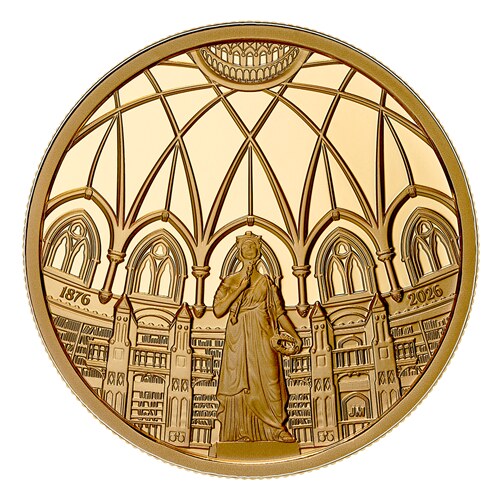
Released September 1, the $200 Pure Gold Coin (150th Anniversary of the Library of Parliament) features John Mantha’s view upward from the base of the Queen Victoria statue into the building’s elaborate dome. King Charles III appears on the obverse in Steven Rosati’s effigy.
The Mint’s product specifications identify the coin as 99.99% pure gold, weighing 15.43 grams, with a proof finish and a stated mintage of 800.
The $200 Is a Denomination, Not a Gold Calculation
This is where buyers need to resist shortcut arithmetic.
The $200 Canadian face value does not tell you how much gold the coin contains. The issuer’s specifications do that.
At 15.43 grams and 99.99% purity according to the Royal Canadian Mint, the coin contains about 0.496 troy ounce of fine gold, just under half an ounce, not one troy ounce. Buyers comparing it with a one-ounce U.S. gold product should therefore compare actual fine-gold content rather than the large denomination stamped on the Canadian piece.
The separate $20 silver Library coin is a different product with an exterior architectural design, ultra-high relief and selective fall coloring. Its specifications should not be transferred to the gold coin.
What Are You Paying for Beyond Gold?
For an architectural collector, the answer is clear: low stated mintage, specialized proof manufacture, detailed interior engraving and a national heritage theme.
For a gold buyer, a second question follows: how does that collector premium compare with familiar U.S. alternatives carrying straightforward U.S. Mint specifications and potentially broader recognition among American dealers?
That is a comparison question, not an authenticity accusation.
The Royal Canadian Mint is the identified issuer and publishes composition, weight, design and mintage data. A particular secondary-market example still has its own provenance and seller-authenticity questions, just as any valuable coin does.
Documentation such as an original invoice, packaging or reputable dealer record can help establish sourcing. None of those items changes the assay specification, but they can improve confidence in the chain of ownership.
The FMV Gold View
This is an attractive specialist collectible. It should be evaluated as one.
First calculate its actual fine-gold content. Then decide whether the Library theme, proof execution and limited issue justify the additional premium compared with more recognizable American choices.
A denomination tells you what the coin says. Specifications tell you what the coin contains. Compare both at FMVGold.com.
Image: Royal Canadian Mint; design by John Mantha.