
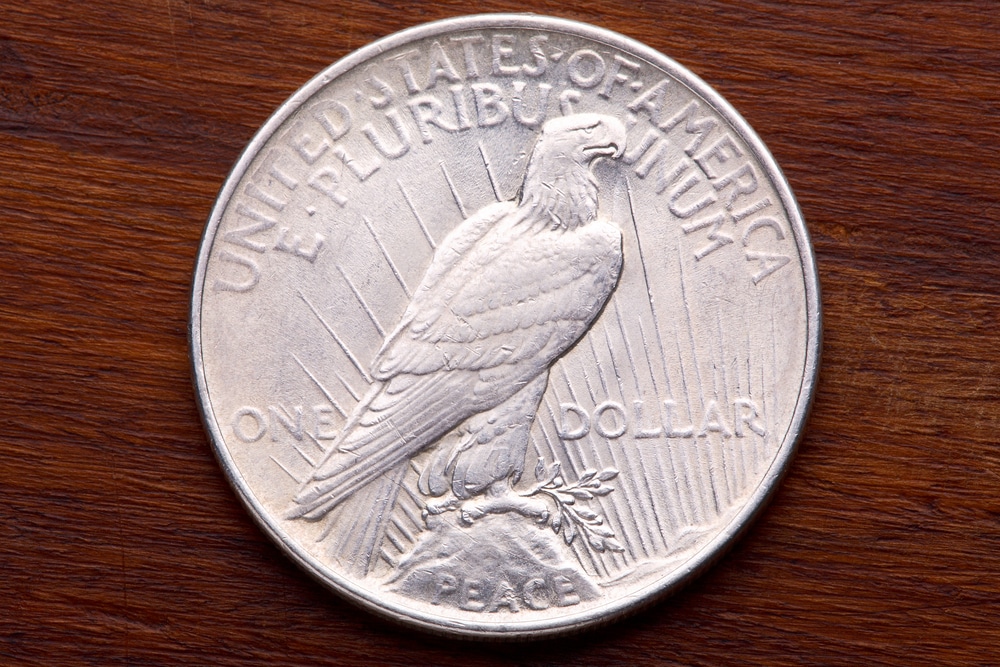
Most American coins were designed in a committee room. The Peace dollar was designed in a mood. It arrived just after the First World War, when a war-weary country wanted its money to say something hopeful, and for a few years the largest silver coin in an American pocket carried a single word on its back: PEACE. A century later it remains one of the most collected United States coins, and one of the easiest for a new buyer to misunderstand.
A dollar minted to mark the end of a war
The story starts with silver, not sentiment. The Pittman Act of 1918 authorized the Treasury to melt hundreds of millions of silver dollars, and roughly 270 million were destroyed, much of the metal shipped abroad. The same law required the government to strike replacements, so silver dollar coinage came roaring back in 1921. The old Morgan design filled the gap first, but numismatists lobbied for something new to mark the return of peace.
A design competition brought in Anthony de Francisci, an Italian-born sculptor who modeled Liberty on his own wife, Teresa. His original reverse showed an eagle breaking a sword, meant to signal the end of fighting. Readers saw surrender and disarmament instead, and the objection was loud enough that the sword was quietly re-engraved away before the first coins struck in December 1921. What remained was a bald eagle at rest, clutching an olive branch, watching a sunrise.
What a Peace silver dollar actually contains
Underneath the symbolism, a circulation Peace dollar is a standard American silver dollar. It weighs 26.73 grams, measures about 38 millimeters across, and is struck in 90 percent silver and 10 percent copper. That works out to 0.7734 troy ounces of pure silver, the identical silver weight as a Morgan dollar. The copper is there for durability, not value.
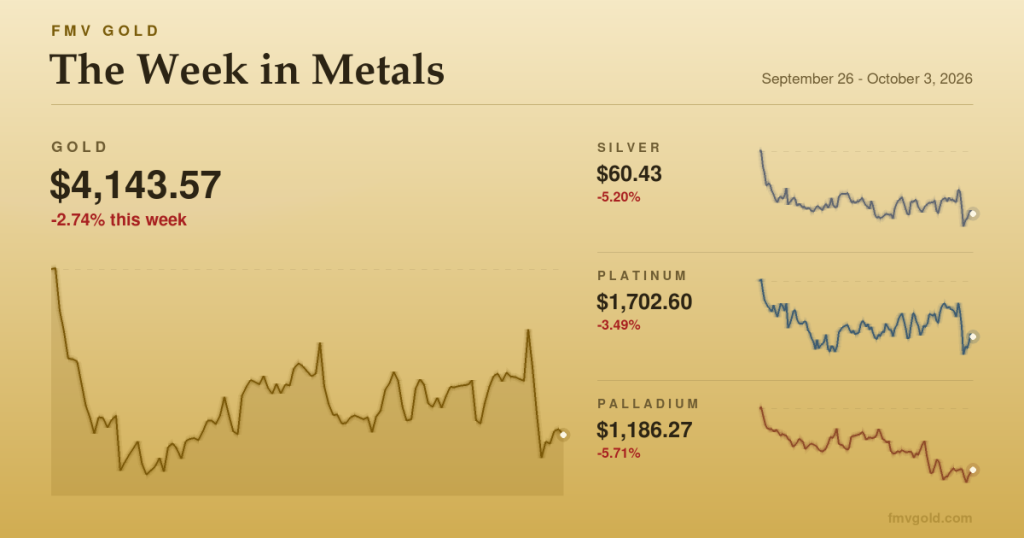
That silver content is the coin’s metal floor. With silver trading around 63 dollars an ounce in early August 2026, up roughly two-thirds over the prior year, the metal value in a common Peace dollar has climbed a long way from where it sat a decade ago. Metal value is a floor, though, not the whole story: even the most common dates carry some collector premium over their silver, and the scarce ones trade well above melt on demand alone. You can track the underlying metal on our markets page.
The design ran from 1921 through 1928, paused, then returned for two final years in 1934 and 1935. Across those ten years of issue the coins came from three mints: Philadelphia, which used no mint mark, Denver with a D, and San Francisco with an S. The mint mark sits on the reverse, below the word ONE, near the eagle’s wing.
The dates that matter to buyers
Common Peace dollars are genuinely common, and that is a strength for a buyer who mainly wants recognizable 90 percent silver. A handful of dates, though, do the heavy lifting for collectors.
- 1921 high relief. The first year was struck in a dramatic high relief that never stacked or wore well, so the Mint flattened the design in 1922. That makes the 1921 a one-year design type and a perennial favorite.
- 1928 Philadelphia. With just 360,649 pieces, the 1928-P is the lowest-mintage regular issue in the series and the classic key date. Because it came from Philadelphia it wears no mint mark, which is exactly why counterfeiters like to add a fake date to a common coin.
- 1934-S. Its mintage was not the smallest, but few were saved in top condition, so it is scarce and expensive in mint state while remaining affordable well-worn.
The lesson for a first-time buyer is that condition and date drive numismatic value far more than the silver does. A worn common date is a silver coin with a little history attached. A certified key date is a collectible that happens to be made of silver.
The ghost of 1965: the 1964-D Peace dollar
The strangest chapter came after the series looked finished. In August 1964 Congress authorized 45 million new silver dollars, and in May 1965 the Denver Mint actually struck 316,076 of them, dated 1964 with a D mint mark. Almost immediately the plan collapsed, as rising silver prices and fears the coins would be hoarded rather than spent turned the idea into an embarrassment.
The Mint reported melting all 316,076 coins under heavy security, verifying by weight rather than by counting individual pieces. In 1973 the Treasury declared the 1964-D illegal to own, treating any survivor as government property subject to seizure with no statute of limitations. No authenticated example has ever surfaced in public. It is, in effect, an American coin that was born and executed in the same month, and it is a useful reminder that a coin’s legal status can matter as much as its metal.
The 2021 revival and the modern coin
For the design’s centennial, the Mint brought the Peace dollar back in 2021 as a collector issue and has continued producing it in recent years. The modern version is not quite the coin your grandfather carried: it is struck in 0.999 fine silver and holds about 0.858 troy ounces of the metal, more pure silver than the classic 90 percent piece. These are sold as commemoratives to collectors rather than made for circulation, so they trade on Mint issue demand and finish, not on the century of wear and history behind an original. If you want a modern government silver coin to simply stack, the Silver Eagle is the more common choice; the revived Peace dollar is bought for the design.
Are Peace silver dollars a good investment?
The honest answer is that “Peace dollar” describes two different purchases. A roll of worn common dates is essentially a way to own recognizable 90 percent silver in a form buyers everywhere will accept, and its value rises and falls mostly with the silver price. A certified 1928-P, a crisp 1934-S, or a lustrous 1921 high relief is a numismatic coin whose price is set by rarity, grade, and collector demand, and can move independently of the metal entirely.
For most people the sensible path runs in that order. Common dates give you liquidity and a metal floor with modest downside. Key dates reward knowledge and patience, and they are where counterfeits and altered mint marks concentrate, so a certified coin from a recognized grading service is worth the premium once you move past bullion-grade material. None of this is investment advice, and silver can be volatile, but the Peace dollar’s blend of history, high recognition, and real silver content is a large part of why it has stayed a collector staple for a hundred years. You can browse the full series on our Peace dollar pages, compare it against the rest of the silver and gold catalog, or read how buying and selling works before you start.