

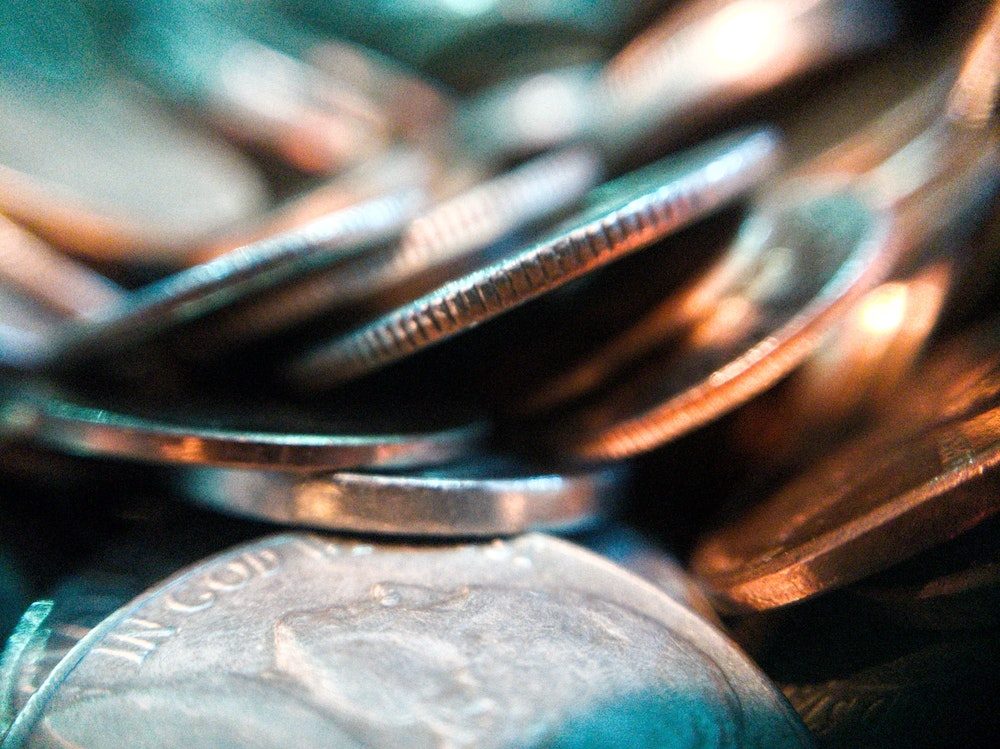
Run a thumbnail around the edge of a quarter and you feel it right away: a tight row of grooves, close enough together that they almost blur. Do the same with a cent or a nickel and the edge is smooth. Most people never think about the difference. Collectors eventually do, and the answer goes back to a problem that worried mint officials for centuries: people quietly helping themselves to the metal in their money.
So, why do coins have ridges? The short version is theft prevention. The longer version involves a famous scientist, a steam press in Philadelphia, a few odd varieties that specialists still hunt for, and a modern dollar coin that left the Mint missing its edge entirely.
The problem the ridges solved: clipping
For most of history a coin’s value sat in its metal. A silver coin was worth its silver, and a gold coin was worth its gold. That created a temptation. If you shaved a sliver off the edge of every coin that passed through your hands, you could collect the shavings, melt them, and still spend the slightly lighter coins at full face value. The practice was called clipping, and it was common enough to be a real drain on a currency.
Early die cutters tried to fight it with border designs such as rows of dots or small toothlike denticles around the rim. If the border was missing, the coin had been tampered with. The trouble, as NGC’s David Lange has written, was that coins of the period were often struck off center, so those border elements were frequently missing on perfectly honest coins.
Better machinery offered a better answer. Once screw presses made coins rounder and more uniform, mints began putting a pattern on the edge itself. According to Lange, thicker gold and silver coins usually carried lettering on the edge, often a Latin legend (British coins used DECUS ET TUTAMEN), while smaller silver and gold coins typically had reeded or engrailed edges. Either way, the logic was the same. A clipped coin would show broken letters or a smooth patch where the grooves should be, and anyone could spot it.
Isaac Newton is part of this story. He became Warden of England’s Royal Mint in 1696, and accounts of his tenure, including ones from the Perth Mint and Mental Floss, credit him with using reeded edges, among other measures, to fight clippers and counterfeiters. Ridged edges also made a coin harder to fake, since a counterfeiter now had to reproduce one more fiddly detail.
How the U.S. Mint handled edges
The young American Mint inherited the same thinking. Precious metal coins got edge protection, and base metal coins mostly did not. Lange notes that edge devices were dropped from the copper minor coins after 1795 because nobody was going to bother clipping them. That is still the reason your cent and nickel are smooth.
Silver and gold were a different matter, and early on lettering did much of the work. Capped Bust half dollars from 1807 through 1836 carry the edge inscription FIFTY CENTS OR HALF A DOLLAR, as CoinWeek’s guide to the series describes, with a star separating the words on some years and vertical lines on others. If you want the full design story of that coin, our history of the U.S. half dollar walks through it.
The switch to reeding on the half dollar came with technology. In 1836 the Mint began moving from hand-operated presses to steam power, and Christian Gobrecht redesigned the half dollar for the new equipment. Dealer and author Jeff Garrett points to the conversion to steam as the main reason the edge changed from lettered to reeded that year. Reeded collars themselves were not new: Lange writes that the Mint used them at least as far back as the 1820s.
Gold followed the same rule for decades. Per Lange, every U.S. gold issue carried a reeded edge until 1907, when the new eagles and double eagles introduced edge designs without reeding. That 1907 redesign is the one that gave collectors the Saint-Gaudens double eagle.
How many ridges are on a quarter?
Here is the number people actually search for. According to the U.S. Mint’s own specifications, today’s coins carry:
- Dime: 118 reeds
- Quarter: 119 reeds
- Half dollar: 150 reeds
- Cent and nickel: plain edges
- Dollar: lettered edge rather than reeding
Those counts have not always been fixed. Lange points out that the number and size of reeds was never written into law, and mints could make collars in house or order them from outside suppliers. The results show up in the variety books. Carson City dimes from 1871 through 1874 have 89 broad reeds, while Philadelphia dimes of the same years have 113 narrow ones. The 1921 Morgan dollar normally shows 189 reeds, but a wide reeding variety has 157. Specialists in the Morgan dollar series check edges for exactly this reason, and some Roosevelt dimes from the 1946 to 1964 era come in fine and coarse reeding as well.
Why do coins have ridges if they aren’t silver anymore?
This is the fair follow-up question. The Coinage Act of 1965 took silver out of the dime and quarter and cut it in the half dollar, as our piece on when the U.S. stopped making silver coins explains. A clad quarter’s metal is worth far less than its face value, so nobody has a reason to clip it.
The ridges stayed anyway. Mental Floss notes that the government saw no need to make or buy new dies and collars when it changed the metal, so reeding carried on out of tradition and backward compatibility. Lange is blunter: on coins without intrinsic value, he writes, reeded edges serve no useful purpose and survive for familiarity and tradition.
There is one practical benefit people mention. Reeding lets you tell coins apart by touch, which helps anyone sorting change in a dark pocket and especially helps people who are blind or have low vision. A dime and a cent are close in size, and the grooved edge on one and the smooth edge on the other is the quickest way to tell them apart without looking. If you want more on the denomination, see our history of the U.S. dime.
The dollar coin that lost its edge
Edge lettering made a modern comeback with the Presidential $1 coin series, which began with George Washington in February 2007. On those coins the edge carried the year, the mint mark, E PLURIBUS UNUM, and IN GOD WE TRUST. As APMEX explains, the lettering was added in a separate step after the coin was struck.
That second step is where things went wrong. In March 2007 the Mint announced that some Washington dollars had been released without their edge inscriptions. Estimates of how many vary widely, from PCGS’s Ron Guth estimating at least 50,000 to APMEX’s figure of roughly 250,000, so treat any single number with caution. Because the missing lettering included the national motto, the coins picked up the nickname “Godless” dollars.
Congress responded. The Consolidated Appropriations Act of 2008 (H.R. 2764), signed in late December 2007, moved IN GOD WE TRUST off the edge and onto the face of the Presidential dollars, a change that applied from 2009. The edge kept the date, mint mark and E PLURIBUS UNUM. For more on why the small dollar never caught on with the public, read why the dollar coin failed.
What this means when you look at your own coins
A coin’s edge is the part most people never look at, and it often tells you more than you’d expect. On older silver and gold, a clean, complete edge is a sign the coin has not been tampered with. On certain dates, the reed count separates a common coin from a variety collectors seek out. On modern dollars, a missing or doubled edge inscription is the difference between pocket change and an error coin.
None of that changes how melt value works on precious metal coins, which is about weight and purity, not grooves. But the next time you sort through a jar of change or a roll of old silver, flip a few coins on their side. If a grandchild ever asks you why do coins have ridges, you’ll have the whole story. The ridges are a small, quiet piece of American coinage history, left over from a time when every coin was worth its metal. You can browse the series we track in our coin directory, and our how it works page explains how we value what you own.