
Open a monster box of Silver Philharmonics and you’ll find a pipe organ staring back at you five hundred times. That organ stands in the Golden Hall of Vienna’s Musikverein, home of the Vienna Philharmonic orchestra, and since February 2008 it has been the face of one of the most widely traded silver bullion coins in the world. American buyers who grew up on Silver Eagles often meet the Philharmonic later, usually when a dealer offers it as an alternative. So it’s worth asking plainly: are Silver Philharmonics a good investment, and what exactly are you holding when you own one?
This profile walks through the coin’s origins, its specifications, how many have been struck, and where it fits in a silver holding. As always on FMV Gold, we stay away from product prices and focus on the metal and the coin itself.
Where the Silver Philharmonic came from
The Austrian Mint (Münze Österreich) built the Philharmonic name on gold first. The gold Vienna Philharmonic arrived in October 1989 and became one of the best selling gold bullion coins anywhere. Nearly two decades later the Mint gave the same design to silver. Its press release announced that the new coin would go on sale worldwide on Friday, February 1, 2008, struck from one troy ounce of .999 fine silver.
The timing turned out to be good. The coin launched into the stretch of financial stress that ran from 2008 into the early 2010s, when demand for silver bullion climbed sharply, and the Philharmonic quickly found buyers well beyond Austria. Wikipedia’s account of the series notes that the silver coin ranked third among the world’s top selling bullion coins in 2013.
Design and specifications
Both sides were designed by Thomas Pesendorfer, who served as the Austrian Mint’s chief engraver. The obverse shows the great organ of the Golden Hall with the legend REPUBLIK ÖSTERREICH, the inscription 1 UNZE FEINSILBER (one ounce fine silver), the year, and the face value. The reverse gathers the orchestra’s instruments: a Vienna horn, a bassoon, a harp, violins, and a cello at the center, under the words WIENER PHILHARMONIKER and above the word SILBER.
The design never changes. Only the date moves from year to year, which is part of why the coin trades so simply. Nobody has to remember which reverse belongs to which year.
- Silver content: one troy ounce (31.103 grams) of .999 fine silver
- Diameter: 37 mm, a little smaller across than a Silver Eagle
- Thickness: about 3.2 mm
- Edge: plain (the gold Philharmonic has a reeded edge)
- Face value: 1.50 euro, legal tender in Austria
- Packaging: tubes of 20, with 25 tubes to a 500-coin monster box
That face value deserves a footnote. The Philharmonic is legal tender in Austria, not across the whole eurozone, and as the Mint itself has put it, bullion coins of this kind are never meant to be spent. A coin holding a full ounce of silver is worth vastly more as metal than its 1.50 euro denomination. The face value matters mostly because it makes the piece a government-issued coin, which helps with recognition when you sell.
How many have been struck
The Austrian Mint strikes Philharmonics to meet demand, so annual mintages swing with the silver market. Figures published in the Numista coin catalog (and matched by onlinecoin.club for the years both list) tell the story:
- 2008, the first year: about 7.8 million
- 2011, the peak: about 17.9 million
- 2013: about 14.5 million
- 2017, the low point: about 2.1 million
- 2020: about 7.2 million
- 2021 and 2022: about 12.3 million each
- 2023: about 10.0 million
Those are enormous numbers. Even the leanest year produced more than two million coins, which tells you something important: no regular date of the bullion Silver Philharmonic is scarce. The first-year 2008 coin and a low-mintage year like 2017 may draw some collector attention, particularly in high-grade slabs, but for most buyers every date is simply an ounce of silver with an organ on it.
Are Silver Philharmonics a good investment for a silver holding?
Whether Silver Philharmonics are a good investment depends on what you want silver to do for you. Bullion coins are a way to own the metal itself. Their value follows the spot price of silver, plus whatever premium the market attaches to the format. The Philharmonic doesn’t change that arithmetic, but it brings a few real strengths to it.
Recognition. The coin is backed by a national mint, carries a face value, and has been struck in the tens of millions with one unchanging design. Dealers on both sides of the Atlantic know it at a glance, which keeps resale simple.
Purity and IRA basics. At .999 fine, the Silver Philharmonic meets the fineness standard that U.S. rules generally require for silver bullion in a precious metals IRA. If that matters to you, confirm eligibility with your IRA custodian before buying, since custodians set their own approved lists.
Diversification across issuers. Some long-term holders like owning ounces from more than one sovereign mint. A stack that mixes Silver Eagles, Maple Leafs, Britannias, and Philharmonics isn’t tied to any single mint’s production schedule or reputation.
There are trade-offs, too. In the United States the Silver Eagle remains the home-team favorite, and some local buyers simply ask for Eagles by name. A Philharmonic will sell readily, but in a small-town shop it may not be the first coin the buyer reaches for. Its plain edge and soft, bright surfaces also show handling marks easily, so keep tubes closed and avoid loose-coin rubbing if condition matters to you. And in Europe, where many readers’ coins originally come from, silver coins generally carry value added tax in some form, which shapes how they’re priced and marketed there. That last point matters less to American buyers, but it explains why the coin’s European pricing doesn’t always line up with what you see at home.
Melt value and the premium question
Because the Silver Philharmonic contains exactly one troy ounce of pure silver, its melt value is the easiest calculation in bullion: one ounce times the spot price of silver. When silver moves a dollar, the metal in each coin moves a dollar. Treat that number as the floor. What you pay above it is the premium, and it shifts with supply, demand, and the size of your order. You can follow the metal side of that equation on our live markets page.
Before buying any bullion coin, compare offers from more than one source, and look at both what you’ll pay and what a dealer would pay you back. The gap between those two numbers is the true cost of owning the coin. Our dealer directory and the guide to how FMV Gold works can help you make those comparisons with clear eyes.
How the Philharmonic compares with its peers
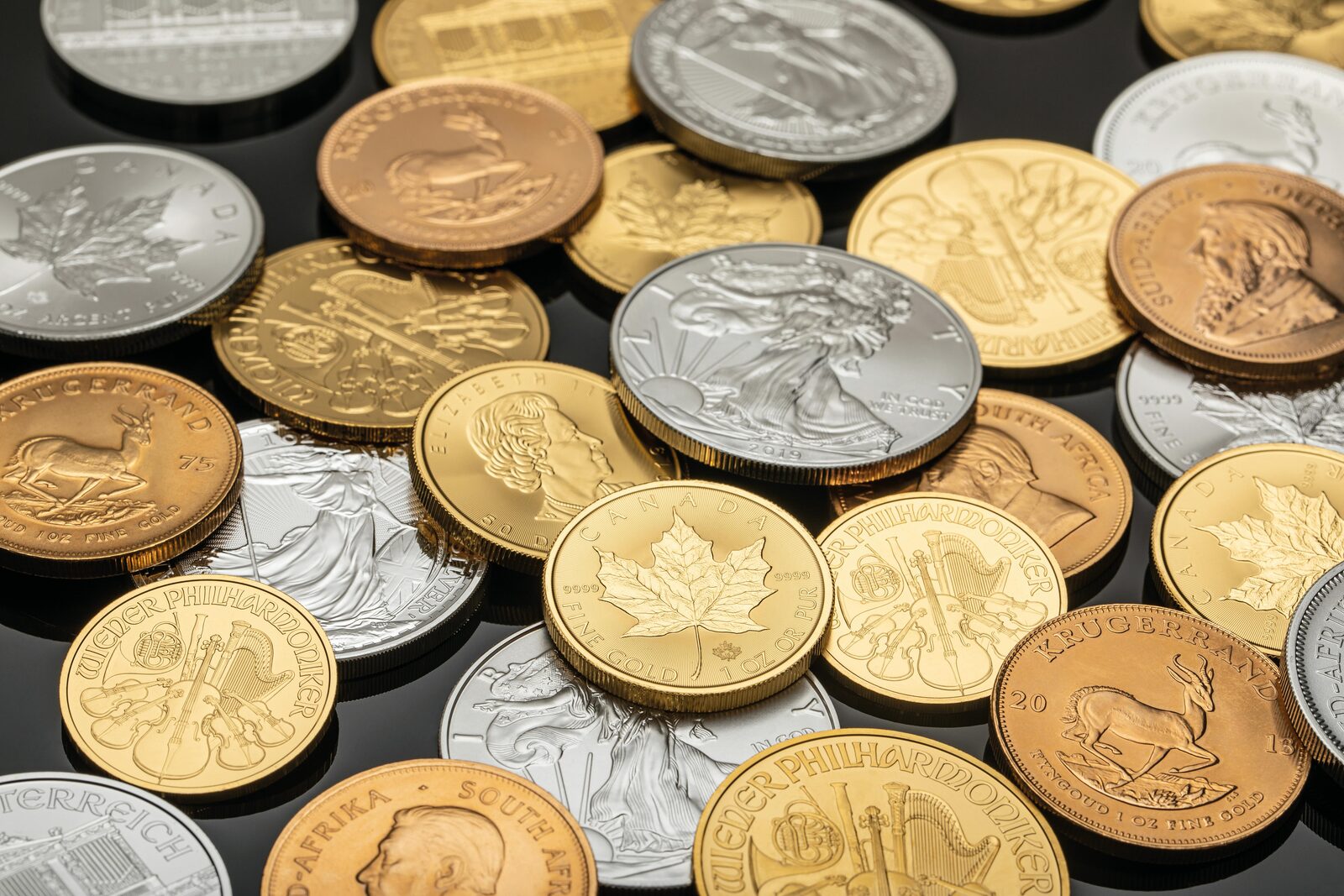
The Silver Philharmonic belongs to a family of national one-ounce silver coins, and each has its own personality. The American Silver Eagle is the most familiar to U.S. buyers. Canada’s entry is covered in our profile Are Silver Maple Leafs a Good Investment? Britain’s entry gets its own look in our Silver Britannia profile. The Philharmonic’s distinction is that it is Europe’s euro-denominated ounce, with a design honoring music instead of a national symbol or allegorical figure.
If you’re building a holding and want a framework for how much silver belongs in it, our Rules of Gold lays out the principles we lean on. The short version: buy the ounces you understand, keep your records, and don’t pay collector premiums for coins that are, at heart, bullion.
The bottom line
The Silver Philharmonic is a well made, widely recognized ounce of .999 silver from a respected sovereign mint, with a design that hasn’t changed since 2008. It won’t become a rarity, because the Austrian Mint strikes millions every year, and it isn’t meant to. Its job is to hold silver in a form that is easy to buy, easy to store, and easy to sell. For a buyer who wants a European counterpart to the Silver Eagle in the same stack, it does that job quietly and well.
This article is for general information only and is not investment advice. Silver prices are volatile, and past performance does not guarantee future results.