

Why supply-side structure matters to a store of value
Most gold commentary is about demand — rates, the dollar, central banks, investor flows. But gold’s identity as a long-term store of value rests heavily on the supply side: the metal is valuable in part because it is scarce and difficult to produce, and because its above-ground stock grows only slowly relative to the total already mined. Anything that durably raises the cost or constrains the pace of new supply reinforces that scarcity. For investors holding gold across decades rather than quarters, these structural forces are arguably more relevant than any single Fed meeting.
Three currents dominate: ESG and environmental regulation, community and social license, and technology.
ESG and environmental regulation: a higher bar to build
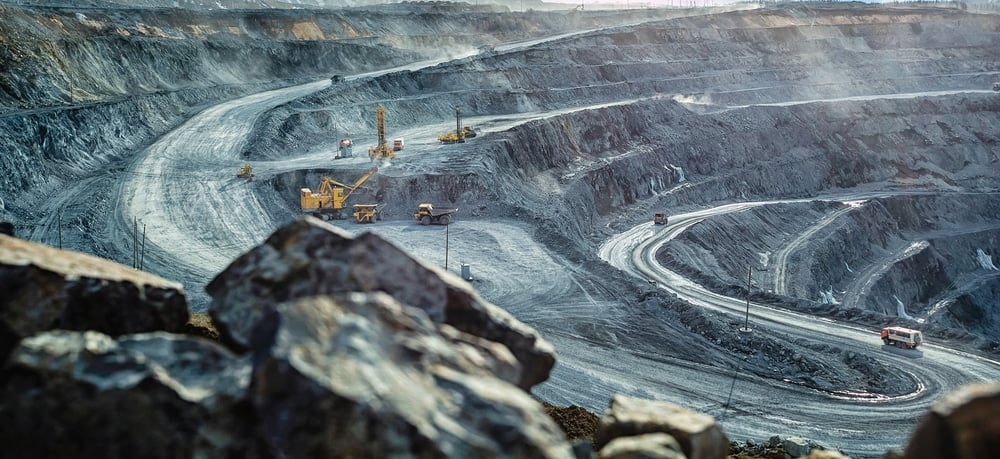
ESG — the framework for assessing environmental, social, and governance factors — has moved from a reporting nicety to a material constraint on mine development. Gold mining is energy- and water-intensive, disturbs land, and historically used processes (such as cyanide leaching) that carry environmental risk. As standards tighten across jurisdictions, the consequences for supply are concrete:
- Longer permitting timelines. Environmental review, impact assessment, and approval for a new mine can now stretch over many years — sometimes a decade or more from discovery to production. Every added year of review delays supply and raises the capital cost of a project.
- Higher operating and compliance costs. Stricter rules on water use, tailings (the waste left after ore processing), emissions, and site rehabilitation add ongoing expense and capital outlay.
- A narrower set of buildable projects. Some deposits that would once have been developed are now uneconomic or impermissible once full environmental costs are counted.
The investment implication is subtle but important: a higher regulatory bar tends to constrain the growth of mine supply and raise the marginal cost of production. All else equal, that is supportive of the metal’s long-run scarcity value, even as it squeezes the economics of individual mining companies.
Social license: consent as a gating factor
Closely tied to the “S” in ESG is the concept of a social license to operate — the acceptance a mining project must earn from the communities and, frequently, the Indigenous peoples whose land and water it affects. Increasingly, this is not optional goodwill but a practical prerequisite: projects that fail to secure genuine community consent face protests, legal challenges, and political reversals that can stall or kill development regardless of the geology or the permits.
This matters for supply because the world’s remaining large, high-grade, easily-accessible gold deposits are dwindling. New supply increasingly comes from more remote, more technically challenging, or more socially sensitive locations — exactly where community and jurisdictional risk is highest. The result is another structural brake on how quickly new production can come online, and a growing premium on operators who can navigate these relationships.
Technology: the counterweight
Pushing in the opposite direction is a wave of technological change that could lower costs, extend the life of existing operations, and unlock previously marginal resources.
- Automation and digitalization. Autonomous haulage trucks, remotely operated equipment, and data-driven mine planning improve safety and productivity and can lower the operating cost per ounce — partially offsetting rising regulatory and labor costs.
- Exploration technology. Advances in geophysical sensing, data analytics, and machine-learning-assisted targeting are improving the odds of finding new deposits and better defining known ones. This matters because the industry has struggled to replace reserves at the pace it depletes them; better exploration tools are a direct response to that challenge.
- Processing innovation. New and refined extraction methods — including efforts to reduce or replace cyanide and to economically recover gold from lower-grade ore — can turn uneconomic resources into viable supply and reduce environmental footprint at the same time.
Technology is therefore the key uncertainty in the supply outlook: it is the force most likely to relieve the cost and scarcity pressures that ESG and social-license constraints impose. How the tug-of-war between the two resolves will shape the cost curve for years.
Recycling: the flexible second source
Gold has a second supply stream that distinguishes it from most commodities: recycling. Because gold is durable and rarely consumed, a large share of annual supply comes from recycled jewelry, electronics, and other scrap. This stream is highly price-sensitive — when prices rise, more old gold is sold back into the market, adding supply; when prices fall, recycling dries up.
That responsiveness gives the gold market a built-in stabilizer that pure mine supply lacks, and it partly insulates the market from mine-supply disruptions. Over the long run, improving technology for recovering gold from electronic waste — a growing and gold-rich waste stream — could make recycling an even more significant and more efficient source, though it is unlikely to displace mining as the primary supply pillar.
Putting it together: the long-term supply picture
For a multi-decade holder, the structural supply story nets out to a few durable themes:
- Mine supply growth is structurally constrained. Tighter environmental rules, longer permitting, harder-won social license, and the depletion of easy deposits all point toward supply that is difficult to expand quickly and rising in marginal cost. This underpins, rather than undermines, gold’s scarcity narrative.
- Technology is the swing factor. Automation, better exploration, and improved processing could meaningfully offset cost pressures and extend supply — the single biggest source of uncertainty in the long-run outlook.
- Recycling adds elasticity. A price-responsive recycled-supply stream cushions the market and may grow in importance, but does not change the fundamental scarcity of the metal.
- Slow forces, durable effects. None of these currents moves the price next week. They operate over years and decades — which is precisely the horizon on which gold is held as a store of value, making them central to the long-term thesis rather than peripheral to it.
What investors should watch next
- Permitting and regulatory trends in major producing jurisdictions — the clearest barometer of how hard it is becoming to bring new supply online.
- Reserve replacement across the industry — whether miners are discovering and developing enough to offset depletion, a multi-year signal of future supply.
- Adoption of cost-reducing technology — the pace at which automation, advanced exploration, and cleaner processing actually lower production costs.
- The trajectory of recycled supply — especially advances in recovering gold from electronic waste, and how recycling responds across price cycles.
This article is informational analysis of long-term structural trends, not investment advice, and does not forecast prices or recommend any action.
More from this series · FMV Gold News & Analysis
- Gold Whipsaws Into the Fed Meeting: A Mid-June Recovery That Settled Nothing
- Gold and the Macro Machine: How Rates, Inflation, and the Dollar Set the Tone
- Two Metals, Two Jobs: Why Gold and Silver Play Different Roles in a Portfolio
- The Official Bid: How Central Banks Shape the Gold Market
- Five Ways to Own Gold — and What Each One Actually Gets You
- When the Hedge Gets Tested: Tail Risks in the Gold Market