

Analysis
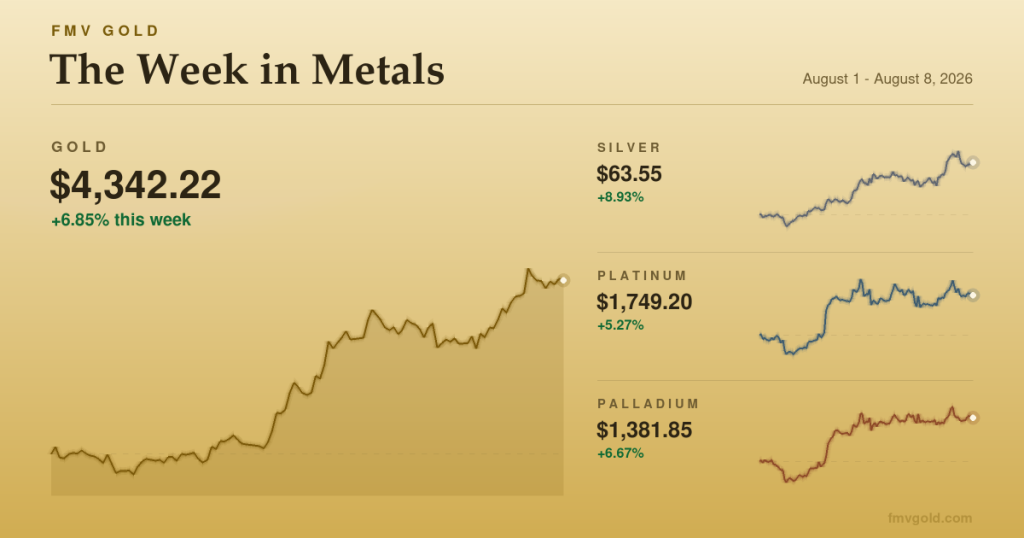
In late January of this year, gold touched the highest price in recorded history — nearly $5,600 an ounce on the spot market, a level that would have sounded like satire three years earlier. It was, by any measure, the greatest bull market the metal has ever known. Five months later, on July 2, one of America’s most heavily advertised gold dealers filed for bankruptcy in Los Angeles, telling the court that those same record prices had destroyed it.
Rosland Capital’s explanation deserves a moment of genuine astonishment. A gold dealer, bankrupted by a gold rally. It is the retail-finance equivalent of an umbrella shop ruined by rain. And buried in that inversion is nearly everything an ordinary investor needs to understand about how the retail precious-metals business actually works — and how little stands between a customer’s prepayment and its disappearance.
Start with what the company’s own sworn filings say, because no accusation is required here; the debtor’s account is damning enough on its own terms. According to the first-day declaration of Rosland’s chief restructuring officer, roughly 617 customers are owed at least $60 million — about $49 million in orders that were paid for but never delivered, and another $11.8 million in promises to buy metal back from customers that were never honored. The company holds, in the declaration’s words, no remaining “inventory of precious metals, coins, or bullion.” None. Its principal remaining asset, the one thing of value left to auction for the benefit of the people it owes, is its customer list.
Sit with that for a moment. The final asset of a company that spent eighteen years advertising trust is the contact information of the people who extended it.
How does a dealer end up owing $60 million of metal it doesn’t have? The mechanism, again per the company’s own account, was structural. Customers paid up front. Rosland bought the metal from suppliers months later. In a flat market, that lag is a float; in a market where gold roughly doubled between late 2023 and late 2025 and kept climbing into January, it is a slow-motion catastrophe, because every backlogged order must eventually be filled at a price higher than the customer paid. Meanwhile, the declaration discloses, sales commissions of 15 to 35 percent of gross profit were paid out the moment customer funds arrived — even on orders that were later cancelled or never fulfilled. Cash exited at the front door while obligations piled up at the back.
The filing frames record prices as the cause of death, and the timing supports the more limited claim: prices set the clock. But the company’s own numbers tell a longer story. Rosland’s revenue peaked at $151.2 million in 2021 and fell every year afterward, to $97.8 million in 2025; gross margins collapsed from 18.4 percent to 8.7 percent; the company lost money in each of its final four full years, more than $24 million in all. The model was decaying well before the fatal spike. And here is the tell: the 2024–26 rally was a boom for the industry. Dealers who sell metal they actually hold, or who hedge their obligations the moment an order is placed, experienced those same record prices as record business. Rising prices do not bankrupt a dealer with a matched book. They bankrupt a dealer who has, in effect, sold gold short to his own customers. Rosland’s filings never use the word “hedge”; the mechanics they describe are what the absence of one looks like.
None of this was visible from the outside — least of all on television, where Rosland lived. For nearly two decades its pitch ran almost unchanged on cable news: first fronted by G. Gordon Liddy, then, from 2012 on, by the actor William Devane, delivering fireside warnings about inflation, Washington, and the falling dollar, and offering gold as the tangible remedy. The spots fused safety with patriotism — a B-17 bomber, an SR-71, a replica White House briefing room, a 2024 election-season ad that urged viewers to vote and buy gold in the same breath. The targeting was the channel itself: buy enough airtime on the networks older, institution-wary Americans trust, and the audience selects itself. It worked until the very end. A spot posted in March of this year — fourteen weeks before the bankruptcy — was titled, simply, “Trust.” By then, per the filing, the vault was already empty. And when the petition finally listed the company’s unsecured creditors, the largest name not redacted was Fox News, owed $1.9 million in what appears to be unpaid advertising. The marketing machine outlived the metal.
There is no finding of fraud here, and this piece makes none. The filing discloses an SEC investigation into the company’s precious-metals IRA business and a New York Attorney General inquiry into past sales practices; both are unresolved, and the company characterizes the latter as largely inactive. What the record supports is something in a way more unsettling than a villain: a business model that was legal, advertised in plain sight, and structurally dependent on tomorrow’s customers paying for yesterday’s promises.
Because here is the part that should genuinely alarm anyone who has ever seen a gold commercial and wondered. Nobody was checking. A firm that takes a retiree’s $50,000 for future delivery of gold is not a bank, not a broker-dealer, not a futures merchant. There is no SIPC protection, no FDIC insurance, no capital requirement, no regulator who audits whether a dealer possesses the metal it has sold. The commodities laws contain a rule that almost describes this exact problem — delayed delivery to retail buyers — but it applies to leveraged and financed purchases; a customer who trustingly pays 100 percent cash up front falls outside it. Even the phrase “gold IRA” flatters the reality: the custodian who keeps the account records is regulated, but the dealer who sets the prices and sources the metal is not. When a dealer fails, prepaid customers discover they are ordinary unsecured creditors, standing in line behind everyone with better paperwork, protected by a consumer-deposit priority capped at $3,800 — a rounding error against a typical order.
And Rosland is not a novel failure. It is at least the fifth major U.S. dealer since 2014 to collapse on the same mechanism — customer prepayments used as working capital, no segregation, no hedge. The Tulving Company, 2014. Bullion Direct, 2015. Northwest Territorial Mint, 2016, whose unsecured customers recovered less than ten cents on the dollar. Lear Capital — where Rosland’s founder had previously worked in sales — went through its own Chapter 11 in 2022 amid a New York Attorney General suit. Some of those earlier cases ended in criminal convictions; nothing of the sort has been alleged against Rosland, and the distinction matters. But the recurrence is the point. The same failure, five times in twelve years, is not bad luck. It is a design flaw with a marketing budget.
The bitter closing irony belongs to the customers. They were sold gold as protection against precisely the forces — inflation, monetary excess, institutional failure — that drove the metal’s historic rise. The thesis was right. Gold delivered. Anyone who took possession of their metal, or whose IRA holdings actually reached a depository, rode the greatest rally in history. The people facing losses are those who owned not gold but a promise of gold from an intermediary who had already spent their money. The asset was exactly as safe as advertised. The company selling it was not, and no one — not the ads, not the A+ rating the Better Business Bureau maintained through the collapse, not any regulator — was positioned to tell them the difference.
That difference is the lesson worth keeping. If you buy metal, take delivery or insist on allocated, audited, insured storage in your own name. Treat any dealer who needs months to deliver what you have fully paid for as a flashing red light, whatever face is on the commercial. And if lawmakers want a modest, obvious reform, the failed cases have already written it: dealers who take prepayments should be required to segregate customer funds or hedge their delivery obligations, and to prove it. The in-stock half of the industry already operates this way voluntarily. It shouldn’t take a sixth bankruptcy to make it the rule.
The customer list will be auctioned in the coming months. Somewhere, a marketing firm will buy the names of 617 people who believed the man on television, and the pitch will begin again.
Disclosure: FMV Gold is a precious-metals pricing and data platform; it does not sell bullion. This article is informed commentary on a public bankruptcy, drawing on Rosland Capital’s own court filings and mainstream reporting; it is not investment advice. Regulatory inquiries mentioned are disclosed in the filing and are not findings of wrongdoing.