

Gold and silver have an obvious appeal inside a retirement account. The metal sits outside the banking system, it does not report earnings, and it has held purchasing power across plenty of currencies that no longer exist. What surprises many first-time buyers is how narrow the door is. The tax code does not let a self-directed IRA hold just any coin or bar. It draws a hard line between a short list of approved bullion products and everything else, which it lumps in with art and antiques as a “collectible.”
Land on the wrong side of that line and the cost is not a small fee. The IRS can treat the purchase as a distribution of your account, taxable in the year it happened, with an extra penalty if you are under 59 and a half. So before you fund a precious metals IRA, it pays to know exactly what qualifies.
What Makes Gold and Silver IRA Eligible
The rule lives in Section 408(m) of the Internal Revenue Code. Its default position is blunt: an IRA is not allowed to hold “collectibles,” and coins and metals are named right there in the list. Congress then carved out two exceptions, and every IRA eligible gold and silver product has to fit one of them.
The first exception names specific coins outright. The second lets in bullion, whether coins or bars, that meets a minimum fineness borrowed from the commodity exchanges. Miss both tests and the coin is a collectible in the eyes of the IRS, no matter how liquid or well known it happens to be.
The Fineness Bar
For bullion admitted under the second exception, the purity thresholds are fixed:
- Gold: .995 fine (99.5 percent pure)
- Silver: .999 fine (99.9 percent)
- Platinum: .9995 fine
- Palladium: .9995 fine
Those numbers mirror the delivery standards on the COMEX and NYMEX futures markets, which is the whole point. The metal has to be good enough that an exchange would accept it for settlement. Palladium is the newcomer in this group. It was not eligible at all until the Tax Increase Prevention Act of 2014 added it for metal acquired after that year.
Bars and rounds carry one more condition. They have to come from a refiner or mint the market trusts, meaning a national government mint or a refiner accredited by the LBMA, COMEX, NYMEX, or an equivalent body. A generic bar with no recognized hallmark will not clear a custodian’s review even when the stated purity looks right.
The Coins That Make the Cut
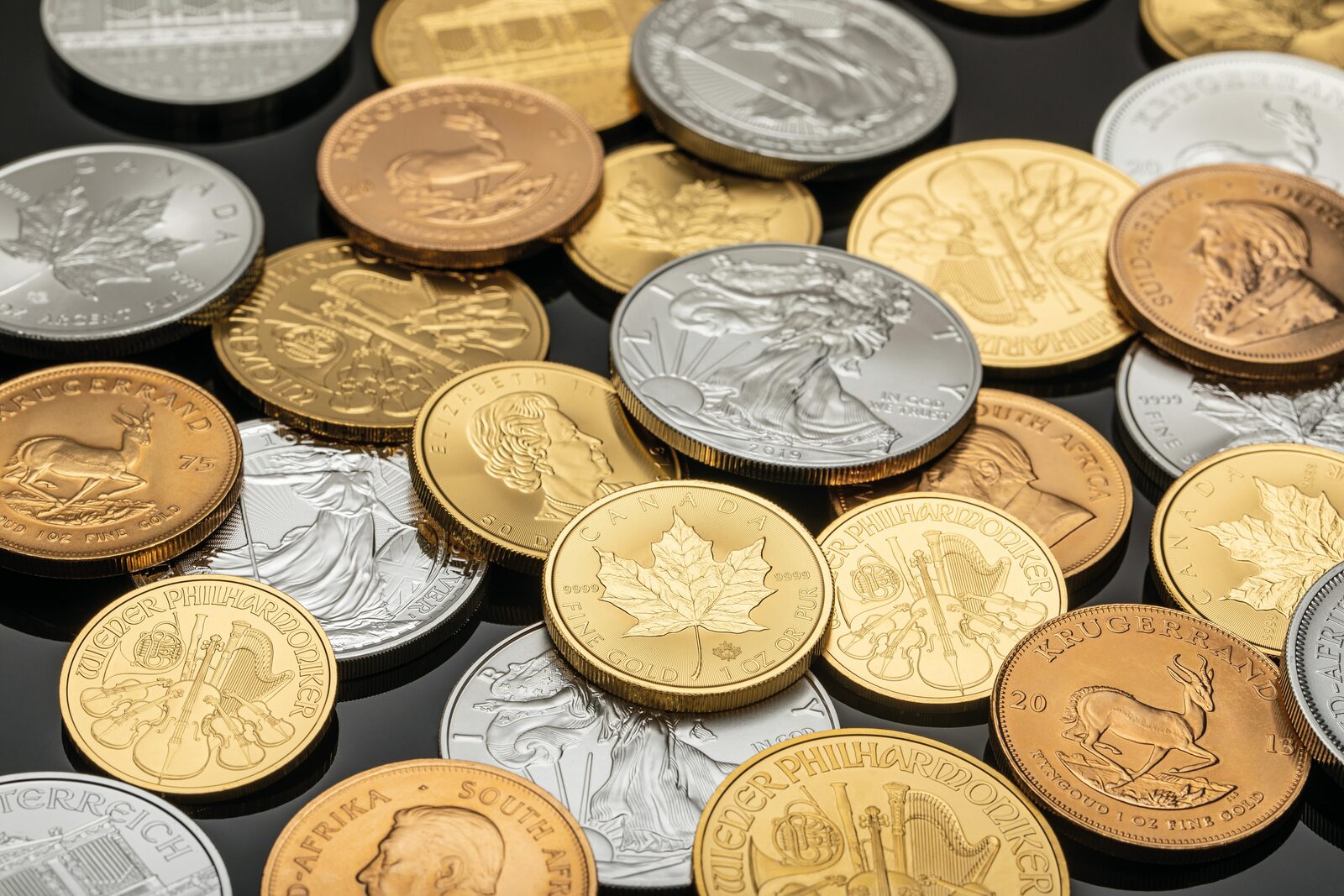
The American Eagles sit in a class of their own because Congress wrote them into the statute by name. That matters most for the Gold Eagle, which is 22-karat and only 91.67 percent gold. On fineness alone it would fail. It qualifies anyway because the law lists it directly, one of the few places where the rulebook simply bends. The Silver Eagle and the Platinum Eagle are named the same way, and the Gold Eagle counts in its fractional sizes too.
Past the Eagles, eligibility runs purely on purity. The American Gold Buffalo, the Mint’s first 24-karat coin at .9999, clears the bar comfortably. So do the popular foreign bullion coins built to the same standard: the Canadian Maple Leaf in gold and silver, the Austrian Philharmonic, and the Australian Kangaroo and Kookaburra. Proof versions of these coins can go into an IRA as well, but they need to arrive in their original mint packaging with the certificate of authenticity intact.
The Coins That Do Not Qualify
Some of the best known bullion coins in the world are shut out, and the reasons are worth understanding. The South African Krugerrand and the British Sovereign are both 22-karat, 91.67 percent gold, the same purity as the Gold Eagle. Neither one is named in the statute, though, so the fineness rule applies and both come up short.
Pre-1933 United States gold, the Saint-Gaudens double eagles and the Liberty Heads, fails on two counts at once. Its .900 fineness is below the gold minimum, and these coins trade on date, grade, and history rather than on metal weight. That collector premium is exactly what the collectibles rule is built to keep out of a tax-sheltered account. The same logic bars graded and certified numismatic coins, and it bars 90 percent “junk” silver dimes and quarters, which are only .900 fine.
The through-line is simple. If a coin is prized for anything beyond its metal, or if it does not reach the purity bar, it is not IRA eligible gold and silver, whatever its reputation on the collector market.
You Cannot Keep It in Your Safe
Clearing the product rules is only half the job. The metal also has to be held in a particular way. The statute requires that IRA bullion stay in the physical possession of a qualified trustee, a bank or an IRS-approved nonbank custodian, which in practice means a professional depository. Your own home safe does not count, and the widely marketed “home storage IRA” pitch runs straight into this wall.
The Tax Court settled the question in McNulty v. Commissioner in 2021. A taxpayer used a self-directed IRA and an LLC to buy American Eagle coins, then had them shipped to her house and kept them in a personal safe. The court ruled that taking possession was a taxable distribution of the full amount, because unfettered personal control defeats the independent custody an IRA is supposed to have. The coins themselves were eligible. Where they ended up was not.
An eligible coin stored the wrong way gets treated the same as an ineligible one: as money that left your IRA.
Checking Before You Buy
The safe path is short. Confirm the coin is either a named American Eagle or a bullion product that meets the fineness minimum, buy it new rather than graded or “rare,” and route it through a custodian and depository rather than your closet. A reputable dealer will tell you plainly whether a product is IRA eligible, and a custodian will reject anything that is not before it ever reaches storage.
None of this is tax advice, and the details have moving parts that depend on your account and your circumstances. For how physical buying and verification work here, see how it works and our rules of gold. If you are weighing formats first, the guide to bars, coins, and rounds and the case for fractional sizes both feed into the same choice. When taxes are on the line, confirm the specifics with a qualified tax professional before you fund the account.