

Two 1881-S Morgan dollars can sit in the same case, both sealed in MS65 holders from the same grading service, and trade at prices nowhere near each other. Buyers new to certified coins find that maddening. If a grader already put a number on both, what is left to argue about?
A fair amount. The grade is the single most important fact about a collectible coin’s value, but it is a summary rather than a full description. Inside every grade sits a range of quality, and the market prices that range with some precision. Coin eye appeal is the name for the difference, and learning to see it is how you stop guessing at the gap between two matching labels.
What Coin Eye Appeal Actually Measures
Graders and dealers use “eye appeal” as shorthand for four qualities a two-digit number cannot carry on its own.
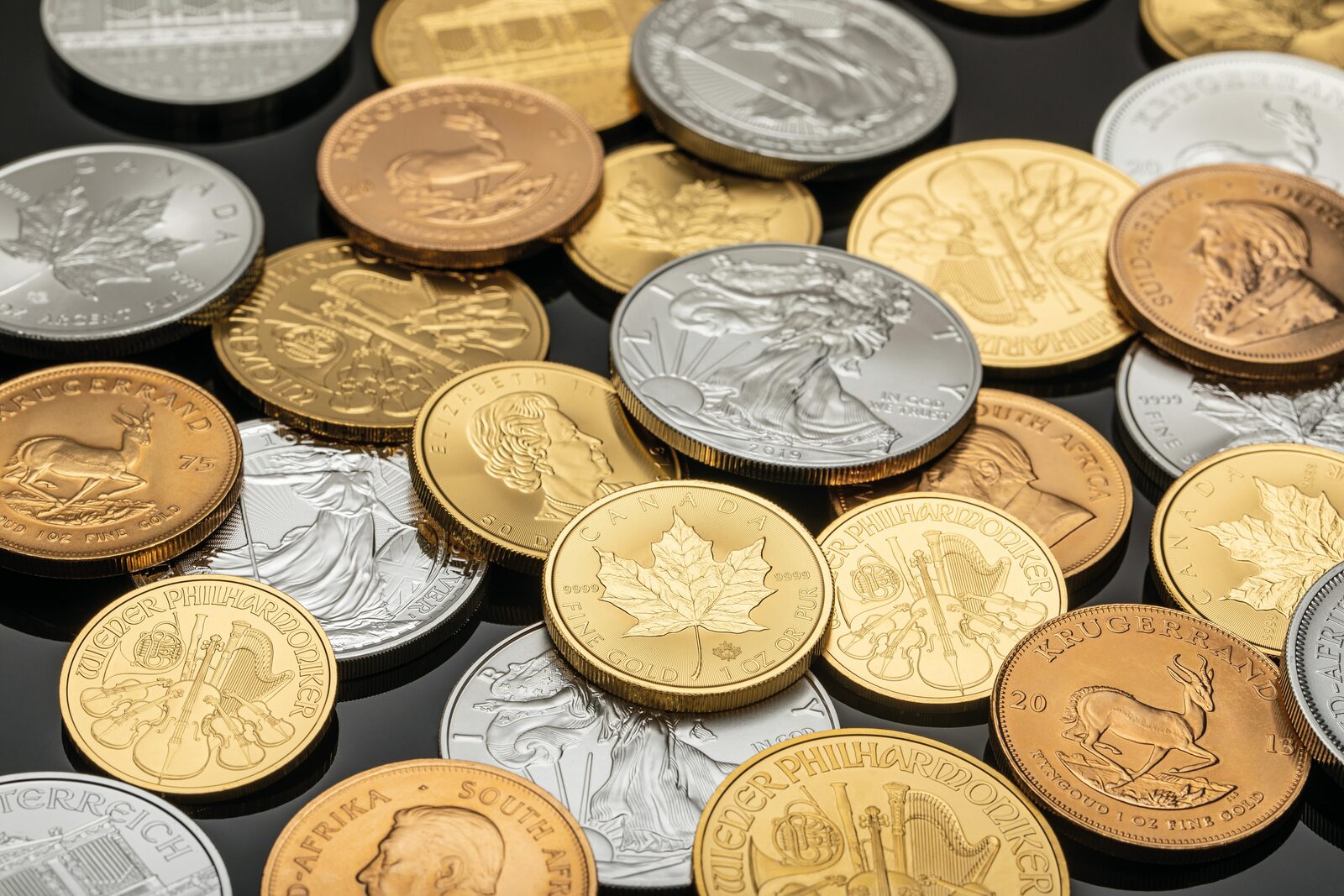
- Luster. The way light rolls across an uncirculated coin, often called cartwheel. Fresh dies and original surfaces produce it. Wear, harsh cleaning, and heavy dipping flatten it.
- Strike. How completely the design transferred to the planchet. A weak strike leaves hair, feathers, and lettering soft even on a coin that never circulated.
- Surface preservation. Not only how many contact marks a coin carries, but where they sit. A nick hidden in the wreath bothers nobody. The same nick on Liberty’s cheek is the first thing every buyer sees.
- Color. Toning that looks natural and attractive, or the bright original white of a coin that was stored well. On proof coins, the equivalent is contrast between frosted devices and mirrored fields.
None of that is exotic. It is what an experienced buyer registers in the first two seconds, before checking the label.
A Grade Is a Range, Not a Point
Because quality varies within a grade, both major services built that fact into their labels. On March 25, 2010, PCGS and NGC announced plus grading on the same day at the ANA National Money Show in Fort Worth. PCGS applies the plus to grades 40 through 68, skipping 60 and 61. Founder David Hall described the high end of a grade as the top 30 percent of the scale within it, and estimated that 15 to 20 percent of coins in a given grade would earn the designation.
NGC uses the plus across XF 45 through MS 68 and PF 45 through PF 68, requiring both superior technical merit and above-average eye appeal. Its own illustration: a PF 63+ is close to the quality of a PF 64.
NGC’s star is a different signal. It marks exceptional eye appeal for the assigned grade, and a star coin can sit anywhere in its range, low, middle, or high. A coin can be technically unremarkable for MS64 and still earn a star for color that stops people mid-aisle. Third-party stickers work along similar lines, worth reading about if you are weighing what a CAC sticker adds.
Eye Appeal Is Already Inside the Grade
Here is the part that surprises people: appearance is not a separate line item bolted onto a technical score. Modern grading is market grading, and PCGS publishes a seven-level eye appeal scale that adjusts the technical grade directly. Amazing appeal can add a full point, positive up to half, above average up to a quarter. Neutral changes nothing. Below average subtracts up to a quarter, negative up to a full point, and ugly can cost two points or send the coin back with no grade. PCGS also sets floors at the top: MS or PR 68 needs positive eye appeal, and MS or PR 65 cannot carry negative appeal.
So a coin with knockout color may already be wearing a grade it earned partly on looks. That does not erase within-grade variance. It means what you see at the counter is the variance that survived the graders’ own adjusting. For the mechanics of the 1 to 70 scale, our guide to how coin grade affects value covers the ladder and the nonlinear jump at the gem grades.
Toning Is the Biggest Swing Factor
Nothing separates same-grade coins like color. PCGS says its graders look for an original surface above all, and notes that originality does not mean untoned. A coin can be fully white and still look either naturally lustrous or over-dipped and lifeless. The questions are whether the toning is original, natural-looking, and attractive.
Answers matter in both directions. Deeply unnatural or very dark color brings a lower grade or none. PCGS also makes an observation that runs against collector instinct: a few minor copper spots on a gold coin are not a negative, since they suggest the piece was never dipped. Surface haze draws the harshest reaction of all, whether it came from decades in a bad envelope or from something applied last month.
CoinWeek’s rundown of what lifts some Morgan dollars above others of the same date and grade makes the point from the market side: attractive natural patina routinely brings far more than a white counterpart, while splotchy or dull toning cuts value. An MS65 with dull luster and a soft strike trades below an MS65 that pops. If Morgans are your entry point, the Morgan dollar listings are a good place to compare how differently two coins can present at one grade.
The Codes That Erase the Premium Entirely
Some coins never reach a numeric grade. PCGS encapsulates problem coins with codes above 81 that name the defect: 82 filed rims, 91 questionable color, 92 cleaning, 93 planchet flaw, 94 altered surfaces, 95 scratches, 97 environmental damage, 98 damage. Artificially toned coins land in that 91 bucket. Peeling lamination, PVC residue, unverifiable authenticity, and outright counterfeits come back without a holder at all.
No-grade coins still sell, because a scarce date in a Genuine holder beats no example at all. They trade on a different curve, well under their problem-free equivalents, and should be priced that way rather than talked up. For anyone submitting coins, the lesson is the oldest one in the hobby: leave original surfaces alone.
Other Reasons Identical Labels Diverge
Color and luster are not the whole story. CoinWeek notes three more factors behind same-grade spreads on Morgans: recognized die varieties such as scarce VAMs, priced well above a standard-die coin of the same date and grade; conditional rarity, where a date like the 1894-O is notorious for weak strikes and a sharp example stands out; and mint of origin, with Carson City strikes carrying a premium even on common dates. Registry competitors chasing a ranked set will pay up for the best example available. Scarcity alone is not the driver people assume, which is why it helps to know whether a low mintage really makes a coin valuable.
What to Do With This at the Counter
The old advice is buy the coin, not the holder, and coin eye appeal is what that phrase is about. A few habits follow from it.
- Look at the coin before the label, in decent light, and at high-resolution images when buying remotely.
- Compare several examples at one grade before deciding what average looks like for that issue.
- Treat published values as a starting point. Guides and wholesale sheets quote a generic coin at a grade, not the one in front of you, which is why reading a price guide and population report is a skill of its own.
- When a certified coin is priced well under its peers, assume there is a reason and find it. Dull luster, a soft strike, a mark in the wrong place, color heading toward brown.
- Ask. A dealer worth buying from will tell you plainly where a coin sits in its grade.
One boundary is worth drawing clearly. All of this applies to collectible coins, where buyers pay for appearance. Plain one-ounce bullion is a different market: it trades close to its metal content, and the arithmetic is fineness times weight times spot, a metal floor rather than a collector price. Nobody pays up for cartwheel luster on a current-year bullion coin.
Grade tells you most of what you need. Eye appeal tells you the rest, and it is the part you learn with your own eyes. Our overview of how the site works explains where our listings and values come from. The fastest education here stays free: look at a great many coins at one grade, until average and exceptional stop looking alike.