

Ask most people what moves the price of gold and the answer comes back fast: interest rates. When the Federal Reserve raises rates, gold is supposed to fall, because money in the bank suddenly pays you something and a gold coin sitting in a drawer still pays you nothing. That story is half right. The half it leaves out is inflation, and once you put inflation back in, the number that actually tugs on gold is not the rate on your savings account. It is the rate after inflation, what economists call the real yield.
The rate that matters is the one adjusted for inflation
A nominal interest rate is the headline figure, the 4 or 5 percent stamped on a Treasury note. The real interest rate is what is left after you subtract expected inflation. If a one-year note yields 5 percent and prices are rising 3 percent, your real return is roughly 2 percent. That subtraction, sometimes called the Fisher relation, is the whole game. A 5 percent yield feels generous when inflation is 1 percent and feels like treading water when inflation is 5 percent.
You do not have to estimate this by hand. The Treasury sells Inflation-Protected Securities (TIPS), whose principal adjusts with the Consumer Price Index, so their traded yield is a real yield straight from the market. The 10-year TIPS yield is the figure most analysts watch when they talk about gold, because it captures the real return a patient, safe-asset buyer can lock in today. When you hear that “real yields” moved, that TIPS number is usually what moved.
Why real interest rates and gold pull in opposite directions
Gold produces no income. No coupon, no dividend, no rent. Its return has to come entirely from price. That single fact is why real interest rates and gold tend to move in opposite directions. When the real yield on a safe bond is high, an investor gives up a genuine, inflation-beating return to hold a metal that yields nothing, so the opportunity cost of owning gold is steep and buyers demand a lower price to take it on. When the real yield is low, or negative, holding gold costs you almost nothing in forgone return, and the same buyers are willing to pay more.
Researchers at PIMCO put a rough number on it: over the two decades through 2025, a one percentage point rise in the 10-year real yield lined up historically with about an 18 percent decline in the inflation-adjusted price of gold. Treat that as an illustration of the pull rather than a formula, because the strength of the link drifts over time. RBC Wealth Management measured the correlation between gold and real yields at 84 percent across 2005 to 2021, tight enough that for years a trader could watch the TIPS screen and guess which way gold was leaning. This is the same real-yield channel that explains a puzzle we covered in how CPI reports move gold: a hot inflation print can push gold down when it convinces markets the Fed will raise rates faster than inflation, lifting real yields.
When the link broke
Here is the part that trips up anyone relying on a single rule. Starting in 2022, the relationship came apart. Central banks hiked aggressively to fight post-pandemic inflation, real yields climbed sharply out of negative territory, and the textbook said gold should sink. Instead it held its ground and then, over the following years, climbed to record after record, trading above $4,200 an ounce by the summer of 2026. RBC found the gold to real-yield correlation collapsed to about 3 percent in 2022 and 2023 and stayed negligible near 7 percent afterward. For a stretch, the screen that used to predict gold told you almost nothing.
Something had replaced real yields as the dominant force, at least for a while. Three things, really. Central banks became huge net buyers, adding more than 1,000 tons a year for three straight years, roughly double their pace in the prior decade. Much of that buying traced back to geopolitics: after Russia’s foreign-currency reserves were frozen in 2022, other governments began quietly diversifying into an asset no one else can freeze. And ordinary investors piled back in through funds and coins. We walk through the official-sector side of this in how central banks shape the gold market, and the broader interplay of rates, inflation, and the dollar in the macro machine that sets gold’s tone.
What real interest rates and gold mean for a coin buyer
The practical lesson about real interest rates and gold is not to throw out the gauge, but to stop treating it as an on-off switch. Real yields are one of the steadiest gravitational pulls on gold over long stretches, and when they swing hard they still matter. What the last few years showed is that other forces, official buying and a slow loss of faith in holding everything in dollars, can overwhelm that pull for years at a time. An honest reading watches several dials at once: the real yield, the dollar, and how much metal the world’s central banks are quietly hoovering up.
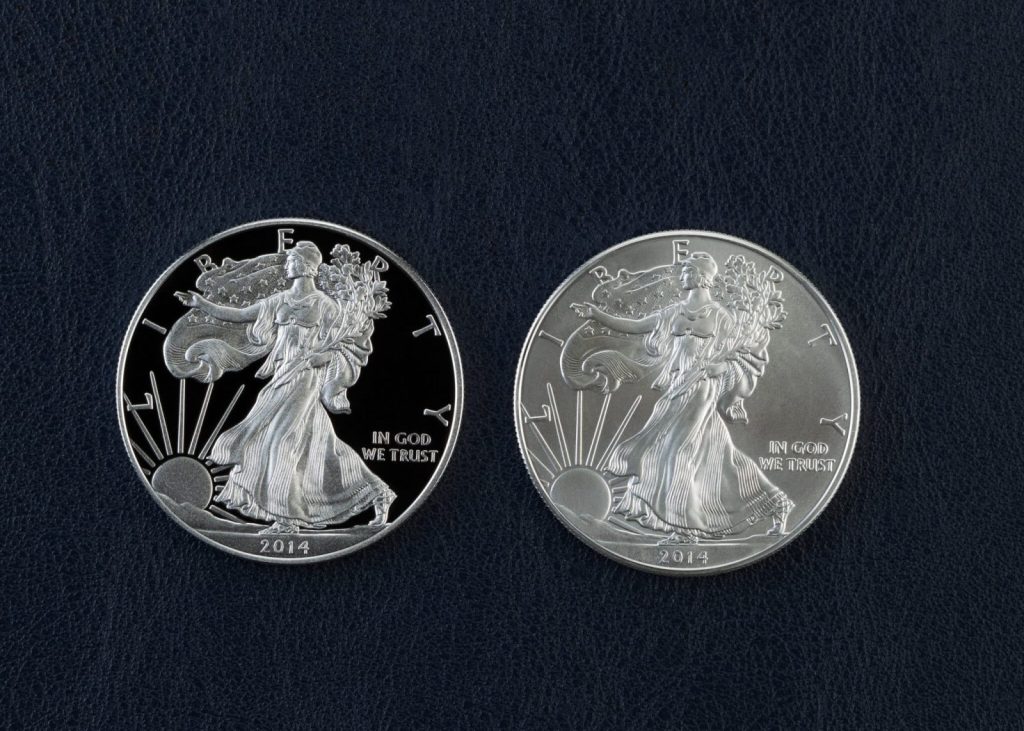
For someone holding physical metal rather than trading it, this is oddly freeing. If you are buying a Gold Eagle or stacking bullion for the long haul, the daily TIPS print is background noise. The metal value under your coin does not evaporate because a real yield ticked up for a month. You can follow spot moves any time on the live markets page, and if you are newer to buying, our guide to how it works covers the mechanics. None of this is investment advice. It is a way to read the weather, so that the next time a commentator declares gold “should” have fallen because rates went up, you know which rate they mean, and why the answer is more complicated than it sounds.