

In 2007 the U.S. Mint set out to do for the presidency what the 50 State Quarters had done for the map: put a rotating cast of familiar faces into everyday pockets and get the country collecting again. The quarters worked. The presidential dollar coins did not, at least not the way Congress hoped. What they left behind is one of the stranger chapters in modern Mint history, a decade of coins most Americans never spent, more than a billion of them still stacked in Federal Reserve vaults, and a small national argument over four words on the edge.
Where the presidential dollar coins came from
The series was created by the Presidential $1 Coin Act of 2005 (Public Law 109-145), signed in December 2005. The plan borrowed directly from the runaway popularity of the state quarters: four new designs a year, presidents honored in the order they served, a fresh reason to check your change. George Washington led off, released on February 15, 2007, and the Mint rolled forward through history four presidents at a time.
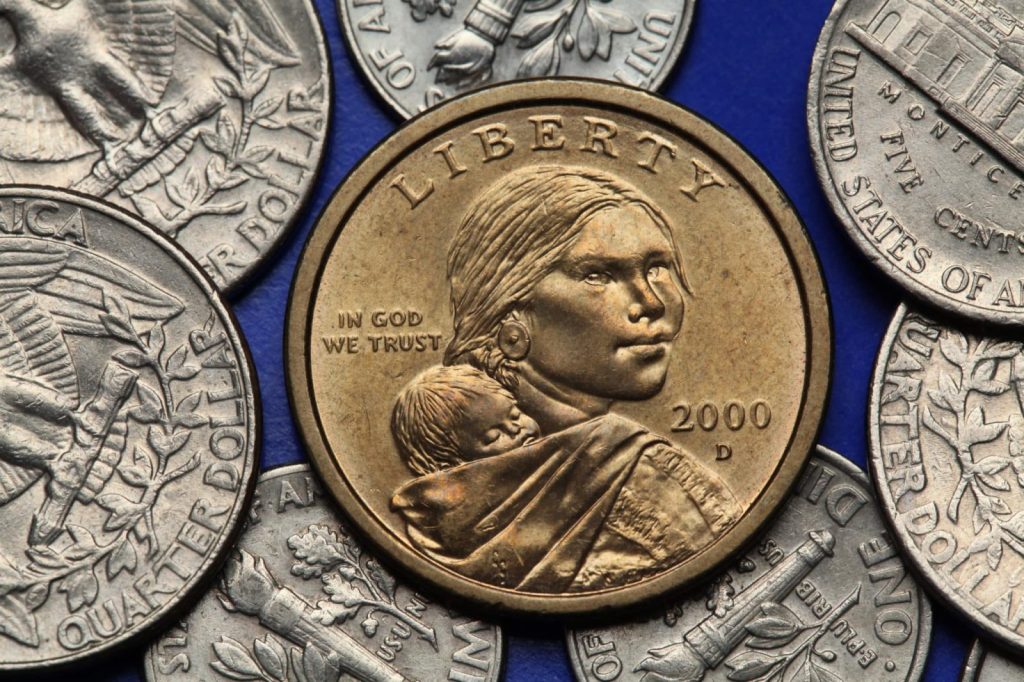
Physically the coins were not new metal. They used the same manganese-brass alloy, the gold-colored blend already carried by the Sacagawea and Native American dollars, which is why collectors and cashiers alike lumped them together as “golden dollars.” Each coin paired a changing presidential portrait on the obverse with one shared reverse, Don Everhart’s Statue of Liberty with the denomination beneath the torch. If you want the wider story of how a coin program like this gets authorized in the first place, we cover that in how the U.S. Mint decides which coins to make, and the sister series is profiled in our 50 State Quarters retrospective.
The rule that shaped the roster
One clause in the law did more than any design choice to shape the series. A president could not appear until he had been dead at least two years, which kept living presidents off the coinage. That single rule explains most of the quirks. Grover Cleveland, who served two nonconsecutive terms, is the only man honored on two different coins, once as the 22nd president and again as the 24th. And the run did not end on a tidy number. The 2016 lineup held only three coins, Nixon, Ford, and Reagan, because those were the last eligible presidents; Jimmy Carter, still living, was simply skipped.
The series looked finished at that point, then reopened once, briefly. When George H.W. Bush died in late 2018, the two-year clock ran out in 2020, and a separate act of Congress authorized a final coin in his honor. It closed the album on a program that had otherwise gone quiet years earlier.
The words on the edge
The real novelty was where the small print went. Instead of crowding the faces, the Mint pushed the incidental inscriptions onto the edge of the coin. On the 2007 and 2008 issues that edge carried the year, the mint mark, E PLURIBUS UNUM, and IN GOD WE TRUST. It was an elegant idea that produced an inelegant problem.
Edge lettering is applied in a separate step after the coin is struck. Early in the Washington run, an estimated 250,000 coins slipped past that step and reached the public with a plain, blank edge, meaning both E PLURIBUS UNUM and IN GOD WE TRUST were missing. The press quickly christened them “Godless dollars,” and the first example turned up on eBay on February 15, 2007, the very day the coin was released. Congress reacted within the year. Late in 2007 it directed that IN GOD WE TRUST be moved off the edge and onto the face of the coin, and from the 2009 William Henry Harrison dollar onward the motto appeared on the obverse, leaving only the year, mint mark, and E PLURIBUS UNUM on the edge. The missing-lettering coins remain a recognized error variety that collectors still hunt, though condition and specific variety drive whatever a given piece brings, not any fixed figure.
A billion coins nobody carried
Behind the design story sat a blunt economic one. The coins were not circulating. Banks ordered them because the law kept them coming, the public spent the paper dollar instead, and the surplus climbed. Business-strike mintages tell the tale on their own: the 2007-P Washington dollar was struck to the tune of roughly 176.7 million, but by 2013 annual figures had fallen to just a few million as output shifted to collectors only.
On December 13, 2011, the administration pulled the plug on circulation strikes. Vice President Biden announced the move and Treasury Secretary Timothy Geithner directed the Mint to stop making the coins for general circulation. The numbers cited were striking: nearly 1.4 billion surplus dollar coins were already sitting unused in Federal Reserve vaults, enough to satisfy demand for more than a decade, and the Mint had been on pace to add some 1.6 billion more through 2016. Halting the presses was projected to save at least $50 million a year. All told, more than 2.37 billion of these coins had been produced since 2007. After 2011 the Mint kept striking them only in the modest quantities collectors actually wanted, at no cost to taxpayers.
What these coins are worth now
Here honesty matters more than enthusiasm. The presidential dollar coins are base metal, that gold-colored brass, with no silver or gold content at all. Unlike a bullion or pre-1933 gold piece, there is no metal floor underneath them, so the melt-value math that governs the coins we usually write about simply does not apply. If the metal side is what you care about, our explainer on how FMV Gold values coins and the rules of gold lay out where real intrinsic value comes from.
For the presidential series, value lives almost entirely in scarcity and condition rather than substance. Ordinary circulated examples are common and trade around face value. The interest concentrates in the missing-edge-lettering errors, in top-grade certified pieces, and in complete sets kept in original Mint packaging. It is a collector’s field, not a metals one, and worth approaching with that expectation. Readers building a broader holding can browse the families we track in the coin catalog, and follow metal moves on the markets page.
The program’s lasting lesson is less about coins than about people. Congress can authorize a beautiful, historically rich series, and the Mint can execute it faithfully, and the public can still decline to carry it. The presidential dollar coins turned out to be a fine civics project and a poor everyday currency, which is exactly why so many of them are still waiting, mint-fresh, in vaults that never needed them.