

The order window opened at noon Eastern on September 3. About eight minutes later, the U.S. Mint’s newest precious metals coin was unavailable. Buyers took 4,778 of the 5,000 authorized 2026-W American Eagle palladium coins, roughly 96 percent of the entire issue, and the Mint’s sales report published on September 9 confirmed the count.
Palladium does not usually generate that kind of hurry. The American Palladium Eagle is the quietest member of the Eagle family, struck in the smallest numbers and priced off a metal most bullion buyers never touch. This year’s coin changed the arithmetic: a 250th-anniversary privy mark, a dual date, and a mintage cap smaller than almost anything the series has issued before.
What is the American Palladium Eagle?
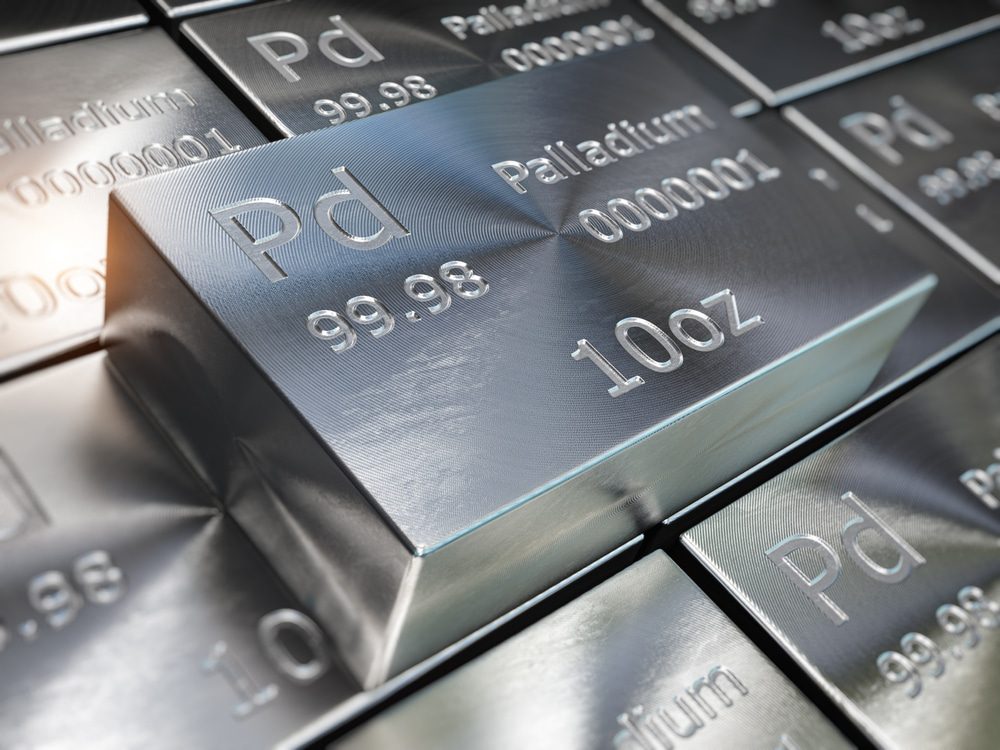
Each coin carries one troy ounce of .9995 fine palladium, a $25 face value, a diameter of 34.036 mm, and a reeded edge. That face value is legal-tender bookkeeping and nothing more. The metal in the coin is worth many multiples of it.
The designs are the reason coin people liked this series from the start. Both sides come from Adolph A. Weinman, one of the most admired sculptors ever to work for the Mint. The obverse adapts his Winged Liberty head, the design that appeared on the dime from 1916 to 1945 and that the public promptly misidentified as the Roman god Mercury, a nickname that stuck for a century. The reverse comes from a 1907 medal Weinman made for the American Institute of Architects, showing an eagle with raised wings pulling a laurel branch from a rock. That eagle had never appeared on a United States coin until the palladium series debuted in 2017.
If Weinman’s name sounds familiar, it should. He also designed the Walking Liberty half dollar, so one artist is responsible for a good share of what collectors consider the high-water mark of twentieth-century American coin design. Our profile of the Walking Liberty half is a useful companion to this coin.
A coin Congress ordered, then nobody made for seven years
The American Palladium Eagle exists because of the American Eagle Palladium Bullion Coin Act of 2010, Public Law 111-303, signed in December of that year. Congress authorizes American coinage; the Mint executes. That distinction explains a lot about why some coins appear quickly and others sit on a shelf, and we walk through the whole process in how the U.S. Mint decides which coins to make.
In this case the shelf time ran long. The first bullion Palladium Eagle did not reach buyers until September 25, 2017, nearly seven years after the authorizing law. It sold out on release. So did the 2018 proof, which moved 14,986 coins against a 15,000-piece limit in about five minutes.
Why the 2026 issue looks different
Three things separate this year’s coin from a routine collector issue. It carries a dual date, rendered as 1776 ~ 2026. It carries a new privy mark: a Liberty Bell containing the numeral 250. And the Mint describes it as a special one-year issue tied to the nation’s semiquincentennial, which means the combination is not scheduled to repeat.
The coin was struck at West Point with a W mint mark and an uncirculated finish, the matte-textured collector treatment that sits between a bullion strike and a proof. If that finish is unfamiliar, our explainer on the enhanced uncirculated Silver Eagle covers how the Mint’s collector finishes differ and why the labels matter more to grading services than to metal value.
Privy marks are having a moment. The Mint has added small anniversary devices across several products this year, and we looked at how that plays out for buyers in our piece on the 1776-2026 Silver Eagle privy. The pattern is consistent: a privy mark adds no metal, and whatever it adds to price is a matter of what collectors decide later.
The mintage picture, year by year
Reported mintages for the series run roughly like this. The 2017 bullion coin came in at 15,000. The 2018 proof finished at 14,986. The 2019 reverse proof is the high-water mark at 18,839. From there the numbers fall away: 9,746 for the 2020 uncirculated, 5,170 for the 2021 proof alongside a second bullion run, 7,439 for the 2022 proof, 5,780 for the 2023 uncirculated, 5,960 for the 2024 proof, and 3,991 for the 2025 reverse proof, the lowest total the series has recorded.
Against that history, 4,778 coins sold in 2026 lands second-lowest, behind only last year’s reverse proof. For a series that has never been produced in large numbers to begin with, that is a genuinely small figure, and it is the single fact most likely to matter to this coin’s story a decade from now.
A word of caution on how small mintages get sold. Scarcity is a necessary condition for a collector premium, not a sufficient one. Plenty of low-mintage modern issues trade close to their metal content because demand never arrived. The coins that hold premiums are the ones people still want to own years later, and nobody knows that on release day. Our look at whether graded bullion coins are worth the premium takes that question apart in more detail.
What palladium itself is doing
Palladium traded around $1,370 to $1,380 an ounce on September 9, 2026, depending on which dealer feed you read. That is up roughly 18 percent from a year earlier and down close to 20 percent from where it stood six months ago, near $1,700. Movement of that size inside a single year is normal for this metal and would be extraordinary for gold.
The reason is demand structure. More than 80 percent of palladium demand comes from the automotive sector, where it goes into catalytic converters in gasoline engines. That makes palladium an industrial metal that happens to be precious, and it ties the price to vehicle production, emissions rules, and the pace of electric vehicle adoption rather than to the monetary anxieties that move gold. When EV sales growth slows, palladium demand from conventional engines holds up better than forecasters expected. When it accelerates, the opposite happens.
Supply adds its own tension. The World Platinum Investment Council has projected palladium supply deficits for both 2025 and 2026, with mine output expected to keep declining. Russia accounts for roughly a quarter of global supply, and U.S. trade authorities have been examining whether Russian palladium is being dumped into the American market, an inquiry whose outcome could mean tariffs or quotas. The metal’s record came in early March 2022, when it spiked toward $3,400 an ounce as the market braced for sanctions to strand Russian output. It has not been close since.
None of that is a forecast. It is the backdrop against which a 5,000-coin issue sold out in eight minutes, and it is worth understanding before treating the coin as a metals position. Current spot levels sit on our markets page.
What the sellout does and does not tell you
A fast sellout at the Mint measures one thing well: how many people were willing to click at noon on a Thursday under a one-per-household limit. It measures the secondary market not at all. Palladium collector coins trade in a thinner market than gold or silver Eagles, which shows up as wider spreads between what buyers pay and what sellers receive. On a coin with a four-figure metal content, a wide spread is not a rounding error.
For anyone weighing this coin, the practical questions are the ordinary ones. What is the metal floor, what is the collector premium sitting on top of it, and how much of that premium survives a resale? We lay out how we think about that gap in the rules of gold, and the full coin directory shows where the rest of the family trades.
The 2026 American Palladium Eagle is a well-designed, genuinely scarce coin in a metal most American collectors have never owned. Whether that ages into something people chase, or into an expensive ounce of palladium in a black velvet box, is a question the next ten years will answer rather than this week’s sales report. None of the above is investment advice.