

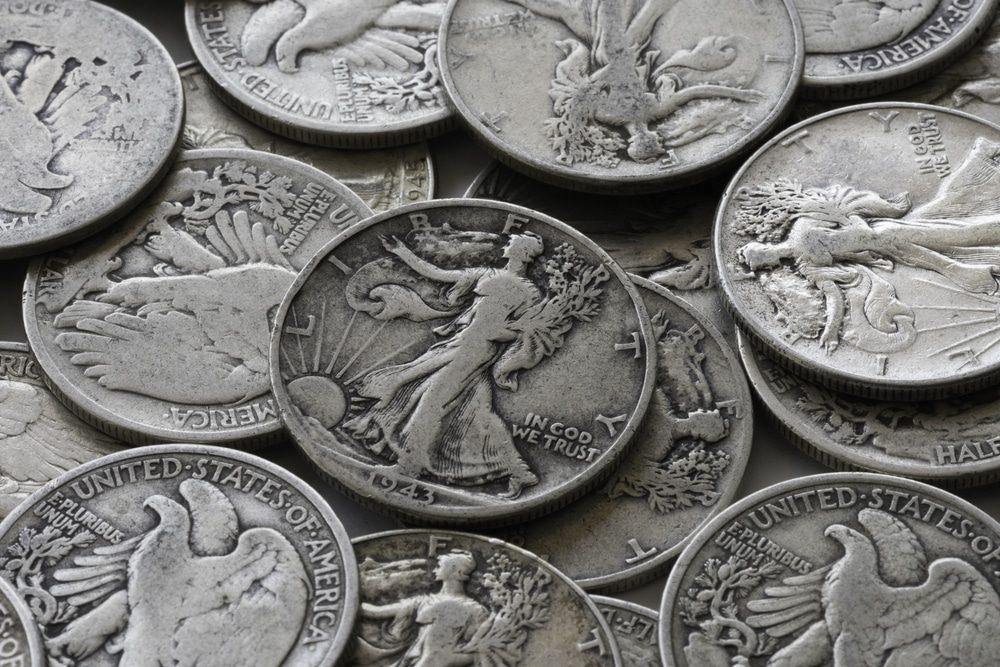
Ask a longtime coin dealer to name the most beautiful silver coin the United States ever put into circulation, and a good many will reach for the Walking Liberty half dollar before you finish the question. Struck from 1916 through 1947, it carries Adolph A. Weinman’s striding Liberty on the obverse and a mountaintop eagle on the reverse, and it has never really gone out of fashion. If you have inherited a roll of them, or you are weighing a first purchase, the honest question is the one in the title.
Are Walking Liberty half dollars a good investment?
The short answer is that it depends entirely on which coin you mean, because two very different markets share the same design. Most surviving Walking Liberty halves are common, worn, and valued mainly for the silver inside them. A smaller group of key dates and high-grade survivors trades on scarcity and condition, and those move to their own rules. Buy the wrong one for your goal and you either overpay for metal or underpay for rarity you did not know you had.
Every business-strike half in the series is 90 percent silver and 10 percent copper, weighs 12.50 grams, and contains 0.3617 troy ounces of silver. That figure matters more than any price sheet, because it is the metal floor beneath the coin. With silver trading around 66 dollars an ounce in early September 2026, the melt value of a single circulated Walking Liberty half is simply that fraction of spot, and it rises and falls with the market like any other piece of bullion. A bag of well-worn commons is, for practical purposes, a form of junk silver with a prettier face than most.
The design that outlived the coin
Weinman studied under Augustus Saint-Gaudens, and it shows. The obverse depicts Liberty in mid-stride toward the sunrise, the Stars and Stripes draped over her shoulder, one arm outstretched and her hands full of laurel and oak branches for civil and military glory. The reverse shows a bald eagle rising from a craggy perch, wings unfolding, with a sapling of mountain pine springing from the rock beside it. The model for Liberty is generally believed to have been Elsie Stevens, wife of the poet Wallace Stevens, though the Mint never made it official and her daughter only confirmed it decades later, in 1966.
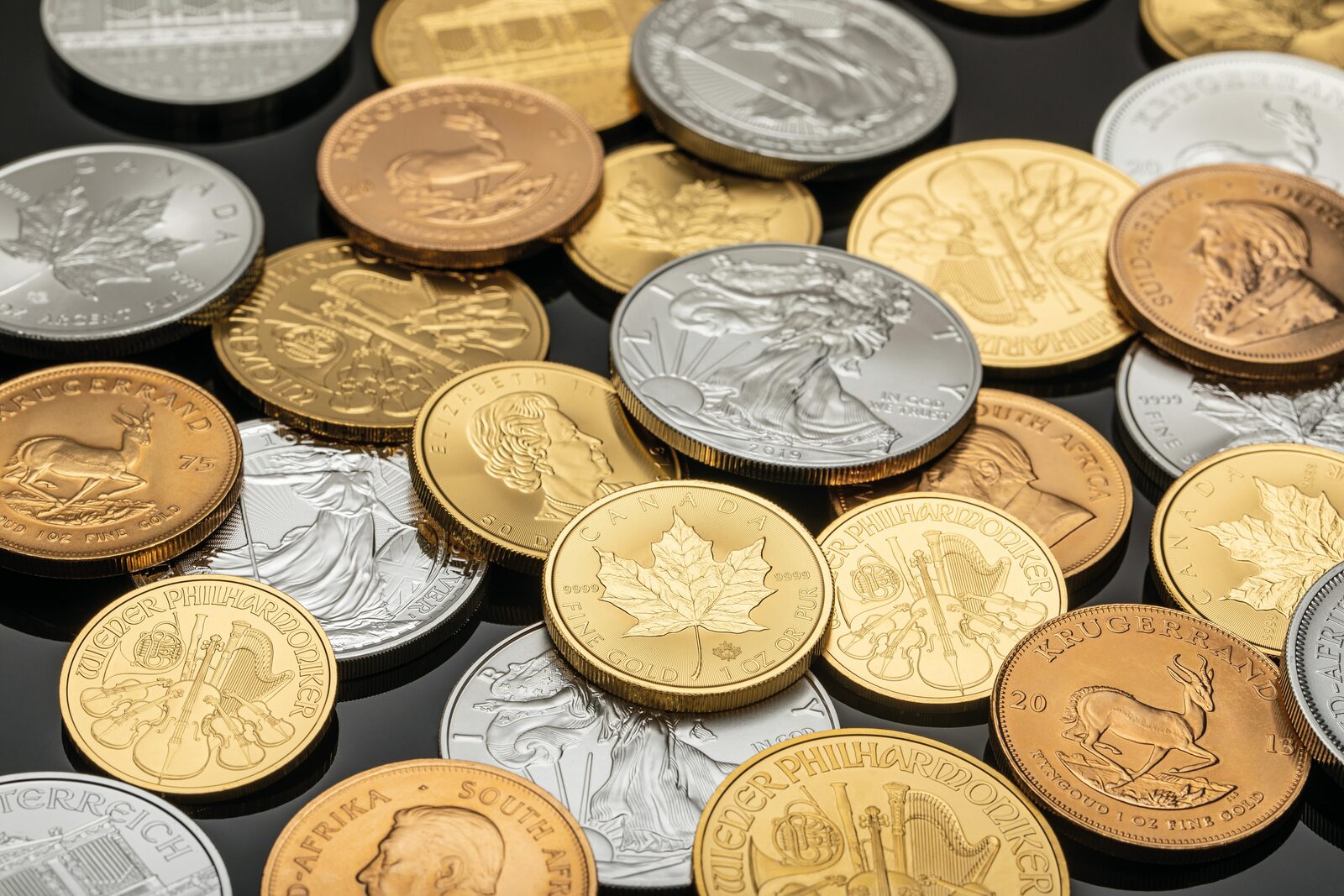
The same sculptor gave the country the Winged Liberty, or Mercury, dime in that very same year, so 1916 alone produced two of the most beloved portraits in American coinage. The half dollar’s afterlife is the more remarkable, though. When the Mint launched the American Silver Eagle bullion program in 1986, it reached back seventy years and put Weinman’s striding Liberty on the obverse, with the details strengthened by engraver John Mercanti. Anyone who owns a modern Silver Eagle already owns the design.
Why so many strikes look soft
The beauty came at a cost the Mint fought for three decades. The high points of the obverse and reverse sit almost back to back, so the presses could not always force metal into both at once. The result is chronic weakness in Liberty’s leading hand and leg and in the eagle’s breast and leg feathers. George T. Morgan reworked the dies in 1918 and again in 1921, and John Sinnock adjusted them in the late 1930s, with limited success. For a buyer this is useful knowledge. A fully struck coin with sharp central detail is worth more than a coin that merely grades the same number, and strike quality is easy to overlook if you are only reading the grade on a slab.
The dates that matter
Production was anything but steady. No half dollars were struck at all in 1922, from 1924 through 1926, or from 1930 through 1932, so those gaps shaped which coins are scarce today. The undisputed key to the series is the 1921-D, with a mintage of just 208,000, the lowest of any date. It travels with two companions from the same year, the 1921 Philadelphia at 246,000 and the 1921-S at 548,000, and that trio is what most serious collectors chase first. The 1938-D, at 491,600, is the classic later-date key, and the 1916-S at 508,000 is scarce as a first-year branch issue. The 1916 and part of the 1917 coinage also carry their mint marks on the obverse, below the motto, rather than on the reverse where they moved after February 1917, which makes the 1917-D and 1917-S obverse-mintmark varieties their own small chase.
Roughly 485 million Walking Liberty halves were struck over the life of the series, so the overwhelming majority are common. That is why the key dates carry real premiums over melt while a typical circulated 1943 does not. Condition rarity is its own separate game: because the finest examples of even common dates are genuinely hard to find, a coin that is ordinary in worn grades can be a serious rarity in gem uncirculated with full detail.
How to buy one, and for what reason
Sort your purpose before you sort the coins. If you want silver, the cheapest path is circulated common-date halves bought close to their metal content, the same way you would buy any 90 percent silver. You get a recognizable, divisible, legal-tender coin with a slim premium over spot, and you are betting on the metal rather than the coin.
If you want the design without paying rarity money, the so-called Short Set of 1941 through 1947 is the traditional entry point. Those years were struck in the tens of millions, they are affordable in high circulated and lower uncirculated grades, and a matched set in a nice album is one of the most satisfying inexpensive projects in the hobby.
If you are buying the key dates or high-grade gems, treat it as numismatics and act accordingly. Buy coins graded by PCGS or NGC, weigh strike as well as grade, and keep in mind that the 1921 trio and the branch-mint keys are among the coins most often counterfeited or altered from common dates. A trusted dealer and a certified holder are worth the modest cost, and the general habits in our rules of the road apply here too.
As an investment, then, the Walking Liberty half is really two propositions. The common coins are a pleasant way to hold silver and will track the metal wherever it goes. The keys and the gems are collector assets whose value rests on scarcity, condition, and demand that has held for a century. Neither is a promise of profit, and neither should be bought on the assumption that a lovely coin must always rise. Know which one you are buying, pay a fair premium over the metal for it, and few American coins reward the attention like this one.