

The U.S. Mint’s year-long tribute to its own back catalog ended on September 24, when the 1907 Saint-Gaudens High Relief $20 Gold Coin and Silver Medal Set went on sale at noon Eastern. It took 8,191 orders in its first few days, enough to debut at the top of the Mint’s weekly sales report for the period ending September 27. With that, the Best of the Mint series is closed, and collectors finally have a full set of numbers to read instead of one launch at a time.
Those numbers are more interesting than any single release was. Interest in these sets did not hold steady across the run. It dropped sharply after the first one, and the reason has less to do with which classic coin was being honored than with how much gold the Mint put in the box.
What the Best of the Mint series actually offered
Each of the five products paired a 24-karat gold coin based on a classic American design with a newly designed one-ounce silver medal. The gold pieces are 99.99 percent fine, struck at West Point with an uncirculated finish, and each carries a Liberty Bell privy mark with the numeral 250 inside it for the nation’s 250th anniversary. The medals are 99.9 percent fine silver, 40.60 mm across with a plain edge, and came from Philadelphia. The medal in the final set was designed by Jesse Hernandez of the Mint’s Artistic Infusion Program.
Here is the part worth noticing. The gold weight tracked the denomination of the original coin:
- 1916 Mercury dime, released June 4, a tenth-ounce gold coin, 16.50 mm, limit 30,000 sets
- 1916 Standing Liberty quarter, July 10, a quarter-ounce coin, 22.00 mm, limit 30,000 sets
- 1916 Walking Liberty half dollar, August 6, a half-ounce coin, 27.00 mm, limit 30,000 sets
- 1804 silver dollar, August 27, a full ounce, 30.61 mm, limit 15,000 sets
- 1907 Saint-Gaudens High Relief double eagle, September 24, a full ounce, 30.61 mm with raised edge lettering reading E PLURIBUS UNUM, limit 15,000 sets
So the series was also a cost ladder, climbing from a tenth of an ounce of gold to a full ounce. Each set carried a one-per-household limit for the first day, and the Mint halved the mintage ceiling for the last two offerings, which suggests it had already read the demand curve before those orders arrived.
How each of the five sold
Debut sales, then the cumulative totals reported for the week ending September 27:
- Mercury dime set: 28,933 at debut, about 96 percent of its 30,000 limit in days, now 29,465
- Standing Liberty quarter set: 14,101 at debut, now 16,846, roughly 56 percent of its limit
- Walking Liberty half dollar set: 9,122 at debut, now 10,224, about 34 percent of its limit
- 1804 silver dollar set: 9,947 at debut, now 12,047, roughly 80 percent of its 15,000 limit
- Saint-Gaudens set: 8,191 at debut, just under 55 percent of its 15,000 limit, with only a few days on sale
The dime set was the event of the year. Most of its run was claimed within the first hour of the June launch, and the Mint flipped it to “Currently Unavailable” after about five hours. The quarter that followed took less than half its ceiling at debut. By the time the half dollar arrived in August, barely a third of the run moved on opening week, and it has crawled since, adding 119 sets in the reporting week just ended.
Then something counterintuitive happened. The two one-ounce sets, the most expensive subjects in the series, outperformed the half dollar as a percentage of their runs. Cutting the ceiling to 15,000 is most of the explanation. The Mint sized the last two offerings to the buyers it actually had rather than to the buyers it hoped for, and the percentages look healthier as a result.
The negative number, and why it is not a typo
The dime set’s line in the latest report shows a loss of 359 sets for the week. Mint sales figures are net, not gross. They absorb cancellations, returns inside the return window, and payment failures, so a cumulative total can and does run backward. The dime set is the clearest case. Its sales fell for three consecutive weeks after the June launch, pulling the cumulative count down to 27,590 by the start of July, which was 1,343 sets below its own opening figure, and the Mint brought the set back at a lower price around the same time. Only later did the total climb to where it sits now.
This matters if you read Mint sales reports to judge scarcity. A product that opens near its ceiling has not necessarily sold out, and a figure that looks like a sellout in week one can soften for months. Treat the opening number as a measure of enthusiasm and the later numbers as a measure of conviction.
The coin behind the final set
The 1907 High Relief double eagle earned its place at the end of the run. Theodore Roosevelt wanted American coinage to look like art and brought in Augustus Saint-Gaudens to do it. The sculptor’s Liberty strides forward with a torch, and the relief he wanted was far deeper than the Mint’s presses were built to handle. The experimental extremely high relief proofs needed nine blows apiece at 172 tons, and only about two dozen survive with the edge lettering. Production High Relief coins still took five blows each. Chief engraver Charles E. Barber objected on grounds of practicality and won: after 12,367 pieces, technicians swapped in lower-relief dies. Saint-Gaudens died in August 1907, before any of them were struck for circulation.
We covered the 2026 recreation’s specifications and design details ahead of the September 24 release, and the original family has its own series page if you want to see where the classic pieces sit.
What the series says about buying modern Mint products
Three things from the Best of the Mint series carry over to the next program. First, the cheapest point of entry usually sells the fastest, which tells you more about budgets than about taste. The tenth-ounce dime set was never the most beautiful object in the run, but it was the one most people could reach.
Second, a mintage limit is a ceiling, not a forecast. Three of these five sets will almost certainly close well under their stated maximums, and unsold authorized mintage is common. The palladium Eagle sellout is the exception that gets remembered; the slow grind is the norm.
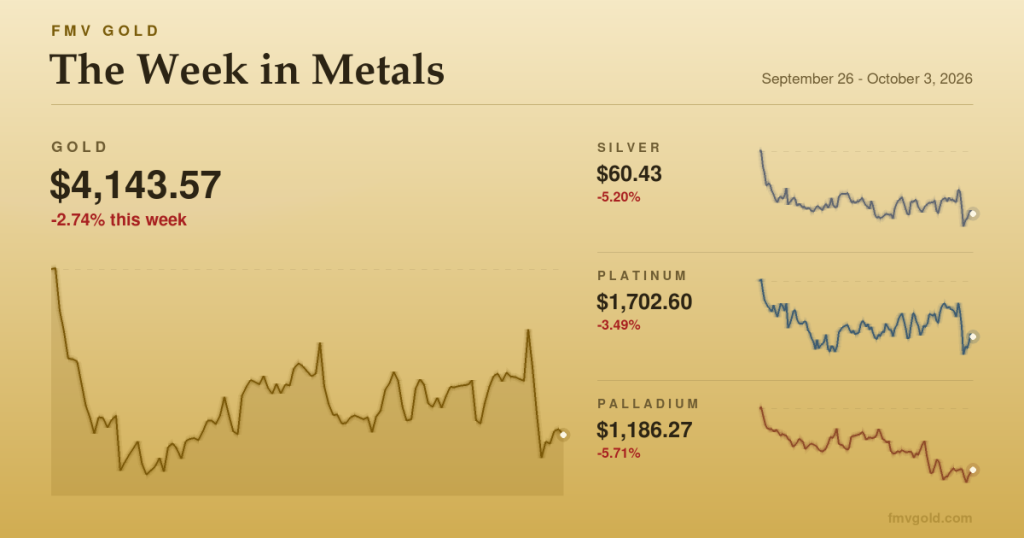
Third, the metal market sets the terms. The Mint reprices gold products weekly, and on September 30 it trimmed prices across the gold lineup after a decline in the market. Spot gold sat near $4,177 an ounce that day, a touch off a seven-week low reached two days earlier, with silver near $61. Softer consumer confidence and a weaker job openings print had cut the odds of an October Fed hike to roughly even from about seven in ten a day before. None of that changes what is in the box, but it changes what the box asks of you, and it is why two buyers of the same product weeks apart can pay different amounts. Our markets page tracks the spot moves behind those adjustments.
For the broader 250th anniversary lineup, the bell-shaped gold coin remains the strangest thing the Mint has done this year. If you are weighing any of these against plain bullion, how we value coins and our rules of gold are the place to start. The gold content is the floor under a set like this. Everything above it is collector demand, and collector demand is exactly what the Best of the Mint series spent five releases measuring.