
Pick up a Silver Libertad next to a Silver Eagle and the first thing you notice is how crowded it is. The Eagle gives you one striding figure and a lot of open field. The Libertad gives you a winged statue, two snow-capped volcanoes, and on the other side not one Mexican coat of arms but eleven. It looks like a coin designed by people who had a lot to say, and in a sense it was.
For a holder deciding whether the silver Libertad belongs in a stack, the design is the pleasant part. The more useful questions are what you are actually buying, why some dates behave like collectibles, and how the coin fits next to the American and Canadian one-ounce coins most Americans already own.
Where the Libertad Comes From
The Libertad is struck by the Casa de Moneda de México, the Mexican Mint, which was founded in 1535 and is the oldest mint in the Americas. The metal has deep roots too: Mexico is still the world’s largest silver-producing country, so the Libertad is about as close to a home-grown national silver coin as any mint offers.
The one-ounce silver coin first appeared in 1982 and has been issued every year since. Its imagery was borrowed from an older and grander coin, the 1921 gold Centenario, struck to mark a century of Mexican independence. Fractional sizes (1/2, 1/4, 1/10 and 1/20 ounce) were added in 1992, the 2-ounce and 5-ounce coins in 1996, and a 1-kilo coin in 2008.
Reading the Design
The side most buyers think of as the face shows the Winged Victory, the gilded figure that stands atop the Angel of Independence column in Mexico City. Behind her rise the volcanoes Popocatépetl and Iztaccíhuatl. Mexican legend makes them a pair of lovers, a warrior and a princess, turned into mountains by the gods so they could stay together. It is a lot of romance for a bullion coin, and collectors tend to like it for exactly that reason.
That side has two distinct types. From 1982 through 1995 the angel faced the viewer, holding a wreath and broken chains. In 1996 Mexico switched to the three-quarter profile of the statue that is used today. The other side carries the national coat of arms: an eagle on a prickly pear cactus, devouring a rattlesnake. Since 2000 the modern arms have been ringed by ten historical versions of the emblem, which is why the coin looks so busy at arm’s length and so rewarding under a loupe.
The one-ounce coin is .999 fine silver, weighs 31.1 grams (a full troy ounce of pure metal) and measures about 40 millimeters across. Pre-1996 coins were struck slightly smaller in diameter and thicker, so a tube of mixed years will not always stack evenly.
No Face Value, and Why That Is Not a Problem
Here is the detail that surprises American buyers. The Libertad carries no denomination. A Silver Eagle says ONE DOLLAR; a Libertad names no peso amount at all. It is still legal tender in Mexico, and Banco de México stands behind it at the market value of its metal content rather than at a fixed number of pesos.
In practice the missing face value changes nothing for a holder. Nobody spends a Silver Eagle at its one-dollar face either. What it does tell you is how Mexico thinks about the coin: as a measured quantity of national silver, priced by the market every day.
On the retirement-account question, the one-ounce coin’s .999 fineness meets the silver purity standard that lets foreign bullion coins qualify for a self-directed precious metals IRA, the same route the Canadian Maple Leaf takes. American Eagles qualify by name instead. Our guide to which gold and silver coins are IRA eligible walks through the statute; confirm any specific product with your custodian before you buy.
Are Silver Libertads a Good Investment?
It depends on which Libertad you mean, because the series runs on two tracks at once.
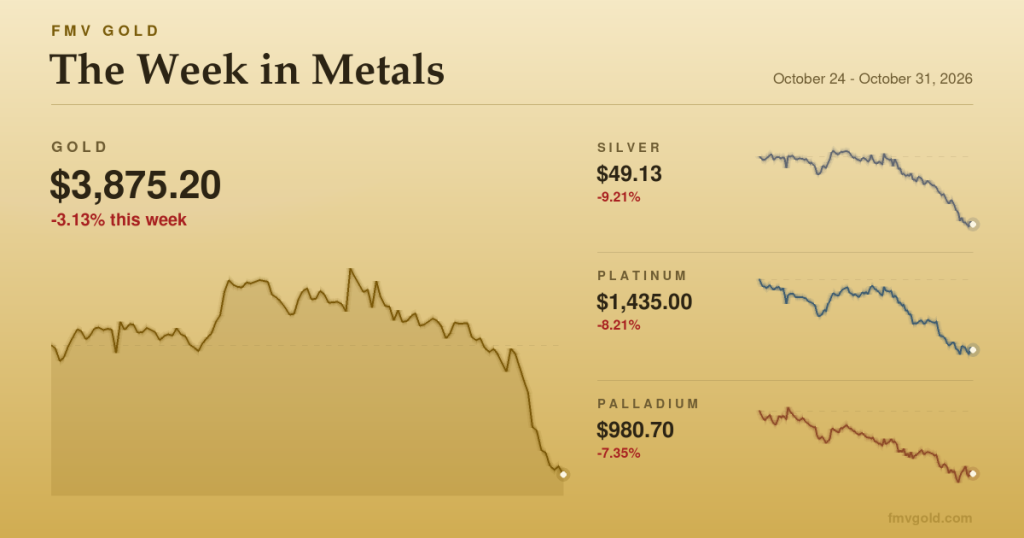
The metal track. A common-date, uncirculated silver Libertad is a one-ounce silver coin, and its floor is the price of an ounce of silver. That floor moves. Silver spot sat near $49 an ounce in early November 2026, roughly a fifth lower than a month earlier and about level with a year ago, so the metal value of any plain one-ounce coin has dropped by more than ten dollars in four weeks. A Libertad bought for its silver will rise and fall with that number like anything else in the stack. You can follow it on our markets page.
The scarcity track. This is where the Libertad parts company with its peers. Mexico’s annual output swings widely from year to year with production decisions and demand, and in many years it is small. The 1998 one-ounce business strike had a mintage of just 67,000 coins, the lowest of any regular one-ounce Libertad through 2024. The 1997 (100,000) and 1999 (95,000) are close behind. For scale, the lowest-mintage bullion Silver Eagle, the 1996, came in above 3.6 million. Even recent years such as 2018 and 2020, at 300,000 one-ounce coins each, are modest by Eagle or Maple standards.
Low mintage alone does not make a coin valuable. What turned the late-1990s Libertads into genuine collectibles is that so few were saved in pristine condition. Ian Russell, president of the auction firm GreatCollections, put it simply after a 1998 coin graded a perfect NGC MS-70 sold well into five figures in June 2026: nobody put away monster boxes of the 1998 the way Americans did with Silver Eagles. Bullion coins pick up contact marks in production and shipping, so top-grade survivors are thin, and registry collectors chasing a complete date run all need the same key.
Prices for those key dates have climbed sharply over the past few years, with activity reported to have accelerated in the first half of 2026. That is a collector market, and it carries collector risks: thin trading, grade sensitivity, and demand that can cool as quickly as it warmed. Treat a graded 1998 as a numismatic purchase, not a silver purchase. The melt value underneath it is a small fraction of what it trades for.
How the Libertad Fits in a Holding
For most buyers the honest framing is that a Libertad is a one-ounce silver coin with an unusually interesting option attached. Some practical points:
- Premiums. Small annual supply tends to mean a richer premium over spot than high-volume coins carry. If your only goal is ounces per dollar, a lower-premium coin or round may serve you better.
- Resale. Bullion dealers know the Libertad well, but it is less familiar to a casual local buyer than an Eagle or Maple. Our piece on which gold and silver coins are easiest to sell explains why recognition sets the buyback spread.
- Condition. Because the collectible upside lives in high grades, handle Libertads by the edges and keep them in capsules or the original tube. A fingerprint costs you nothing on a bar and something real on a Libertad.
- Diversity. Holding a few Libertads alongside Silver Eagles and Silver Maple Leafs spreads a stack across three sovereign mints at modest extra cost.
If you are comparing the Libertad with the American coin directly, our Silver Eagle coin pages show the U.S. side of the ledger, and how FMV Gold works explains how we separate metal value from collector value.
The Bottom Line
The silver Libertad is two coins sharing one design. Bought in a current year, it is a handsome, .999 fine ounce of silver from the oldest mint in the hemisphere, worth what silver is worth plus whatever premium you paid. Bought as a late-1990s key date in top grade, it is a collectible whose price has little to do with this week’s spot quote. Neither is wrong. The mistake is paying for the second while thinking you bought the first.
This article is for general information and is not investment advice. Melt value is a metal floor, not a market price; collector coins can trade well above or below it.