
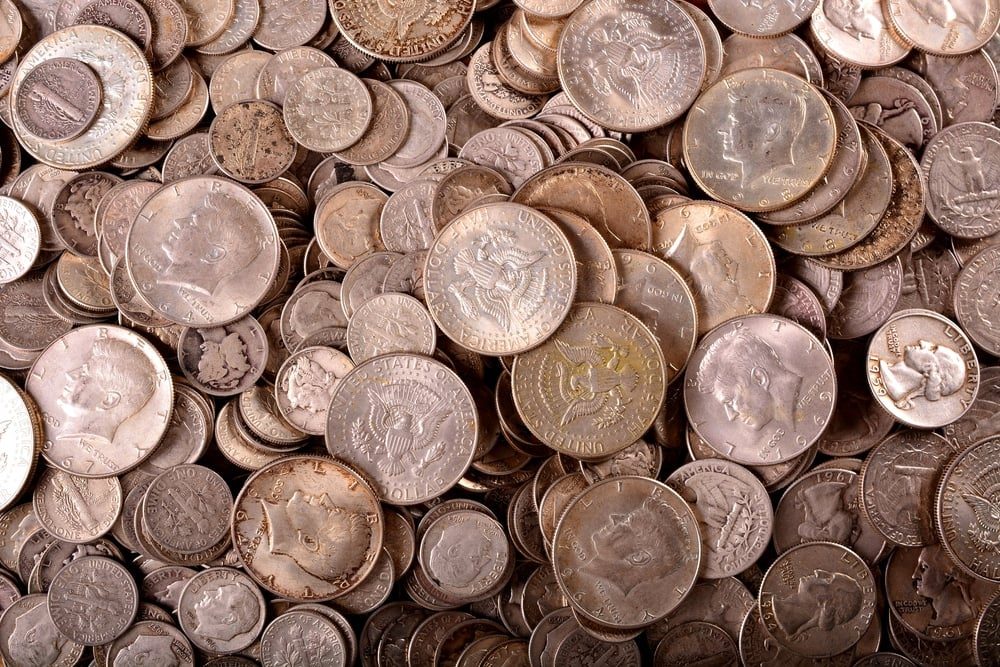
Walk into any coin shop and ask about the cheapest way to start owning physical silver, and sooner or later someone will slide a bag of worn dimes and quarters across the counter and call it junk. The name is a bad joke. There is nothing junky about it. It just means old United States coins that trade for the silver in them rather than for any collector value, and for a lot of buyers it is the most sensible metal in the case.
The name goes back to the coin trade itself. Dealers needed a word for common, circulated silver coins with no date rarity and no grade worth paying up for. These are coins you buy by the pound of metal, not by the piece, so they got lumped together as junk. Everything under the label is real 90% silver struck by the U.S. Mint, which is why plenty of people who own it quietly prefer the term to almost anything else in the shop.
What Counts as Junk Silver
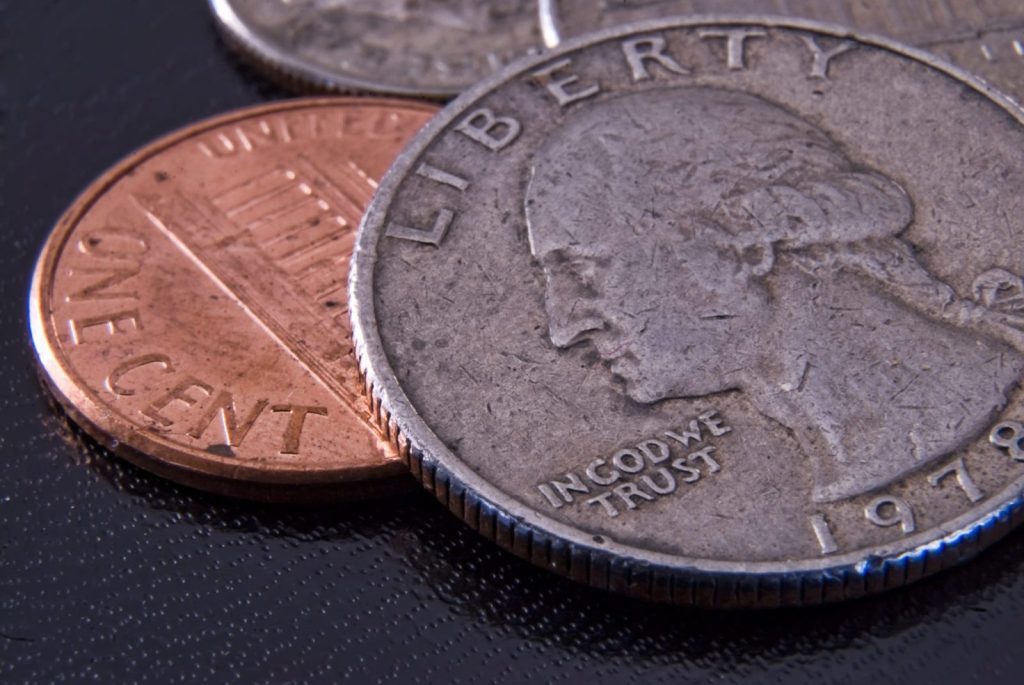
The core of it is simple: any circulating U.S. dime, quarter, or half dollar dated 1964 or earlier. Those coins are 90% silver and 10% copper, the alloy the country used for its silver coinage for well over a century. That covers Roosevelt and older Mercury dimes, Washington quarters going back to 1932, Walking Liberty and Franklin half dollars, and the first-year 1964 Kennedy half. Designs vary, dates vary, and none of that matters much when the coins are worn smooth. What matters is the metal.
Silver dollars are a different animal. Morgan and Peace dollars are also 90% silver, but they carry collector demand and trade on their own, so they are rarely tossed in with junk. If you are curious how those markets work, the profiles on the Morgan dollar and the Peace dollar lay out why a cartwheel dollar is priced very differently from a beat-up dime.
How Much Silver Is in Junk Silver
Here is the part worth memorizing, because it turns a pile of odd coins into a known quantity of metal. A 90% dime holds about 0.0723 troy ounce of silver. A quarter holds roughly 0.1808 ounce, and a half dollar about 0.3617 ounce. Add those up and a single dollar of face value, whether that is ten dimes, four quarters, or two halves, works out to close to 0.715 ounce of silver.
Fresh from the Mint the number is a shade higher, around 0.7234 ounce per dollar of face. Decades of riding around in pockets and cash drawers wear a little metal off, so the trade settled on 0.715 as the working figure for circulated coins. Scale that up and the classic 1,000 dollar face value bag comes to roughly 715 ounces of silver. With silver trading near 68 dollars an ounce in late August 2026, up better than 17% in a single month, the metal content is the whole story. You can see the running spot price move and the way we show metal value rather than a retail sticker on any coin.
The 1965 Cutoff and Its Odd Cousins
Silver left circulating coinage on a schedule set by law. The Coinage Act of 1965 ended silver in dimes and quarters outright, sending both to the copper-nickel clad sandwiches we still use. That single line in the statute is why 1964 is the magic date on a dime or a quarter.
Half dollars held on a bit longer in a diluted form. From 1965 through 1970 the Kennedy half was struck in a 40% silver clad, roughly 0.1479 ounce of silver per coin, before it too dropped to copper and nickel in 1971. Collectors treat those 40% halves as a separate, lower-content tier, so watch the date on a Kennedy before you assume it is 90%.
There is one more silver coin that catches people off guard. From partway through 1942 into 1945, the Mint pulled nickel for the war effort and struck the five-cent piece in 35% silver, about 0.0563 ounce each. You can spot these so-called war nickels by the large mint letter, P, D, or S, floating above Monticello on the reverse, the first time Philadelphia ever put its own letter on a coin. They are worth pulling out of any nickel jar.
Why Buyers Reach for It
The first draw is cost. Because these coins carry no numismatic premium and the government already did the minting decades ago, junk silver usually sits among the lowest premiums over the metal value of anything on the counter. You are paying for silver and very little else.
The second draw is how it breaks down. A dime is a tenth of an ounce of silver in a form every American recognizes on sight. If you ever wanted to trade or sell a small, exact amount, a handful of 90% dimes does that in a way a one-ounce bar cannot. That divisibility, plus the fact that these are still legal tender coins with a familiar face, is why prepared buyers keep some on hand. Compare it against a modern one-ounce coin like the Silver Eagle and the trade-off is clear: the Eagle offers a guaranteed weight and a government proof of purity, while junk silver offers smaller units and a thinner premium.
What to Watch Before You Buy
A few honest cautions. Worn coins hold slightly less than a mint-fresh coin, which is exactly why dealers price bags on that 0.715 figure rather than the theoretical weight. During buying panics the premium on physical silver can jump hard even when the spot price is falling, since the shortage is in finished coins, not raw metal, and small recognizable silver is the first thing to run short. Half dollars sometimes ask a touch more than dimes and quarters because they are harder to find. And junk silver is a metal play, not a rarity play, so do not expect the sort of appreciation a scarce date can bring. If a key date happens to turn up in a bag, that is a bonus, not the plan.
None of that changes the basic appeal. Junk silver is real United States silver, bought close to its metal value, in units small enough to be genuinely useful. For a first stack, or for the divisible corner of a larger one, it earns its place. You can browse the wider coin listings to see where these worn old dimes sit alongside everything else a holder might want.