
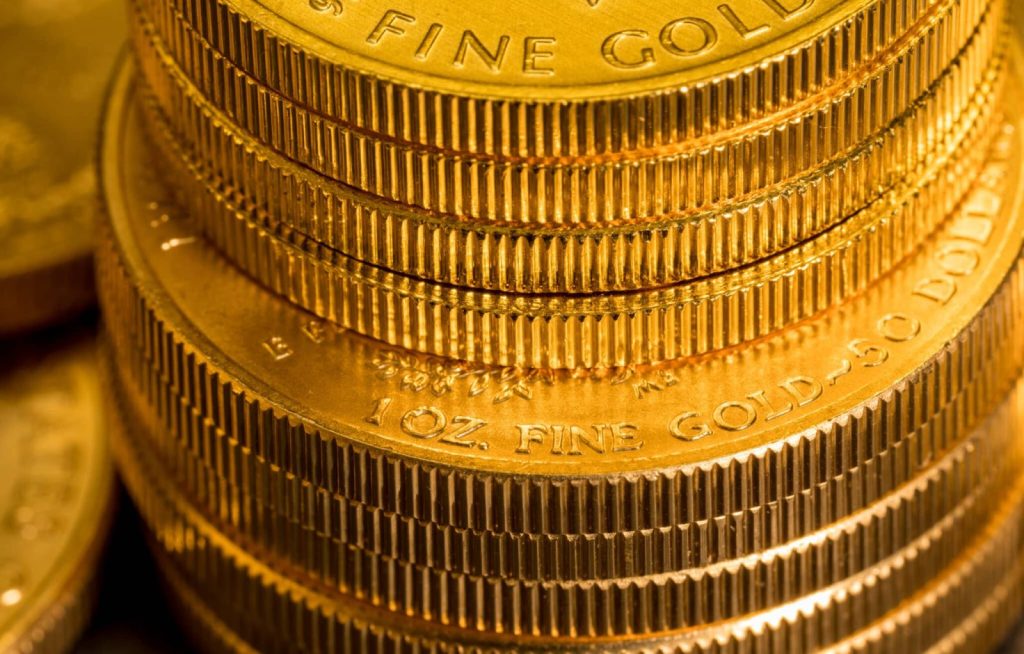
Ask a coin dealer what a bullion piece is worth and the first thing running in the background is a simple sum: how much metal is in the coin, and what that metal fetches on the wholesale market right now. That number is the melt value. It is the floor under any gold or silver coin, the one figure you can work out yourself with a scale, a fineness table, and the day’s spot price. Learning how to calculate the melt value of a coin is the single most useful habit a new buyer can build, because it tells you what you are really paying for the metal and what you are paying on top for everything else.
What melt value is, and what it is not
Melt value is the worth of the raw metal a coin contains if it were melted down to an anonymous puddle. It ignores the design, the mint, the year, the grade, and the story. A worn 90 percent silver quarter and a pristine one hold almost the same amount of silver, so their melt values are nearly identical even though a collector might pay a large premium for the pristine one.
The key word is floor. Melt is the least a piece of real bullion is worth, not the most, and never what you will actually pay at the counter or receive when you sell. Proof coins, graded coins, low-mintage issues, and pre-1933 gold all trade above melt on collector demand. The gap between melt and the market price is where premiums and spreads live. If you want the metal-market side of that story, our explainer on what the spot price of gold actually means covers where the underlying number comes from.
How to calculate the melt value of a coin
Every melt calculation, no matter the coin, is the same three ingredients multiplied together:
- Weight, converted to troy ounces. Precious metals are weighed in troy ounces, not the ordinary avoirdupois ounce in your kitchen. One troy ounce is 31.1035 grams. If you have a coin’s weight in grams, divide by 31.1035 to get troy ounces.
- Fineness, the share of the coin that is actually the precious metal, written as a decimal. A 90 percent silver coin has a fineness of 0.900. A 22-karat gold coin is 0.9167. A modern .999 bullion coin is, well, 0.999.
- Spot price, the current wholesale price of that metal per troy ounce, which you can read off any live market page.
Put them together and the formula is:
Gross weight in troy ounces, times fineness, equals pure metal content in troy ounces. Pure metal content, times spot price per troy ounce, equals melt value.
That first step, weight times fineness, is worth doing on its own, because the pure metal content of a given coin never changes. Once you know a coin holds a fixed amount of gold or silver, the only moving part left is spot. You can look up published silver and gold prices on our markets page and drop today’s number straight into the second step.
A worked example, one ounce at a time
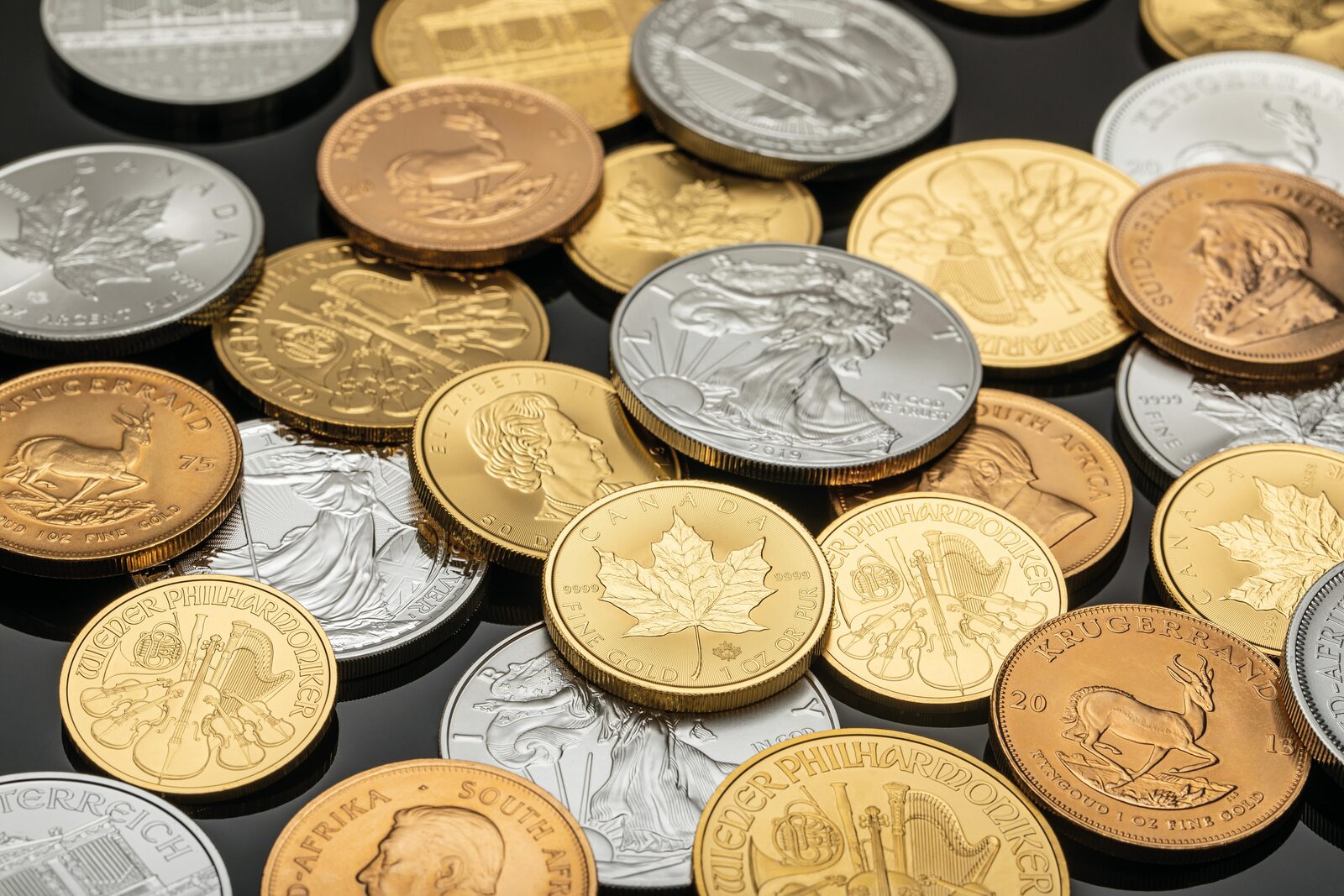
Start with the easiest case, a coin sold as one troy ounce of pure metal. A Silver Eagle is one troy ounce of .999 silver. Its pure content is 1.000 times 0.999, which rounds to one full ounce of silver. So its melt value is simply one times spot. With silver near 70 dollars an ounce in late August 2026, the metal in a Silver Eagle is worth close to 70 dollars. Nothing more to compute.
Gold works the same way once you watch the fineness. A Gold Eagle is a 22-karat coin, 0.9167 fine, which trips up beginners who assume 22-karat means less gold. It does not. The one-ounce Gold Eagle is deliberately made a little heavier, about 1.0909 troy ounces gross, so that after you multiply gross weight by 0.9167 you are left with a full troy ounce of pure gold. Its melt value is one times the gold spot price. With gold near 4,600 dollars an ounce in that same stretch, the pure gold in the coin is worth roughly 4,600 dollars. The extra copper and silver in the alloy add hardness, not value.
The coins that trip people up
Round numbers are the exception. Most classic U.S. silver was struck at 90 percent fineness, and the arithmetic there is the reason junk silver has its own shorthand. A Morgan dollar weighs 26.73 grams at 0.900 fine. Divide 26.73 by 31.1035 to get 0.859 troy ounces gross, multiply by 0.900, and you land on 0.7734 troy ounces of actual silver. That fixed content, 0.7734 ounces, is all you need. Multiply it by the day’s silver price and you have the melt value of any Morgan or Peace dollar, since the two share the same specification. A circulated example trades well above that metal figure on collector demand, but the floor is the silver.
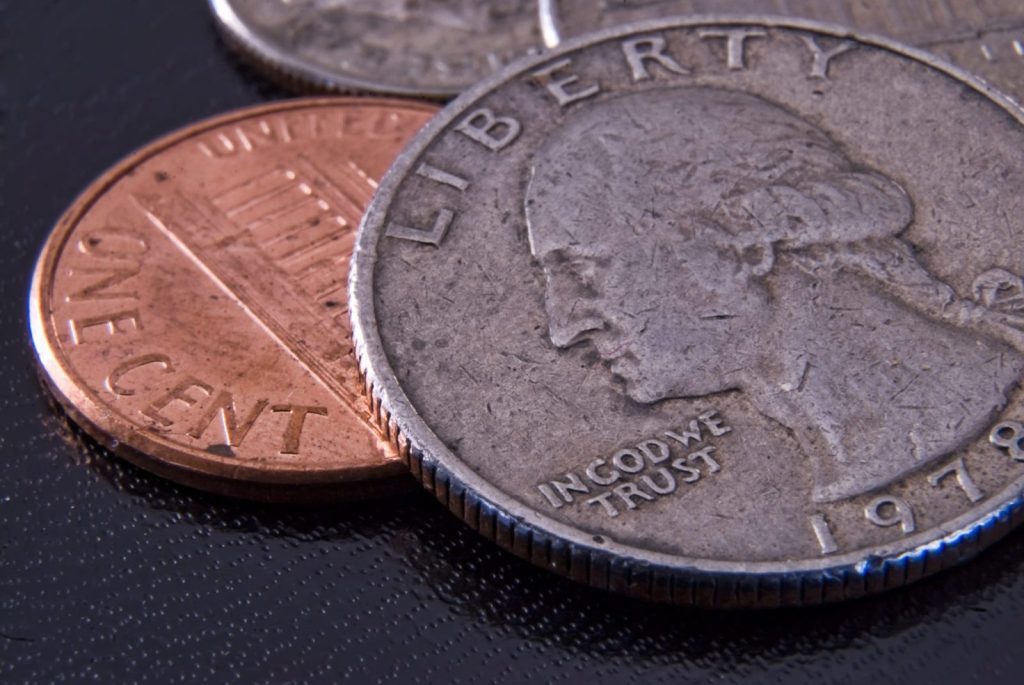
Smaller 90 percent coins scale down cleanly, because they were struck proportional to face value. Dealers skip the per-coin math entirely and use a multiplier: a dollar of face value in dimes, quarters, or half dollars holds about 0.715 troy ounces of silver. That number is a touch below the mint’s theoretical 0.7234 ounces because decades of pocket wear rubbed a sliver of metal off circulated coins, and the industry rounds down to be honest about it. So the setup for a bag of junk silver is face value, times 0.715, times spot. A ten dollar face bag works out to about 7.15 ounces of silver, which at a silver price near 70 dollars is roughly 500 dollars of metal. Uncirculated coins, and pre-1936 silver dollars at closer to 0.769 ounces per dollar of face, run a little higher.
Two more wrinkles are worth filing away. War nickels struck from 1942 to 1945 are 35 percent silver, unlike every other nickel, so they carry real melt where the rest carry none. And 24-karat coins like the American Buffalo, at 0.9999 fine, hold a full ounce of gold in a coin that weighs almost exactly one ounce, since there is barely any alloy to account for.
Why the calculator number is a starting point
Run the formula and you have the metal value. What you will not have is the price. Every real transaction adds a premium over melt when you buy and subtracts a spread when you sell, and those gaps are widest on small, fractional, and heavily collected pieces. Condition matters too, sometimes enormously: the same coin in a high grade can command a multiple of its metal, which is why our guide to how coin grade affects value is worth a read before you judge any older coin by melt alone.
Still, the melt calculation is the anchor for all of it. Knowing that a coin holds a fixed 0.7734 or 1.000 troy ounces of metal lets you separate the part of a price that is honest bullion from the part that is premium, grade, or hope. Do the sum before you buy and before you sell, and you will never mistake the floor for the ceiling. For a wider view of how buyers and dealers actually meet in the middle, our overview of how it works puts the melt floor in context.