

Watch a bullion market during a real scare and you notice something that seems to break the rules. The spot price on the screen is falling, sometimes hard, yet the coin you actually want costs more than it did a week ago, and the dealer says it will ship in three weeks if you are lucky. Spot down, real cost up. That gap is the premium doing its job, and it is where the stress in a shortage shows up first.
If you have read our explainer on what the premium over spot actually is, the short version is that a finished coin or bar is a manufactured product. Spot is the wholesale price of the metal itself. The premium is everything it takes to turn raw metal into a stamped, recognized, deliverable coin sitting in a dealer’s case. In calm markets that premium is small and stable. In a shortage it can multiply, and understanding why tells you a lot about how the physical market really works.
What actually runs short
The first surprise is that the world almost never runs out of gold or silver. What runs short is finished product. Between the metal and your hand sits a chain of choke points: the refiners who cast and roll the metal, the blank suppliers who punch out planchets, and the mints that strike and package coins. That capacity is close to fixed in the short run. A mint cannot conjure a second production line in a week, and a refiner cannot double its furnaces overnight.
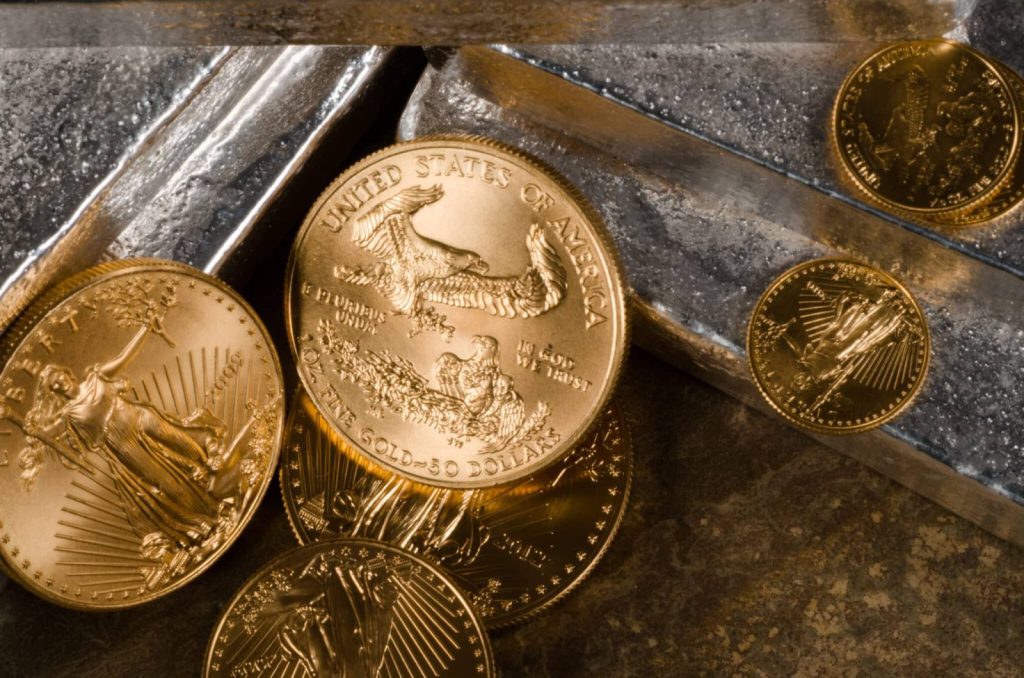
So when demand triples in a month, the metal is still there, but the machinery to convert it into Eagles and rounds is not. Orders back up. Dealers who normally restock in days wait weeks. The scarce thing is not the element on the periodic table, it is the finished, recognized coin, and the price of that scarcity is paid through the premium.
Why gold and silver premiums spike during shortages
Premiums spike during shortages because spot and the physical coin are set in two different markets that usually track each other and occasionally come apart. Spot is discovered in enormous, liquid futures and wholesale markets where paper positions change hands in seconds. The retail coin trades in a much smaller world of mints, distributors, and dealers moving physical boxes. When a panic hits, paper can be sold instantly, which is why spot can drop as frightened investors raise cash. Physical supply cannot move that fast, so the premium on the finished product rises to ration what little is available. The two prices decouple, and the premium is the visible measure of the distance between them.
This is also why a shortage widens the gap between what a dealer will buy at and what they will sell at. Our piece on the bid-ask spread covers the mechanics, but the headline is simple: when a market maker cannot easily replace what they sell, they protect themselves by quoting a wider spread. Higher premiums and wider spreads tend to arrive together.
Three times the physical market broke from spot
The pattern is not theoretical. It has played out repeatedly, and the numbers are worth knowing because they show just how far premiums can travel.
In the 2008 financial crisis, physical shortages ran from roughly September 2008 into the spring of 2009. Across the market, premiums on American Gold Eagles moved from about 4 percent in June 2008 to around 11 percent that October. The move in silver was far more dramatic: premiums on bags of 90 percent junk silver went from under 1 percent in the spring to roughly 40 percent by October. All of this happened while spot prices were falling, as a global scramble for dollars pushed metal quotes down before they rebounded in early 2009. These are market-wide averages, not any single seller’s quote, and they show the premium absorbing pressure that spot alone did not.
March 2020 was stranger still. As the pandemic locked down Europe, the Swiss refineries clustered in the Ticino region shut their doors, and the air freight that normally carries refined metal between London and New York was grounded. The wholesale plumbing seized: the exchange-for-physical market that links futures to deliverable metal dried up, the spread between COMEX futures and London spot blew out, and one broker described conditions as worse than anything in 2007 to 2011. At the retail end, the U.S. Mint temporarily suspended American Silver Eagle production, private mints sold out of bars and rounds, and premiums jumped on both what dealers would pay and what they would charge. Buyers who could find product waited weeks for delivery.
Then came the so-called silver squeeze of early 2021. On February 1, retail buyers organized on Reddit poured into silver, and the spot price jumped more than 10 percent to above 30 dollars an ounce, its highest level since 2013. Coin sellers warned almost immediately of delivery delays amid demand they called unprecedented. Unlike 2008 and 2020, spot rose here rather than fell, but the physical result was the same: finished silver got scarce and premiums climbed. Shortages do not care which direction spot is moving.
Between these headline events, quieter squeezes have come and gone. The Mint suspended Silver Eagle sales and moved to a formal rationing, or allocation, system during stretches of 2013 and 2015, parceling out coins to its authorized purchasers rather than selling all a hungry market wanted. Our own desk has flagged a more recent Silver Eagle squeeze worth keeping an eye on.
Why the coin absorbs the stress, not spot
It helps to think of spot as the price of a commodity and the premium as the price of a service. The commodity trades in a market deep enough to swallow enormous orders without much moving. The service, which is fabricating and delivering a trusted coin, has a hard capacity ceiling. When everyone wants that service at once, its price is what gives.
Which product you want matters, too. Recognized government coins such as the American Silver Eagle tend to see the sharpest premium spikes, because in a panic buyers flee to the most liquid, most recognizable names and the Mint is the single bottleneck feeding them. Generic private rounds and larger bars usually move less, since more refiners can make them and buyers are less fussy about the exact stamp. As a rule, the smaller and more retail the item, the wilder its premium swings; a fractional coin can gap far more than a kilo bar.
What it means when you are the buyer
The practical lesson is that premiums are not noise, they are a real and variable cost that lands on you twice, once when you buy and again when you sell. Pay a 40 percent premium in a frenzy and the metal has to climb meaningfully just to get you back to even. The good news is that these spikes are temporary. Capacity catches up, panic fades, and premiums drift back toward their quiet-market baseline, usually within months.
That argues for a certain contrarian patience. The cheapest premiums are almost always available when nobody is lining up, and the worst time to demand physical metal is the exact moment everyone else is demanding it as well. If you understand that gold and silver premiums spike during shortages, you can plan around the pattern instead of being surprised by it: build a position in calm stretches, treat a premium blowout as a signal of stress rather than a reason to chase, and read the premium as a live gauge of how tight the physical market has become.
Watching how those premiums move over time is part of what we track. You can follow the broader picture on our markets page, and if you are new to how melt value, spot, and premium fit together, our how it works guide lays out the foundation before you ever browse a single coin listing.
This article is general market education, not investment advice. Premiums, spreads, and availability change constantly and vary by product and market conditions.