

A pre-1933 gold coin sits in an odd and appealing spot. It is real bullion, struck from the same metal that trades on the wire every morning, yet it also carries a design, a date, and a survival story that a modern round never will. That double identity is exactly what makes buyers ask whether pre-1933 gold coins are a good investment, or just an expensive way to own an ounce of gold.
What “pre-1933 gold” actually means
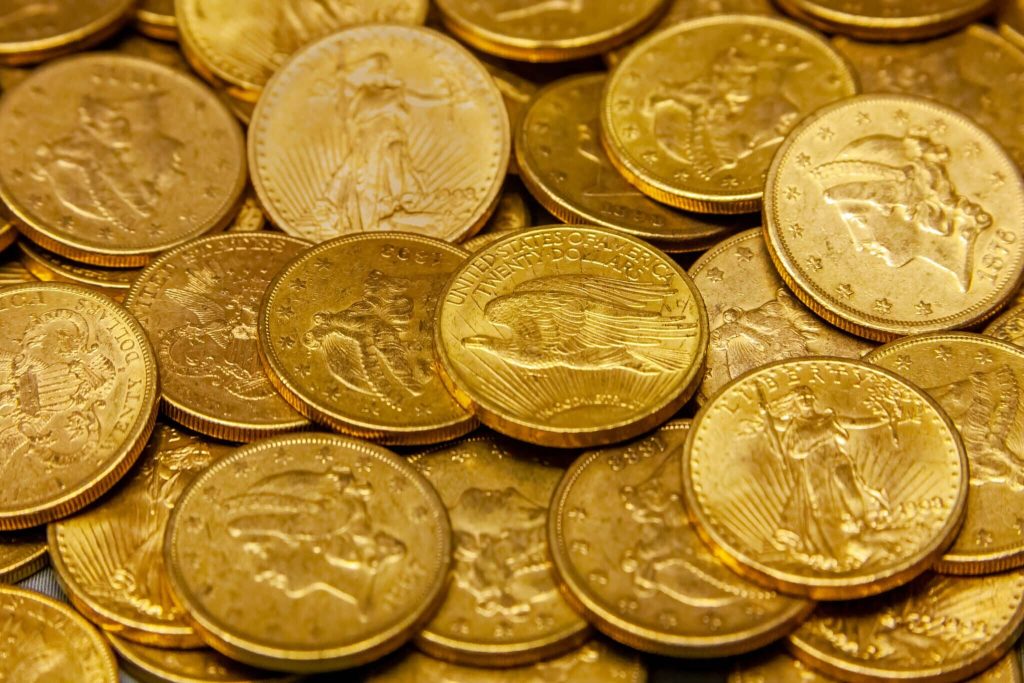
The phrase refers to the circulating gold coins the United States Mint produced before Franklin Roosevelt ended domestic gold coinage in 1933. Four denominations did most of the work: the $2.50 quarter eagle, the $5 half eagle, the $10 eagle, and the $20 double eagle. All of them were struck in .900 fine gold, which is 90 percent gold and 10 percent copper, an alloy sometimes called 21.6 karat because it stood up to pocket wear. That copper is why the color runs slightly warm next to a modern 24-karat bar.
The gold content tracks the face value almost exactly. A $20 double eagle holds 0.9675 troy ounces of pure gold, the $10 eagle holds half that at 0.48375 ounces, the $5 half eagle 0.24187 ounces, and the small $2.50 quarter eagle 0.12094 ounces. The double eagle is the coin most buyers picture, and it came in two great designs: the Liberty Head, or Coronet, type by James Longacre that ran from 1850 to 1907, and the Saint-Gaudens double eagle that replaced it.
The Saint-Gaudens deserves a paragraph of its own. Theodore Roosevelt, unhappy with the artistry of American coins, wrote to his Treasury secretary in late 1904 asking for a coinage with “some beauty” and hired the sculptor Augustus Saint-Gaudens to deliver it. The first 1907 coins were struck in a relief so high the Mint’s presses choked on them, and only a small experimental run of ultra-high-relief pieces survives. Roosevelt also wanted the motto “In God We Trust” left off, a decision Congress promptly reversed. The lower-relief version minted from 1907 through 1933 is the coin collectors chase today.
Why the year 1933 changed everything
On April 5, 1933, Roosevelt signed Executive Order 6102, ordering Americans to hand in their gold coins, bullion, and gold certificates to Federal Reserve banks by May 1. The penalties on paper were severe, up to a $10,000 fine or ten years in prison. Citizens could keep gold worth up to $100 at face value, and, crucial to this story, the order exempted “gold coins having a recognized special value to collectors of rare and unusual coins.” That single clause is the reason a legal collector market for these coins exists at all.
The following January, the Gold Reserve Act revalued gold from $20.67 an ounce to $35, a jump the Treasury pocketed after paying the old price for everything it had gathered in. Millions of coins went to the melting pot in those years, which is why many dates are scarcer today than their original mintages suggest. The interesting part is where the survivors came from. Enormous quantities of U.S. gold had been shipped abroad over the decades and sat untouched in European bank vaults, beyond the reach of the melt. The 1924 double eagle is the classic case: more than four million were struck, it was once considered genuinely scarce, and then bags of them came home from Europe and turned it into one of the most common dates a buyer can find. For more on how that recall built the modern collector market, see our piece on when a bullion coin becomes a collectible.
Where the premium comes from
Pre-1933 gold is the textbook semi-numismatic product: part metal, part collectible, priced above its underlying metal value but not purely on rarity. For a common date in a circulated grade, that premium is thin, often just a few percent over the gold it contains, so you are buying bullion with a bit of history attached. Push up the grade and the math changes quickly. A common-date double eagle certified around Mint State 63 might carry roughly 15 to 20 percent over its metal value, while the same coin in a crisp MS-65 can command well past 100 percent, because pristine survivors are genuinely scarce. Certain dates and mints add another layer. Carson City coins, struck at the frontier mint that served the Comstock Lode, carry strong collector premiums almost regardless of grade.
This is the same spectrum we lay out in our bullion versus semi-numismatic explainer. Near the bullion end you pay for gold and liquidity. Toward the collectible end you pay for condition and scarcity, and that portion of the premium can move on its own, rising when collector demand is hot and compressing when it cools, regardless of what spot did that week.
Are pre-1933 gold coins a good investment?
The honest answer is that it depends on which coin, and on why you are buying. If you want the cheapest exposure to an ounce of gold, a plain modern gold bullion coin or a bar will usually get you there for less premium. Pre-1933 gold earns its keep for a different buyer: someone who wants metal that also carries design, age, and a collectible dimension, and who accepts that part of the price can rise or fall with the collector market rather than with gold alone. Common-date coins in modest grades behave almost like bullion and stay easy to sell. High-grade and rare-date pieces behave more like collectibles, with wider spreads and a thinner pool of buyers.
One claim deserves a plain warning. Some sellers market pre-1933 gold as “confiscation-proof,” implying it is legally shielded from any future recall. No such law exists. The 1933 collector exemption applied to that order only, and a future government would not be bound by it. Most observers consider another gold recall very unlikely in a world that no longer runs on a gold standard, but that is a judgment about probability, not a legal guarantee, and it is a poor reason to pay a higher premium.
Buying without overpaying
Two habits protect a first-time buyer. Decide up front whether you are buying metal or a collectible, because that choice sets how much premium is reasonable to pay. For pure gold exposure, stick to common dates in ordinary certified grades and treat the coin as bullion that happens to carry a story. If you are stepping toward the numismatic end, buy coins graded by a major service, learn which dates and mints hold real scarcity, and keep a record of what you paid and why. When you are ready to look at specific coins, you can browse the full coin catalog and match a date and grade to your goal.
Pre-1933 gold rewards the buyer who knows which half of the coin they are paying for. Bought as common-date metal, it is a durable way to hold gold with a piece of American history in hand. Bought as a rarity, it asks for the patience and knowledge any collectible demands. Neither approach is wrong. The costly mistake is paying a collector’s premium and then expecting a bullion coin’s liquidity.