

The five-cent piece is the plainest thing in an American pocket. No silver, no gold, no eagle on the back, just a president and his house. It is also the only denomination still circulating in essentially the metal Congress gave it in 1866, and the one lawmakers are arguing over right now. The history of the U.S. nickel is more interesting than the coin looks.
A coin invented to fill the hole silver left
Five cents used to mean a half dime, a thin silver coin about the size of a fingernail. The Civil War ended that. In 1861 and 1862 the half dime followed the rest of American silver into hoards and speculators’ boxes, and what circulated instead was fractional paper currency almost nobody liked handling.
Into that gap walked Joseph Wharton, the Pennsylvania industrialist who reopened the Gap mine in 1862, ran a refinery in Camden, New Jersey, and made his first delivery of nickel to the Mint in early 1864. He had a metal to sell and a talent for persuading Congress to buy it. The three-cent piece of 1865 became the first American coin struck in 75 percent copper and 25 percent nickel. The Act of May 16, 1866 extended that alloy to a new five-cent coin, and the first pieces came off the Philadelphia presses that June. The Mint’s own timeline puts it plainly: the nickel five-cent coin was authorized “to replace the smaller silver five-cent coin.” The half dime lingered until the Coinage Act of 1873 finished it off, one of several denominations that quietly disappeared in the nineteenth century.
The history of the U.S. nickel in four designs
Shield nickel, 1866 to 1883
Chief Engraver James B. Longacre adapted the shield he had already used on the two-cent piece. Wharton, who had lobbied the coin into existence, was unimpressed with the result and described the obverse as “a tombstone surmounted by a cross and overhung by weeping willows.” The first version placed rays between the stars on the reverse. Nickel blanks are hard, the dies wore out fast, and the rays came off in 1867 to extend die life, which is why collectors still sort the early dates into two varieties.
Liberty Head nickel, 1883 to 1913
Chief Engraver Charles E. Barber’s replacement arrived in February 1883 with Liberty on the front and a Roman numeral V in a wreath on the back. The word CENTS was nowhere on it. Within nine days the Secret Service warned that a thin plating would let someone pass the coin as a new gold issue, and by early March the Mint was cutting dies with CENTS added. About 5.47 million of the first version reached circulation.
The gold-plated fakes earned the nickname “racketeer nickels,” and they come attached to a story about a deaf con man named Josh Tatum who supposedly worked them across New York. That part is unverified: researchers have found no census record, no criminal file, and no contemporary newspaper account of the man. The series ended in 1913 and then produced one of the most famous American coins of all, the five Liberty Head nickels dated 1913 that the Mint never authorized. They sit among the other great U.S. rarities for reasons more to do with mystery than metal.
Buffalo nickel, 1913 to 1938
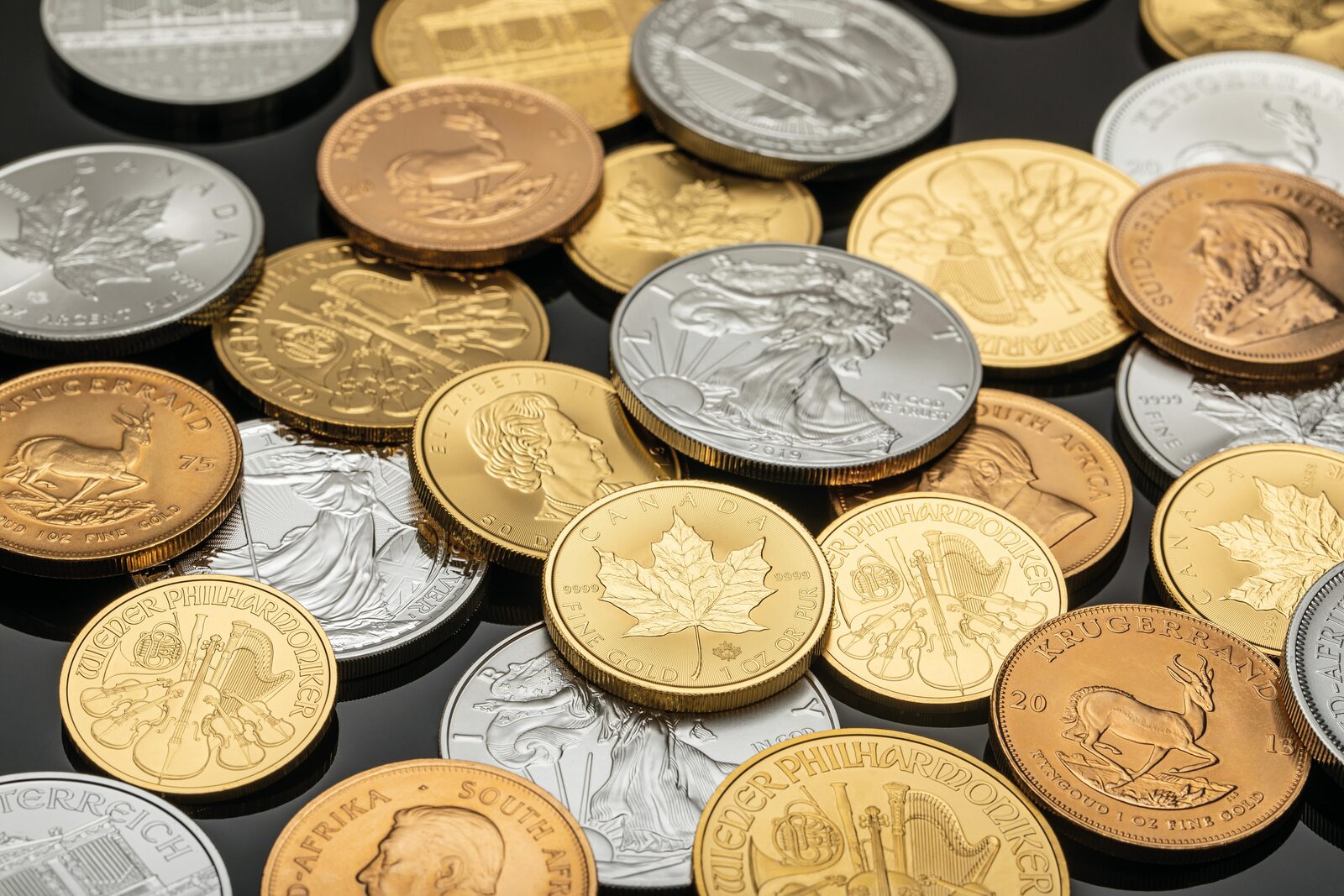
James Earle Fraser gave the denomination its best-loved design, a Native American portrait facing a standing bison. It was also a headache to produce. The relief was hard on dies, the coins did not always strike up cleanly, and the date sat on a raised shoulder that wore smooth in circulation, which is why plenty of Buffalo nickels survive with no readable date at all. The bison came back in modern form on the Mint’s gold bullion series, which is why buyers of the American Buffalo are looking at a design first cut for a five-cent piece.
Jefferson nickel, 1938 to today
An 1890 law let the Treasury change a coin design after 25 years without going back to Congress, and 1938 was the Buffalo’s twenty-fifth year. The Mint ran a competition with a $1,000 prize. Roughly 390 entries reached the judges, and a German-born sculptor named Felix Schlag won with a Jefferson portrait and a three-quarter view of Monticello. Officials made him redo the reverse, replacing his modern lettering with Roman letters and his angled house with a straight-on elevation. Production started at Philadelphia, Denver, and San Francisco on October 3, 1938.
The design held for 65 years. In 2004 and 2005 the Westward Journey series marked the Lewis and Clark bicentennial with the Peace Medal, Keelboat, American Bison, and Ocean in View reverses. In 2006 Monticello returned, restored by sculptor John Mercanti, and Jamie Franki’s new obverse, chosen from 147 candidates, made Jefferson the first president to face forward on a circulating American coin.
The silver years, 1942 to 1945
Nickel is useful for armor plate, so the Second War Powers Act took it out of the five-cent coin. Starting in October 1942 the alloy became 56 percent copper, 35 percent silver, and 9 percent manganese at the same 5.00 gram weight, which works out to 1.75 grams of silver per coin. To make the wartime pieces easy to spot later, the Mint moved the mint mark to a large letter above Monticello’s dome and, for the first time on a circulating coin, used a P for Philadelphia. That P did not appear again until the Anthony dollar of 1979. The old alloy returned in 1946.
These are the odd ones out in American silver. They do not look the part, they were never 90 percent, and they are the only wartime coins most people can still find by sorting a jar of change. For the longer arc, we covered when the U.S. stopped making silver coins separately, and our guide to mint marks on U.S. coins explains where those letters moved and why.
What a nickel costs now, and what Congress is doing about it
The Mint reports a unit cost for every circulating coin, and the five-cent piece has been underwater a long time. Production and distribution ran 11.54 cents in fiscal 2023, 13.78 cents in fiscal 2024, and 13.31 cents in fiscal 2025, the twentieth consecutive year above face value. With cent production ended in late 2025, a subject we traced through the penny’s full history, the nickel carries more of the small-change load and draws more scrutiny.
The Common Cents Act is the vehicle. The House passed H.R. 3074 on July 14, 2026 by voice vote under suspension of the rules. The Senate discharged its own companion from committee and passed S. 1525 with an amendment by unanimous consent on August 7, 2026. That measure went to the House on August 10 and was held at the desk, where it stood in mid-September 2026. The Senate text would let the Treasury move the coin to a zinc core with a nickel outer layer, within a weight range of 4 to 6 grams, and only after testing shows it costs less and does as little harm as practicable to machines that accept coins. None of it is settled until one identical measure clears both chambers.
One rule worth knowing before you sort
Federal regulation at 31 CFR Part 82 makes it unlawful to export, melt, or treat U.S. five-cent and one-cent coins, with narrow exceptions for small amounts carried by travelers, exports up to $100 in face value for legitimate money or numismatic use, and small-scale treatment for jewelry or novelty purposes. Penalties run to $10,000 and five years. One carve-out matters here: the 1942 to 1945 copper-silver-manganese nickels are specifically exempt and may be exported or melted without restriction.
That exemption is the practical takeaway from 160 years of nickel history. Every other five-cent coin in the jar is a five-cent coin and nothing more, whatever the metal markets are doing. The war nickels are a different animal, and they are the one date range worth pulling aside. To see what the underlying metals are doing on a given day, our markets page tracks spot, and the Rules of Gold covers how we separate metal value from collector value. For how any of it becomes a holding, start with how it works.