

Ask a room of coin buyers when American money stopped being silver and you will get three answers, all partly right. The dime and quarter went first, the half dollar hung on five more years in a watered-down form, and the silver dollar had quietly stopped circulating long before either. The line most holders use is 1964, and it is a good one, but the law that drew it was signed in 1965 and the last silver did not leave pocket change until the end of 1970.
When Did the U.S. Stop Making Silver Coins? The Short Answer
The Coinage Act of 1965, signed by President Lyndon Johnson on July 23, 1965, struck silver out of the dime and the quarter entirely, replacing it with copper-nickel outer layers bonded to a pure copper core. The same act cut the half dollar from 90 percent silver to 40 percent. Silver left the half dollar completely under a law signed at the close of 1970, and halves dated 1971 onward were copper-nickel clad.
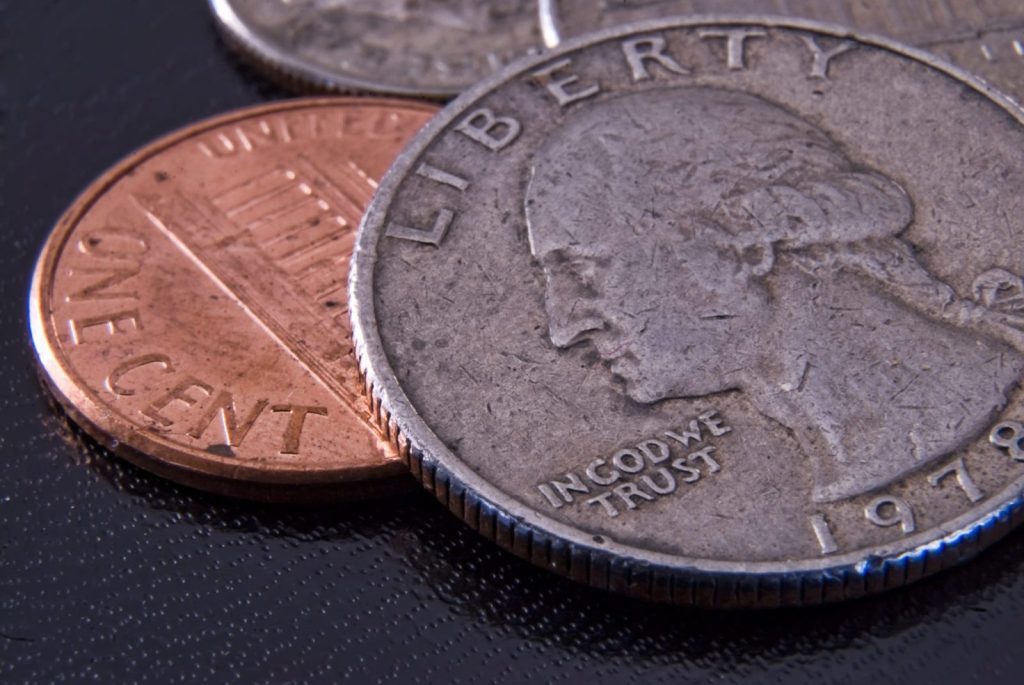
So the country did not stop making silver coins on a single day. It stopped in stages, and the rule that came out of it still works at the coin counter. A dime or quarter dated 1964 or earlier is 90 percent silver. One dated 1965 or later is not. Half dollars need a second look, because the 1965 through 1970 issues are 40 percent silver and the ones after that hold none.
A Standard That Held for More Than a Century
The Coinage Act of 1792 set American silver coins at 1,485 parts silver to 179 parts copper, about 89.24 percent, a figure borrowed from the Spanish milled dollar. The Mint Act of January 18, 1837 rounded that up to .900 fine and put gold and silver coinage on the same fineness for the first time. Nine parts silver to one part copper then held for the dime, quarter, half dollar, and silver dollar straight through 1964.
Alloy that stable is unusual, and it lasted for a plain reason. Silver stayed cheap enough that the metal in a quarter was worth comfortably less than twenty-five cents, so coins circulated because nobody had a reason to pull them out.
The Squeeze of the Early 1960s
By the 1960s that arithmetic was breaking down. World silver consumption more than doubled between 1958 and 1965 while mine production rose only about 15 percent, with photographic film, electronics, and batteries pulling on the same supply. The Treasury covered the gap from a stockpile that stood near 2.1 billion troy ounces in 1958 and was draining fast.
Holding the line meant holding a price. The Treasury sold silver to keep the market near $1.29 an ounce, the level at which the silver in a silver dollar is worth exactly one dollar. Above that number, melting circulating coins turns a profit, and everyone knew it. As the price pressed toward the ceiling, Americans set coins aside by the roll and by the bag, and by 1964 the country had a real coin shortage.
July 23, 1965
Johnson’s remarks at the signing are worth reading now, mostly for how confidently wrong they were. “Silver is a scarce material,” he said, warning that otherwise “we would have risked chronic coin shortages in the very near future.” Then came the part that has aged least well: “If anybody has any idea of hoarding our silver coins, let me say this. Treasury has a lot of silver on hand, and it will be used to keep the price of silver in line with its value in our present silver coin. There will be no profit in holding them out of circulation for the value of their silver content.” The old coins, he added, “won’t disappear and they won’t even become rarities.”
They did not become rarities. They did vanish from cash registers within a few years, which amounts to the same thing for anyone hoping to find one in change today.
The Strange Transition Years
Congress gave the Mint two blunt tools against speculation, and both left marks collectors still notice. The first was a date freeze: coins kept carrying the 1964 date well past 1964, so cents and nickels dated 1964 were struck into 1965 and coins dated 1965 ran into mid-1966. The last 90 percent dimes and quarters came off the presses in spring 1966 wearing a 1964 date.
The second was the removal of mint marks. From 1965 through 1967 no U.S. coin carried a D or an S, on the theory that collectors could not chase varieties they could not identify. Mint marks returned in 1968 and moved to the obverse, where they have stayed. Our guide to reading mint marks covers where to look on everything else. The act also let the Treasury prohibit melting or exporting coins, with penalties running to five years in prison, a regulation used during the crunch and withdrawn in 1969.
The Half Dollar’s Slow Goodbye
Kennedy halves struck from 1965 through 1970 are the 40 percent coins, silver-clad rather than solid alloy. The 1970 issue became a collector footnote: Denver struck halves that year only for mint sets, about 2.15 million, and Philadelphia struck none. A law signed at the end of December 1970 finished the job, taking silver out of the half dollar so the denomination might actually circulate and authorizing the Eisenhower dollar in copper-nickel clad, with a 40 percent silver version sold to collectors.
What the Silver Did Next
The price ceiling did not survive long. On Friday, July 14, 1967, acting on a recommendation from the Joint Commission on the Coinage, the Treasury halted all sales of silver at its monetary price. The following Monday spot silver in New York was quoted at $1.78 an ounce, and by early August it was near $1.85. Silver certificates lost their redemption privilege for bullion on June 24, 1968.
What followed was Gresham’s law working exactly as advertised. Coins worth more as metal than as money stopped changing hands, and by the early 1970s the circulating pool had been picked clean. The 1979 and 1980 price spike sent an enormous quantity of ordinary dimes and quarters to the refiner for good. Current quotes sit on our markets page.
What Survived, and Why Buyers Care
The coins that escaped the refiner are what the trade calls junk silver, a poor name for a useful thing. A dollar of face value in circulated 90 percent dimes, quarters, or halves carries roughly 0.715 troy ounces of silver, and the coins are recognizable enough to change hands close to their metal value. Our buyer’s guide to 90 percent coins covers how it trades.
Two oddities sit outside the 1964 rule. The 40 percent halves hold real silver, less per coin than their 90 percent predecessors. And Jefferson nickels struck from late 1942 through 1945 are 35 percent silver, an emergency alloy of 56 percent copper, 35 percent silver, and 9 percent manganese adopted because nickel was a war material. Those pieces wear a large mint mark above Monticello and were the first U.S. coins to carry a P. To turn any of this into a metal figure, our walkthrough on calculating melt value shows the arithmetic, and how FMV works explains where the numbers come from.
Silver Came Back, Just Not to Your Pocket
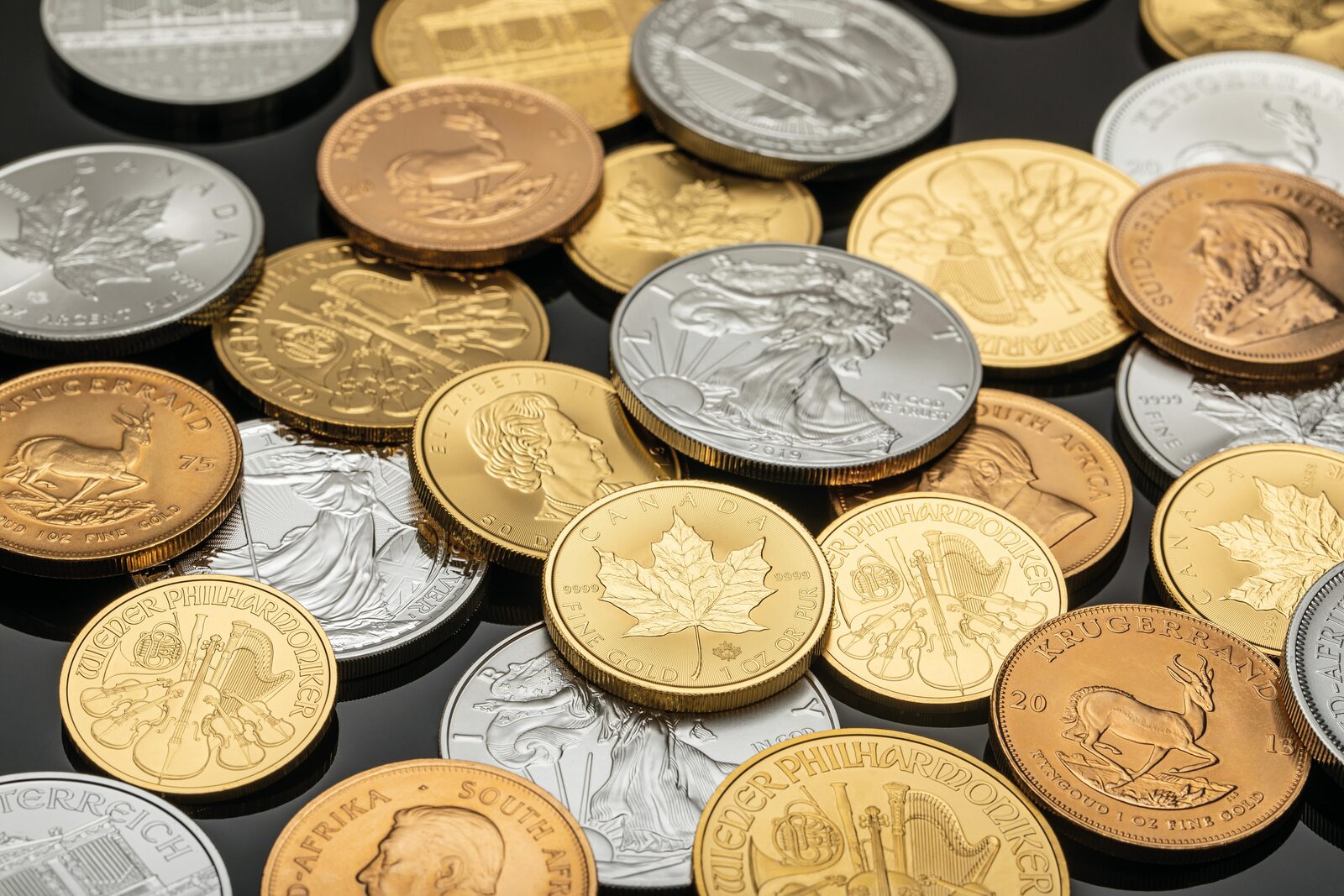
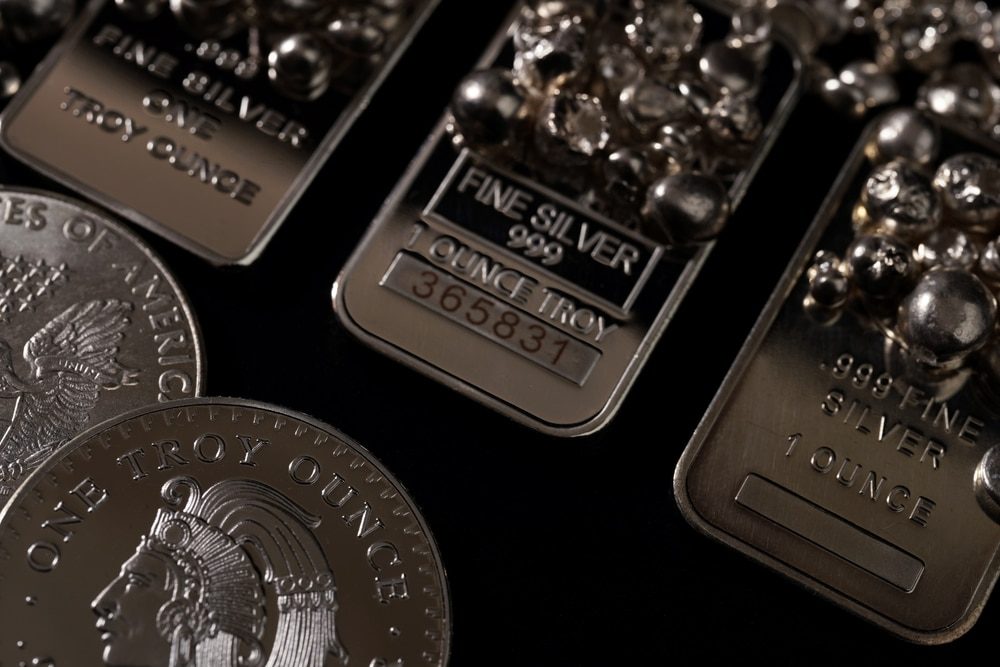
Twenty years after the Coinage Act, the Liberty Coin Act of 1985 authorized a one-ounce .999 fine silver bullion coin, and the first American Silver Eagle appeared in 1986 carrying Adolph Weinman’s Walking Liberty design. So the answer depends on which kind of coin you mean. Silver left circulating money in 1965 and 1970, and came back in 1986 as something you buy on purpose rather than receive by accident.
The quarter is the clearest witness. Its composition held from 1837 to 1964, then changed in a single year, a break you can feel by weight on any two coins from a jar. The full history of the quarter follows it from 1796 forward, silver years and clad years alike.