


Plenty of buyers will spend an afternoon shaving half a point off a coin’s premium, then hand over several times that much at checkout without a second thought. In most of the country that second number is zero, because most states decided years ago that taxing money by the ounce made little sense. In a shrinking handful of places it is not zero at all, and 2025 and 2026 turned out to be unusually busy years for the rules.
Whether you owe sales tax on gold and silver now depends on your own address, the size of the order and sometimes the exact coin. Here is where the map stands, why the tax line often matters more than the premium argument, and the fine print that catches people on their first large purchase.
The short answer on sales tax on gold and silver
Most American buyers pay no state sales tax on investment-grade bullion. Five states (Alaska, Delaware, Montana, New Hampshire and Oregon) have no general sales tax at all. Roughly thirty more exempt precious metals outright, and several exempt them once a purchase clears a dollar threshold. Industry tallies as of late 2026 put the number of states with a full or partial exemption in the mid-forties.
That leaves a short list where bullion is taxed like any other retail good. Hawaii, Maine, New Mexico, Vermont and the District of Columbia have no bullion exemption on the books. Washington joined that group on January 1, 2026. Maryland spent a year in a strange middle position and has since climbed back out, which is a story worth telling in full below.
Why the tax line can dwarf the premium
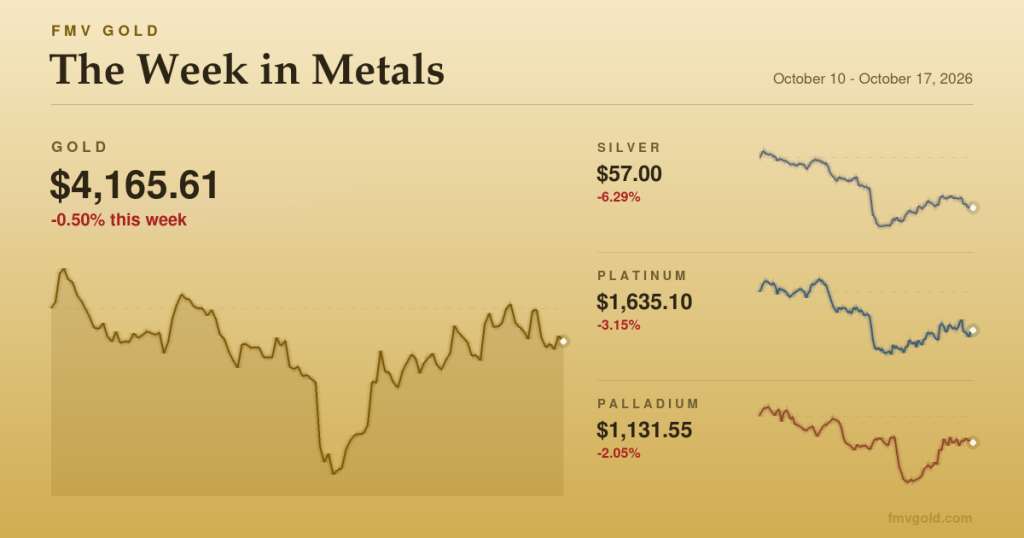
Spot gold sat near $4,300 an ounce on September 25, 2026, with silver around $63.50. Apply a six percent sales tax to one ounce of gold’s metal value and the tax alone runs roughly $260. Percentage premiums on plain one-ounce gold bullion are normally a good deal smaller than six percent, which means a buyer who negotiates hard in a taxing state can still finish behind a buyer who pays an unremarkable premium over spot somewhere exempt.
The asymmetry is arithmetic rather than sentiment. Part of a premium tends to come back when you sell, since the secondary market pays its own premium on recognizable coins, and the rest of the round trip shows up in the bid-ask spread. Sales tax comes back never. The metal has to appreciate by the full amount of it before the position is even, which is a strange thing to volunteer for on a purchase whose entire appeal is the metal.
The map moved in 2025 and 2026
Washington repealed an exemption that had stood for roughly four decades. Under ESSB 5794, enacted as Chapter 423 of the 2025 laws, precious metal and monetized bullion became tangible personal property on January 1, 2026, subject to retail sales tax and to the state business and occupation tax. The state’s Joint Legislative Audit and Review Committee had concluded the exemption “may not be achieving the inferred public policy objective” of keeping Washington competitive with out-of-state dealers. Combined state and local rates push the bite toward ten percent in some jurisdictions. Ryan Hoolahan, chief financial officer of Bellevue Rare Coins, told KOMO News that “people will be impacted, and be forced out of state by it.”
Maryland produced the oddest episode of the two years. Its 2025 budget legislation kept the exemption for purchases over $1,000 but added a condition: the sale had to take place at the Baltimore Convention Center, home of the big Whitman shows. Everything else in the state became taxable on July 1, 2025. One dealer reported a 72 percent drop in showroom traffic. Governor Wes Moore signed House Bill 500 and Senate Bill 309 on May 26, 2026, and the statewide exemption for purchases above $1,000 returned on July 1, 2026.
Virginia came within hours of losing its exemption. The provision was set to sunset on June 30, 2026, and Governor Abigail Spanberger signed the biennial budget bill, House Bill 30, that same day, carrying the exemption forward to 2028. Sunset clauses like Virginia’s are why a state’s status is worth rechecking rather than remembering.
Florida moved the other way twice. House Bill 7031 dropped the state’s old $500 minimum purchase requirement on August 1, 2025, so bullion qualifies regardless of order size. Then, effective July 1, 2026, Florida began recognizing qualifying gold and silver coins as legal tender, with gold at least 99.5 percent pure, silver at least 99.9 percent, and weight and purity stamped on the piece. Palladium, jewelry and coins that miss those standards remain taxable there.
The fine print that trips buyers up
- Thresholds. California exempts qualifying sales above $2,000. Connecticut, Massachusetts, New York and Maryland use $1,000. Connecticut is scheduled to drop its threshold altogether on July 1, 2027. A threshold turns the tax into something small buyers pay and large buyers do not, which is the usual objection to it.
- Definitions. Exemptions are written around metal content, not around the word bullion. Alabama’s turns on whether price depends on metal content rather than rarity. Florida sets purity floors. Graded, commemorative and foreign pieces can fall outside an exemption that covers the plain version of the same metal, so the product category matters as much as the state.
- Your address, not the dealer’s. Since the Supreme Court decided South Dakota v. Wayfair in 2018, remote sellers generally collect based on where the order ships. Buying online from a dealer in an exempt state does not import that state’s rules.
- Use tax. When a seller does not collect, the obligation usually follows the buyer home in the form of use tax. Ignoring it is common and is still not the same thing as owing nothing.
- Local rates. Alaska has no statewide sales tax, yet some municipalities levy their own, so “no sales tax state” is not always the last word.
What to check before a large purchase
- Confirm the current rule with your state’s revenue department or a tax professional. Dealer summaries and blog tables go stale, and this piece is general information rather than tax advice.
- Ask how the specific product is treated before you order, since two sellers can quote the same coin differently and treat the tax question differently too.
- Keep the paperwork. Records describing metal, weight, purity and price support an exemption claim if anyone ever asks, and they make life easier when you sell.
- Watch sunset dates. Virginia and Connecticut both have calendar items pending, and a repeal can arrive through a budget bill rather than a standalone tax debate.
- Do not let tax alone choose the product. Liquidity when you sell outlasts a one-time tax saving, and current spot prices and market conditions move far more money than either.
The tax line deserves at least the scrutiny buyers give the premium. A premium buys a coin somebody will want back, and the way fair market value is calculated here is meant to make that half predictable. A sales tax buys a receipt. Both come out of the same envelope, and only one has a chance of coming home again. Anyone deciding where to transact can start with our dealer directory by state, then read the relevant state code, since the rules on sales tax on gold and silver are written one legislature at a time and revised more often than most buyers expect.