
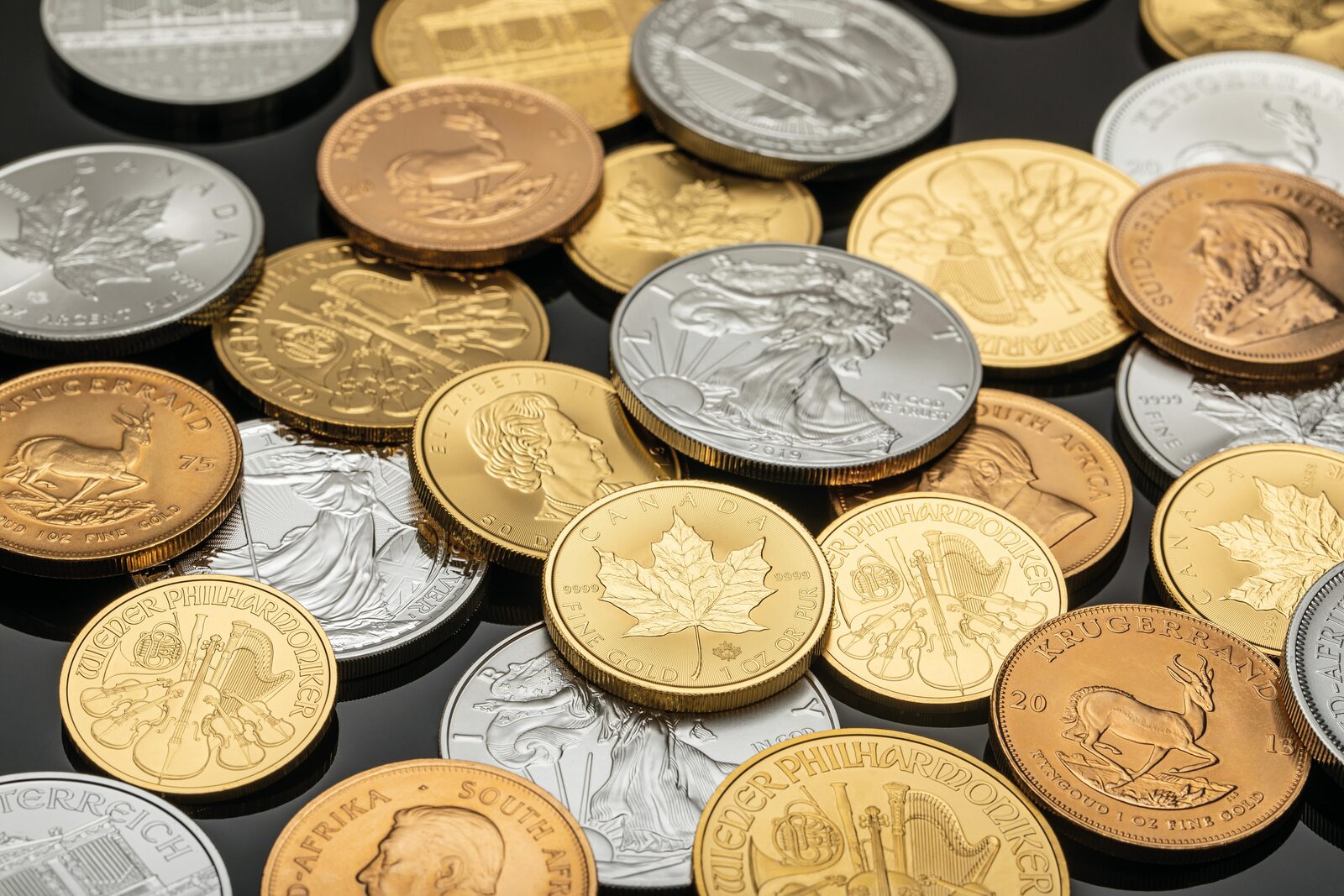
Every major bullion coin has a face you learn to recognize without thinking. Liberty striding into the sunrise, the springbok in mid-leap, the maple leaf with its fine vein lines. China went the other way in 1982, and it is still the only mint of consequence that does: the panda on the reverse gets redrawn almost every year, so a date run of these coins reads like a photo album of the same animal in different moods.
That one decision explains most of what a buyer needs to know about the series, including why it costs more than its metal and why it does not always behave like plain bullion.
Are Gold Pandas a Good Investment? What You Are Actually Buying
A gold panda is .999 fine gold, legal tender in the People’s Republic of China, issued under the authority of the central bank and distributed through the China Gold Coin Corporation. Production is spread across several state facilities, with Beijing, Shanghai, Shenyang and Shenzhen all named in the series history. Chinese mints generally do not sign their work the way U.S. branch mints do, so a panda usually will not tell you which building struck it.
The obverse has stayed loyal to one image since the beginning: the Hall of Prayer for Good Harvests at Beijing’s Temple of Heaven, with the country name in Chinese characters and the year of issue. The reverse is where the variety lives. Shanghai artist Chen Jian drew the first panda, and CoinWeek puts that first year’s one-ounce strike at 16,000 coins, sold out within months and reselling at several times the issue price soon after.
A design that refuses to sit still
The annual redraw has been broken exactly once. Chinese authorities froze the artwork for 2002, reissuing the 2001 panda unchanged. Collectors objected loudly enough that the decision was reversed and yearly changes resumed. That episode is worth remembering, because it shows who actually drives demand for this coin. A pure bullion buyer would not care what the panda was doing in a given year. Somebody assembling a date run cares enormously.
Sizes have moved around too. The 1982 launch offered one ounce, half ounce, quarter ounce and tenth ounce, with a twentieth-ounce coin added in 1983 and occasional large formats of five and twelve ounces in scattered years. Then, in 2016, China dropped troy weights for the metric system across the whole series. The ladder became 30 grams, 15 grams, 8 grams, 3 grams and 1 gram, carrying face values of 500, 200, 100, 50 and 20 yuan.
The 30-gram detail that trips people up
Thirty grams is not an ounce. A troy ounce is 31.103 grams, so the flagship panda since 2016 holds about 0.9645 ounces of gold, a bit over three percent less than the coin that carried the same 500 yuan denomination the year before. Nothing underhanded is going on and the weight is stamped right on the coin. It does mean, though, that you cannot line a modern panda up against a Gold Eagle or a Krugerrand by eyeballing the asking figure. Convert to metal value per ounce first. That is the only comparison that travels across products.
Why pandas cost more than their metal
Premiums on this series run wider than on the workhorse bullion coins. A Krugerrand or a bullion Gold Eagle trades near its metal value because supply is deep and one coin of a given year is interchangeable with the next. Pandas carry three extra layers on top of that. The yearly design change adds die work and marketing cost. Older and lower-mintage dates develop real collector value independent of the gold price. And condition gets scored more harshly here than in almost any other bullion series.
Anyone asking whether gold pandas are a good investment has to price that middle layer honestly, because it is the part that can shrink as easily as it grows. That last point about condition deserves emphasis. Pandas arrive sealed in original mint plastic, and the market treats the seal as part of the coin. Cracking one open to admire the surface can cost you on the way out, because buyers of these coins want untouched examples and price accordingly. If you intend to hold a panda as metal and someday sell it as metal, leave the plastic alone.
Counterfeits, the unglamorous part
Pandas sit among the more frequently faked coins in the bullion world, which is the tax on being popular and issued far from the market that buys most of them. Specialists who catalog the fakes describe crude fur detail, blurry temple architecture, surfaces that look sandblasted or unnaturally sparkly instead of creamy, plating gaps showing dark metal underneath, and weights that come in light because of a copper core. One rule of thumb from those same panda specialists: genuine coins carry a stated face value, with the 1982 gold issues cited as the exception, so a coin showing no denomination at all deserves immediate suspicion.
Counterfeit packaging exists as well, reportedly done less convincingly than the coins inside it. The practical defense is the one that applies to any gold purchase: buy from sources that stand behind what they sell, and think twice about a new-looking panda that is not in a sealed holder.
Where a panda fits in a holding
If the goal is the most gold for a given outlay, the panda is not the efficient answer, and there is no point pretending otherwise. A Krugerrand or a Buffalo delivers metal with a thinner markup. The panda earns its keep for a different reason. It is the one modern bullion series that gives a buyer something to collect without stepping outside a government-issued coin of fixed purity, which is a genuinely unusual combination.
Recognition in the American market is solid without being universal. Any serious dealer knows a panda on sight, though it lacks the reflexive acceptance a Gold Eagle enjoys among casual buyers. On the retirement account question, .999 fine gold from a sovereign mint generally clears the fineness test, but custodians keep their own approved lists and that answer should come from yours rather than from an article.
So are gold pandas a good investment? The series is really two purchases wearing one coat. Underneath is gold, these days a little under an ounce of it, worth what gold is worth on any given afternoon. On top is a collector market built on a picture that will never be struck again after December. Buyers who want only the first thing have cheaper ways to get it, and can compare families side by side before committing. Buyers who want both, and who go in knowing they are paying for the second, have stayed loyal to this series for over forty years.