
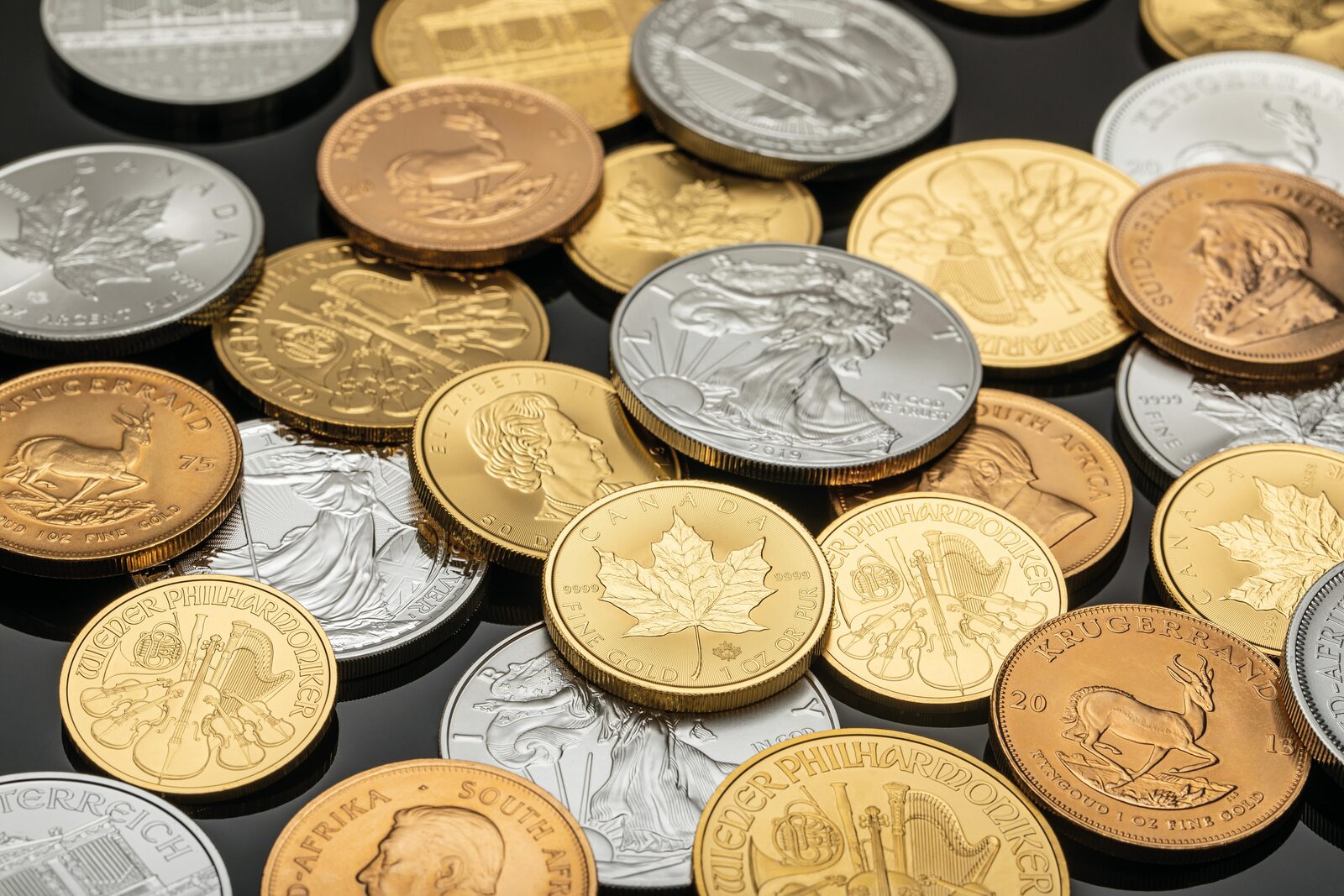
Almost every American who owns gold has handled a Krugerrand at some point, or been offered one, and a fair number are not quite sure what they are holding. The coin carries no dollar figure, no ounce marking that matches its weight on a scale, and a portrait of a nineteenth century Boer statesman most buyers could not place. It is also the coin that invented the modern bullion market, and for a stretch of the 1980s it was the only gold coin the United States government told its citizens they could not import.
A Coin Built to Sell South African Gold
The first Krugerrand was struck on 3 July 1967 by the South African Mint, under a mandate from the South African Reserve Bank and the Chamber of Mines. The reasoning was commercial. South Africa was producing roughly 70 percent of the world’s newly mined gold at the time and wanted a way to put that metal directly into private hands, in a form ordinary buyers could price without a refiner’s assay.
Nothing quite like it existed. Sovereigns and old European trade coins circulated, but they were denominated coins that happened to contain gold. The Krugerrand inverted that logic: one coin, one troy ounce of gold, priced off the daily gold market and nothing else. The name is a straightforward compound of Paul Kruger, the last president of the South African Republic, and the rand, the national currency.
Both faces are older than the coin. The obverse portrait comes from an 1892 profile of Kruger by Otto Schultz, which had already appeared on South African gold pieces. The prancing springbok on the reverse was designed by the sculptor Coert Steynberg in 1947, for a five shilling coin struck to mark a British royal visit. Twenty years later the Mint reached back for it, and the antelope became the most widely recognized animal in bullion.
What Is Actually in a Krugerrand
Put a one ounce Krugerrand on a scale and it reads 33.93 grams, which confuses people the first time. The coin is 22 karat, 91.67 percent gold with the balance copper, so the extra mass is alloy. The gold itself comes to 31.103 grams, exactly one troy ounce. The Mint sized the blank so the buyer gets a full ounce of fine gold and the copper rides along on top rather than being subtracted from it. The finished coin measures 32.77 mm across and 2.84 mm thick.
That copper does real work. Pure gold is soft enough to mark with a fingernail, and the Krugerrand was designed as legal tender that could survive handling. The alloy hardens the surface against scratches and dings, and it tints the coin a warm orange that is easy to spot next to a 24 karat coin. Anyone who has compared one to a Gold Buffalo, which is struck in .9999 fine gold, has seen the difference across a table.
The legal tender status comes with a wrinkle worth knowing. Krugerrands are legal tender in South Africa, but they carry no face value at all. The South African Mint states this plainly in its own literature: the value of each coin is tied directly to its gold content at the daily gold price. Half ounce, quarter ounce and tenth ounce versions arrived in 1980, and the fiftieth anniversary in 2017 brought the first silver and platinum Krugerrands along with additional sizes.
The Years the Krugerrand Was Banned in America
By the early 1980s the Krugerrand held something close to 90 percent of the international gold coin market. South Africa struck more than six million pieces in 1978 alone, and by the middle of the next decade an estimated 15 to 20 million of them were sitting in American hands.
Then apartheid sanctions arrived. President Reagan signed Executive Order 12535 on 1 October 1985, prohibiting the importation of South African Krugerrands into the United States effective 12:01 a.m. Eastern time on 11 October. The effect on production was immediate and brutal. Mintages fell from 2,685,466 coins in 1984 to 874,995 in 1985 and then to 21,040 in 1986, and roughly two million coins were melted during the embargo years. The ban was lifted in 1991 as South Africa moved away from apartheid.
One point still gets garbled at coin shows: owning a Krugerrand was never illegal in the United States. The order stopped imports of new coins. Americans who already held them could keep them, sell them, and trade them throughout, and they have been freely importable again for more than thirty years. More than 50 million troy ounces of gold Krugerrands have been sold since 1967, which is a larger volume than any other bullion coin has managed.
Are Krugerrands a Good Investment Today?
So are Krugerrands a good investment? For a buyer whose goal is owning gold rather than owning a collectible, the coin does the job about as directly as anything on the market. It is universally recognized, it trades in volume, and that recognition is what liquidity actually rests on. A dealer anywhere in the world knows the springbok on sight and knows what the coin weighs, which tends to keep the spread between what buyers pay and what sellers receive narrower than it is on obscure products. When the coin launched it was sold at about five percent over the gold price, and low premium has stayed part of its identity since.
The honest caveat is that a bullion Krugerrand is metal first. Its floor is the value of one troy ounce of gold, which sat near $4,400 an ounce in early September 2026, and the market does not pay much above that floor for a common date. Gold Krugerrands were minted in the tens of millions, so scarcity is not the story here. Early dates, proof strikes and high grade certified examples are a separate conversation with collector demand attached, and that is a different kind of purchase with a different risk profile.
The Retirement Account Catch
Here is where buyers get tripped up. The IRS generally requires gold bullion held in an individual retirement account to be at least .995 fine. The Krugerrand is .9167 fine, so it does not clear that bar. The American Gold Eagle has exactly the same 91.67 percent purity and is IRA eligible anyway, because Congress named it specifically in the statute. The Krugerrand is not named, so the fineness rule applies to it and it comes up short.
None of that makes the coin a worse piece of gold. It simply means a Krugerrand cannot go into a self directed retirement account, and buyers planning around one should sort that out before the metal arrives rather than after.
Who the Krugerrand Suits
Are Krugerrands a good investment for you? That comes down to the job the gold is meant to do. The coin fits the holder who wants ounces, wants them recognized everywhere, and does not need the metal to be American. It is durable enough to handle, cheap enough to accumulate steadily, and liquid enough that selling it later is a phone call rather than a project. Buyers who want their gold to carry a domestic story, or who are building toward a retirement account, are usually better served by the American Gold Eagle or the American Buffalo, and collectors chasing pre-1933 design and scarcity have the Saint-Gaudens double eagle waiting for them.
What the Krugerrand has that none of them have is priority. Every one ounce bullion coin issued since, the Eagle and the Maple Leaf and the rest, is working from a template South Africa drew up in 1967. That is worth remembering when a coin with no denomination on it turns up in an inherited box and nobody in the room is sure what it is.
If you are weighing formats and want to see how the pieces fit together, our guide to how valuations work and the Rules of Gold cover the ground buyers ask about most, current metal levels sit on the markets page, and you can browse the American Gold Eagle listings or the full coin directory to compare what is actually available.