

At noon Eastern on July 16, 2026, the United States Mint began selling a coin that will not fit in a coin tube. It is shaped like the Liberty Bell, crack and all, with the yoke across the top and the skirt flaring at the bottom. Nothing about it is round.
That is a bigger departure than it sounds. The Mint has been striking coins since 1793, and across all those years it had issued exactly one non-round legal tender coin before this one. The Freedom Ringing series is the second, and it arrived 111 years after the first.
What is the Liberty Bell shaped gold coin?
Three pieces make up the release, sold separately, all struck at Philadelphia with a P mint mark, all in a proof finish, all with smooth edges, and all capped at a mintage of 2,026 to match the anniversary year.
- One ounce gold coin (catalog 26LB): one troy ounce of .9999 fine gold, a face value of 250 dollars, measuring 0.888 inch by 1.024 inches and 0.167 inch thick.
- Half ounce gold coin (26LC): a half troy ounce of .9999 fine gold, a face value of 125 dollars, nearly the same footprint as its larger sibling but thinner, at 0.104 inch.
- Half ounce silver medal (26LD): a half troy ounce of .999 fine silver, with no denomination at all, because a medal is not legal tender and carries no face value.
The obverse of each carries the bell itself, the famous crack running up from the lip, with LIBERTY, the dual date 1776 ~ 2026, and IN GOD WE TRUST. The reverse shows Independence Hall under fireworks, with UNITED STATES OF AMERICA and E PLURIBUS UNUM riding the yoke and the weight, fineness, and denomination set into the sound bow. The Mint used laser engraving to create frosted textures that stand in for the windows of Independence Hall, and credits Director of Design and Engraving Michael Costello and Product Design Specialist Matthew Newell with developing the format. The whole design leans on the line cast into the real bell: Proclaim Liberty Throughout All the Land Unto All the Inhabitants thereof.
The last time an American coin was not round
To find the precedent you have to go back to the Panama-Pacific International Exposition in San Francisco. Congress authorized a commemorative series for the fair, and for the 50 dollar gold pieces it wrote the octagonal shape directly into the law, a deliberate echo of the eight-sided gold slugs that circulated in California after 1851.
Robert Aitken designed both the octagonal and round versions, identical except that the octagon carries eight dolphins in its corners, one for each angle, standing for the unbroken waterway the Panama Canal had just opened. Minerva appears on the obverse in a crested helmet, and her owl perches on a branch of western pine on the reverse. Each coin weighs 83.59 grams of 90 percent gold and 10 percent copper, about 2.4186 troy ounces of actual gold, on a 46 millimeter format.
They did not sell. A 50 dollar face value in 1915 was an enormous ask, and most of the coins went back to the melting pot when the fair closed. San Francisco struck 1,509 octagonal pieces and melted 855, leaving 645 distributed. The round version did worse: 1,510 struck, 1,015 melted, 483 net, which remains the smallest distribution of any United States commemorative coin. Those melt figures are the reason the survivors are so prized today, and it is worth holding that thought.
A 250 dollar face value, and what it does not mean
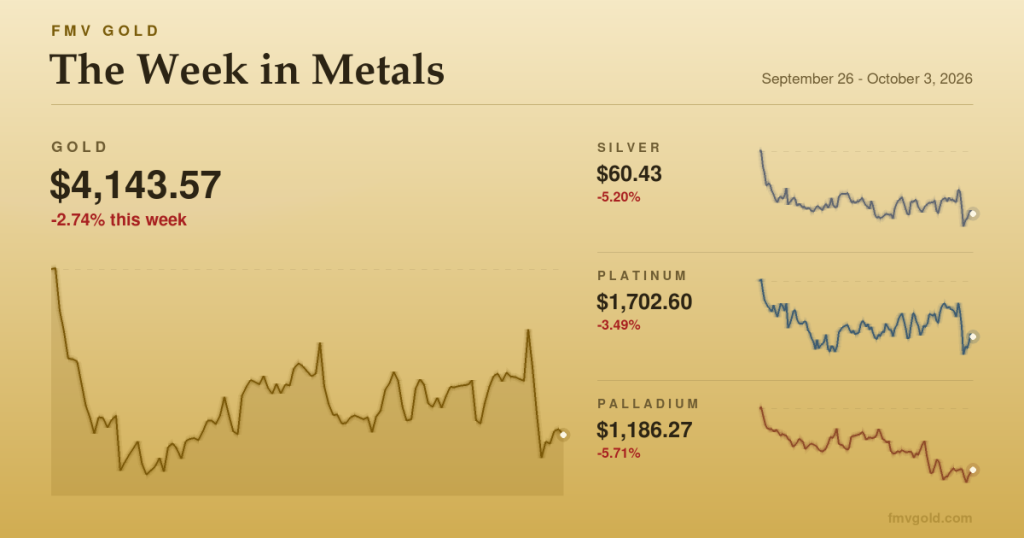
The number stamped on a coin is a legal tender denomination. It is not the price, it is not an appraisal, and on a modern gold issue it is nowhere near the metal value. Gold traded around 4,130 dollars an ounce on September 28, 2026, after a sharp drop of roughly 3.7 percent on the day, with silver near 61.50. The metal in the one ounce Liberty Bell shaped gold coin is therefore worth many multiples of the 250 dollars on its face, and the same logic applies to the half ounce piece.
The denomination is still a milestone. Until this year the highest face value ever placed on a United States legal tender coin was the 100 dollars of the one ounce platinum American Eagle, a distinction the Mint’s own American Eagle reference pages still describe in the present tense. The Liberty Bell coin quietly passed it.
How the sale actually went, and the lesson in it
The silver medal went unavailable within one minute of launch. Both gold coins held on for under half an hour. Then something instructive happened: the gold coins came back into stock, and the Mint removed the one-per-household limit on them.
Reported sales through July 19 tell it plainly. The medal had moved 2,021 of its 2,026 pieces, about 99.8 percent. The half ounce gold coin stood at 1,622, roughly 80 percent. The one ounce gold coin sat at 1,428, a little over 70 percent. As of late September the Mint still lists the one ounce coin as available on backorder rather than sold out, more than two months after the launch.
Anyone who read the first-day headlines as proof of scarcity paid for a shortage that had not arrived. A product going unavailable in sixty seconds describes a checkout queue, not a mintage. Reservations lapse, carts are abandoned, orders get cancelled, and inventory returns. Early resale did trade above the issue price in the opening days, which rewarded the fastest buyers, but the coins that came back to the Mint’s own shelves were the same coins at the same official price. Waiting cost those buyers nothing except bragging rights.
What a gold buyer should actually weigh
Start with the split between metal and premium. The issue price on the one ounce coin was a large multiple of its gold content, not a few percent over it, so the overwhelming majority of what a buyer hands over is collector premium. The gold underneath is a real floor, and it is a long way down. Our rules of gold page covers the same point in general terms, and the markets page shows where spot sits today.
Then consider the mintage. A cap of 2,026 is genuinely small by modern Mint standards, smaller than the 5,000-coin ceiling that made the 2026 palladium Eagle a fast sellout. Small mintages matter, but only when demand shows up to meet them, and the July sales pace suggests the buyer pool for a premium novelty format is thinner than the pool for anniversary bullion.
The shape itself creates practical problems worth planning for. No standard tube, flip, or album page fits a bell. Proof surfaces show fingerprints, and an irregular outline concentrates handling risk at the thin points. Storage, shipping, and insurance need more thought than they would for a round coin, the sort of housekeeping our how it works page is built around.
Finally, ask who the next buyer is. Resale on a piece like this rests on collector appetite for a one-off format, not on the gold price, so the exit is a numismatic market rather than a bullion market. That is a different question from the one a bullion buyer usually asks. If you want the anniversary with a thicker metal floor and a deeper resale market, the privy-marked Eagles and the Saint-Gaudens high relief set covered elsewhere in our semiquincentennial guide are worth reading first, and the full series list lives on the coins page.
One last note on the history. The Panama-Pacific octagonal became one of the great classic commemoratives partly by accident, because two thirds of the mintage was destroyed and the survivors turned scarce by subtraction. The Liberty Bell coins begin life with a fixed ceiling and no melting pot waiting at the end of a world’s fair. Whether the Liberty Bell shaped gold coin earns the same standing depends on whether collectors a generation from now care that the Mint broke the circle twice, and the process that authorizes coins like this will keep turning out anniversary products long before that verdict is in.