
Ask almost anyone what happens to gold when the bombs start falling and you’ll get the same answer: it goes up. The idea is old and intuitive. Wars destroy wealth, frighten investors, and push governments to print money, so people reach for the one asset that has been money for five thousand years.
The trouble is that the price record is messier than the folklore. Gold often does jump when a conflict breaks out. What happens over the following weeks and months depends far less on the shooting than on what the war does to interest rates, the dollar, and oil. This year gave holders a painful lesson in exactly that.
Does gold go up during war? The short answer
Usually at first, and often not for long. Across the modern conflicts that moved markets, the same pattern keeps showing up. Gold rallies on uncertainty, sometimes in the run-up before anyone fires a shot. Then, once the war becomes a known quantity, the premium fades, and the metal goes back to trading on the slower forces covered in our piece on tail risks in the gold market: real yields, the dollar, central-bank demand, and investor flows.
One historical wrinkle first. For most of the twentieth century’s big wars, there was no gold price to speak of in the United States. The Gold Reserve Act of 1934 set the official price at $35 an ounce, where it stayed into the early 1970s, and private Americans could not legally own bullion again until the last day of 1974. So World War II, Korea, and Vietnam tell us very little about how a free gold market reacts to war. The useful evidence starts later.
The Gulf War, 1990 and 1991
Iraq invaded Kuwait on August 2, 1990. Gold had been fairly depressed beforehand, and the buildup lit a fire under it. Analysts commonly put the gain across the Desert Shield period at roughly 15 to 20 percent, and by October 1990 the metal had risen more than 10 percent in about two months to around $375 an ounce. When the air war began in January 1991 there was a brief second spike.
Then the conflict ended quickly. With the fighting mostly over by February 1991 and oil retreating, gold drifted back. Within a year it had given up its prewar and wartime gains. Anyone who bought the headline paid for fear that evaporated.
Iraq, 2003: buy the rumor, sell the invasion
The 2003 invasion produced the cleanest version of the pattern. Gold rose through the months of diplomatic standoff and uncertainty, then sold off once the invasion actually began in March. Markets had already priced the war in. When the event arrived, the uncertainty premium had nothing left to anticipate.
It’s worth noting that gold climbed enormously over that decade, from roughly $250 an ounce in 2001 to more than $1,900 by 2011. But that long bull market had much more to do with low real interest rates, a weakening dollar, and later the 2008 financial crisis than with any single battlefield.
Russia and Ukraine, 2022
Russia invaded Ukraine on February 24, 2022. Gold had been trading at or a bit below $1,900, and within about two weeks it pushed above $2,000 an ounce. That looked like the classic war trade.
It didn’t last. On March 16 the Federal Reserve raised rates for the first time in its fight against inflation, and gold unwound its war premium quickly. By October 2022 it was trading below $1,650. Over that year the 10-year TIPS yield rose by about 250 basis points and the dollar index gained roughly 8 percent, a combination that would have pressured gold in peacetime too. Our explainer on what a Fed rate hike means for gold walks through why.
The 2026 Iran war: a hard lesson for safe-haven buyers
This year supplied the starkest example in decades. Gold set a record near $5,600 an ounce in January 2026 and was trading near $5,100 when U.S. and Israeli airstrikes hit Iran in the pre-dawn hours of Saturday, February 28. When markets reopened, gold did what the folklore promises. It shot past $5,300 and touched a session high of $5,418 on Monday, March 2.
Within weeks the trade had reversed hard. Gold suffered its worst five-session stretch since February 1983, falling to about $4,098 on March 23, its weakest level in four months. By late March it sat near $4,490, down about 13 percent from the outbreak of the war. As of mid-November it was trading below $3,900 an ounce.
Reporting at the time pointed to several forces working together:
- Oil-driven inflation fears. Crude jumped sharply, by some measures more than a third above prewar levels. Higher energy prices raised inflation expectations, which pushed markets to expect a tighter Fed rather than an easier one.
- A collapse in rate-cut hopes. On the eve of the war, futures markets priced a near-certain U.S. rate cut. Within weeks those odds had largely evaporated, and Treasury yields rose.
- A firmer dollar. The dollar strengthened as a haven of its own, competing with gold for frightened money.
- Forced selling. Leveraged traders sold gold to meet margin calls elsewhere, and large gold ETFs saw heavy outflows. After a run of more than 60 percent in 2025, there were plenty of profits to take.
None of that means gold failed. It means gold traded on the economics of the war instead of the drama of it. An oil shock that drives inflation and keeps rates high is, for a non-yielding asset, a headwind that can overwhelm the fear bid.
Why the war premium tends to fade
Put the episodes side by side and three lessons stand out.
First, gold prices uncertainty, not violence. The biggest moves tend to come before or at the very start of a conflict, while nobody knows how far it will spread. Once the scope is clear, even a grim war can become old news for markets.
Second, the macro response to the war matters more than the war itself. If a conflict leads to lower real rates and a weaker dollar, gold tends to hold its gains. If it leads to an inflation scare and a hawkish central bank, as in 2022 and 2026, the premium can vanish and then some. The same logic shows up in our look at how gold behaves in recessions.
Third, gold is liquid, and liquidity cuts both ways. In a sudden market panic, investors sell what they can sell, and gold is one of the easiest things to sell. That’s part of its value as a reserve, and it’s also why the metal can fall during the very crisis people bought it for.
What this means for coin and bullion holders
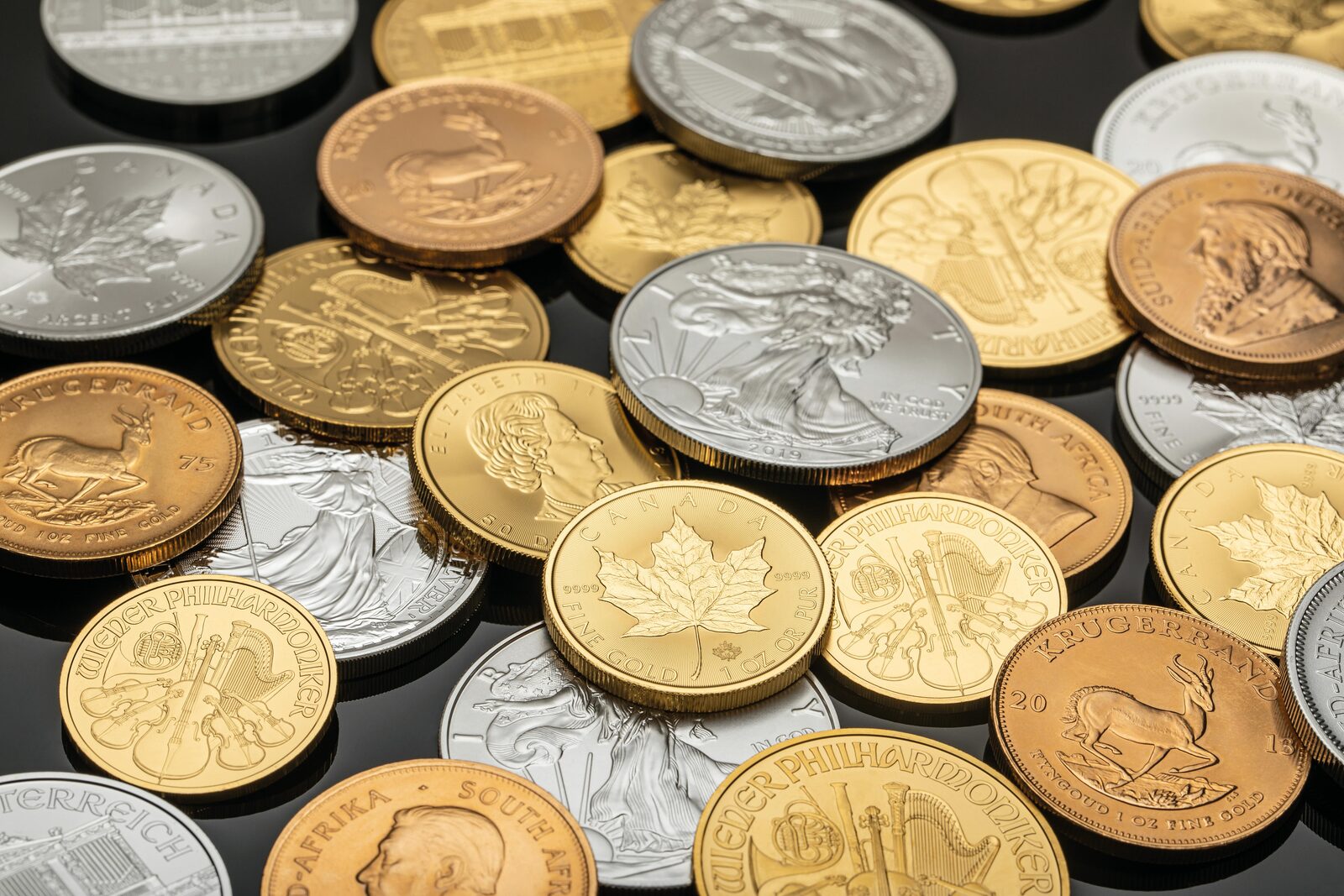
The practical takeaway is modest. Buying gold the morning a war starts has historically meant paying for a fear premium that tends to leak away. Physical buyers face a second cost on top of that: premiums on popular coins such as the American Gold Eagle often widen during sudden demand spikes, so a panic buyer can pay up on both the metal and the markup.
The case for holding some gold has always rested on longer arcs: protection against currency debasement, a hedge against financial accidents, and diversification away from paper promises. Those reasons don’t depend on guessing the next headline. Our rules of gold lay out the habits that tend to serve holders better than reacting to the news, and the markets page tracks where spot actually stands while the headlines shout.
So does gold go up during war? Sometimes, briefly, and mostly on the uncertainty. Whether it stays up is decided by rates, the dollar, and inflation. As 2026 showed, a war can even coincide with one of gold’s sharpest declines in forty years. This article is general information, not investment advice.