

Reach into a pocket of loose change and the quarter is the coin you notice first: heavier than a dime, wider than a nickel, the workhorse of parking meters and laundromats for generations. It is easy to take for granted. Yet the 25-cent piece has one of the longest and most restless design records of any American coin, from a tiny 1796 silver rarity to the rotating scenes minted today. This is the history of the U.S. quarter, and how a single denomination came to carry so many faces.
The history of the U.S. quarter begins in 1796
The Coinage Act of 1792 laid out the young country’s money and included a silver “quarter dollar” worth 25 cents. It took the Mint a few years to get to it. The first quarters were struck in 1796, and just 6,146 pieces left the Philadelphia presses that year. They wore Robert Scot’s Draped Bust portrait of Liberty on the obverse and a delicate small eagle on the reverse. Because the design lasted only that single year in that form, the 1796 quarter is one of the classic first-year rarities in American numismatics.
The Mint then stopped making quarters for several years before returning to the denomination with a Heraldic Eagle reverse in 1804. John Reich’s Capped Bust design followed in 1815 and ran, with a break, into 1838. In 1831 the Mint trimmed the coin’s diameter and dropped the motto over the eagle, giving collectors the “large size” and “small size” varieties that still get sorted at coin shows.
Christian Gobrecht’s Seated Liberty quarter arrived in 1838 and became the longest-serving of the early types, minted through 1891. Liberty sits on a rock holding a shield and a pole topped by a liberty cap, a design that also appeared on the era’s dimes, half dollars, and dollars. Charles E. Barber’s Liberty Head quarter took over in 1892 and ran through 1916, a sturdy, businesslike coin that circulated hard. The famous 1901-S Barber quarter, struck in tiny numbers at San Francisco, is one of the most sought keys of the whole series.
Standing Liberty and the Washington switch
In 1916 the quarter got one of the most admired designs in U.S. coinage. Hermon A. MacNeil’s Standing Liberty quarter shows Liberty in a gateway holding a shield and an olive branch, with an eagle in flight on the reverse. The first version, now called Type 1, was modified in 1917 to Type 2. The 1916 issue, with a reported mintage of just 52,000, is the great prize of the run, and early dates lost their dates to wear because the numerals sat on a raised, exposed part of the coin.
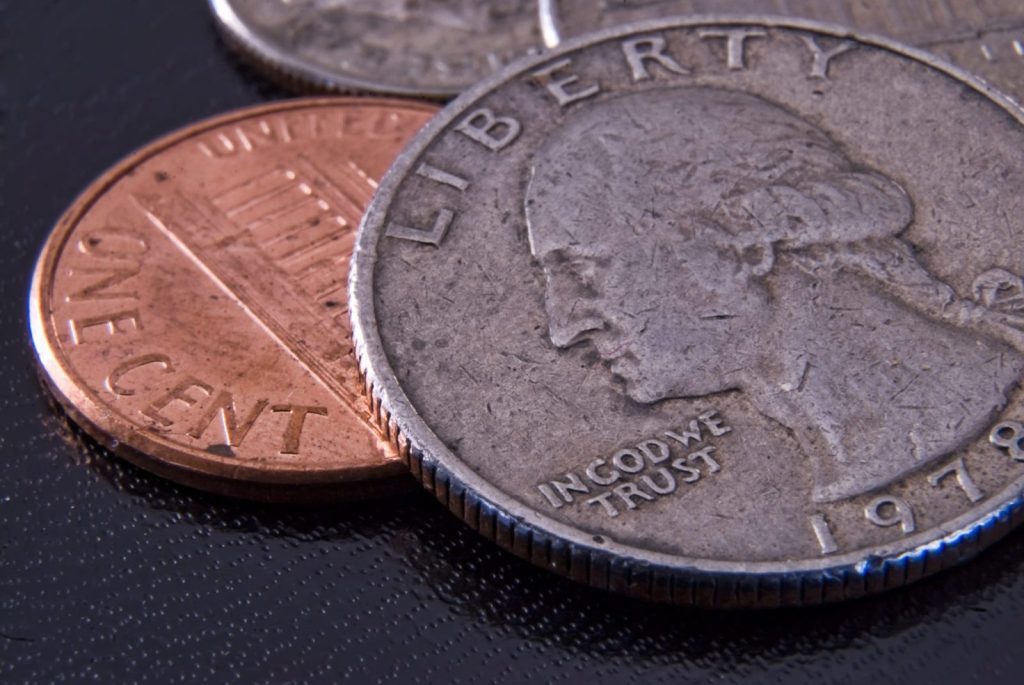
Standing Liberty lasted only to 1930. In 1932 the Mint planned a quarter to mark the 200th anniversary of George Washington’s birth, meant as a one-year commemorative. It never left. The design competition behind it is worth remembering. The Commission of Fine Arts recommended a portrait by the sculptor Laura Gardin Fraser, praising it warmly, but Treasury Secretary Andrew Mellon chose John Flanagan’s left-facing Washington instead. Flanagan’s profile has ridden the quarter ever since. Fraser’s rejected work finally reached circulation ninety years later, as you will see below.
From silver to clad
For most of its life the quarter was a silver coin, struck in 90 percent silver on a planchet weighing 6.25 grams. Each of those pre-1965 quarters holds about 0.18 troy ounce of silver, which is why “junk silver” bags of worn Washington, Barber, and Standing Liberty quarters trade today on metal content rather than collector appeal. That metal value is a floor, not a market price: it tracks the silver spot price, which sat near $67 an ounce in late August 2026, and it says nothing about what a dated or graded example is worth to a collector.
Rising silver prices ended the run. Starting in 1965 the Mint switched the quarter to a copper-nickel clad composition, a pure-copper core bonded between outer layers of 75 percent copper and 25 percent nickel. The modern quarter weighs 5.670 grams, measures 24.26 millimeters across, and carries 119 reeds on its edge. It has no precious-metal content, so its value is its face value plus, for a few dates and errors, whatever collectors will pay.
One coin, many reverses
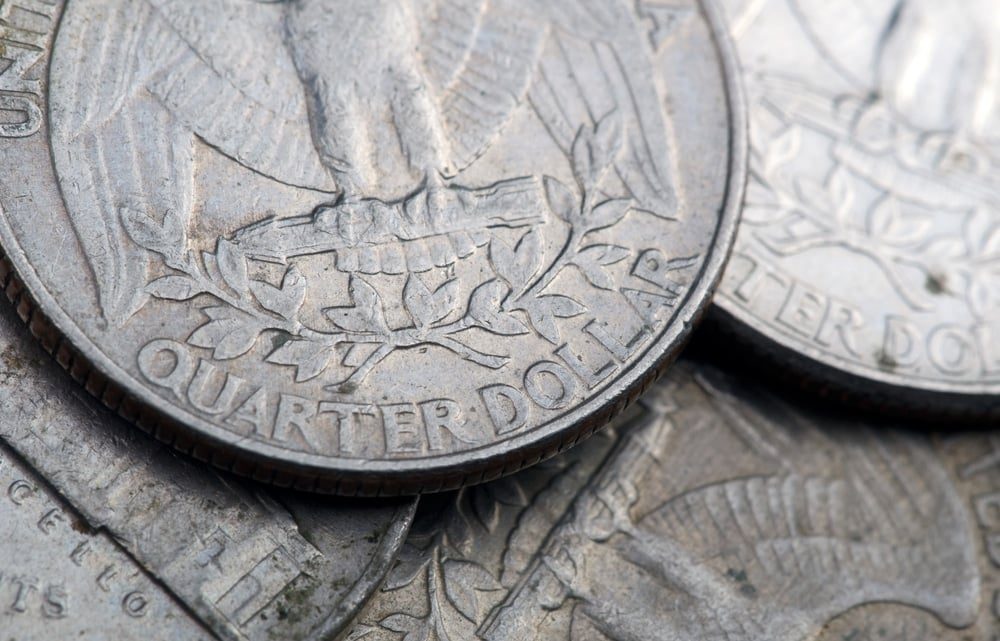
For decades the Washington quarter kept John Flanagan’s eagle on the back. The first real break came for the nation’s 200th birthday. Quarters, half dollars, and dollars dated 1975 and 1976 all carried the dual date “1776 1976,” and Jack L. Ahr’s colonial drummer boy, circled by thirteen stars, replaced the eagle on the quarter. Then the eagle returned, and stayed until the end of the century.
In 1999 the quarter became a rotating canvas and never really stopped. The 50 States Commemorative Coin Program Act, signed in 1997, launched five new state reverses a year from 1999 through 2008, released in the order the states joined the Union. A sixth year in 2009 added the District of Columbia and five territories. The America’s Beautiful National Parks Quarter Dollar Coin Act followed, and its America the Beautiful series ran 56 designs from 2010 through 2021, one for a national park or site in each state, territory, and the District.
The American Women Quarters Program picked up in 2022 and ran through 2025, honoring figures such as Maya Angelou and Sally Ride with five reverses a year. Its obverse is the payoff to that 1932 story: the Mint finally adopted Laura Gardin Fraser’s long-rejected Washington portrait for the front of the coin. For 2026 the Mint has announced five Semiquincentennial quarters for the country’s 250th anniversary, honoring the Mayflower Compact, the Revolutionary War, the Declaration of Independence, the U.S. Constitution, and the Gettysburg Address.
What the history means for a collector
Few coins reward a beginner as generously as the quarter. You can build a type set that walks through Draped Bust, Capped Bust, Seated Liberty, Barber, Standing Liberty, and Washington, and every one of those names marks a real shift in how America wanted its money to look. You can chase famous keys like the 1916 Standing Liberty or the 1901-S Barber, or you can simply pull silver Washingtons from a junk-silver bag and hold them for the metal. The 50 State and national park quarters put a whole generation’s worth of designs into everyday pocket change, which is how a lot of today’s collectors got started in the first place.
The through line is Washington himself, on the coin since 1932 and, with Fraser’s portrait, likely to stay a while longer. If you want to see where the quarter sits among the rest of American coinage, our guides on reading mint marks, famous American rarities, and the branch mints that struck them are good next stops. You can also browse the full coin catalog, see live metal figures on the markets page, learn how our pricing works, and read the rules of gold for the basics of buying physical metal.