

Pick up a quarter from the dish by the door and you are holding the end product of a factory line that turns a coil of metal into money in a matter of minutes. Most of us never think about it. Collectors should, because almost everything that makes one coin worth more than another (a sharp strike, a clean rim, a famous mistake) happens somewhere on that line.
So how are coins made? Here is the process the U.S. Mint describes for its own factories, step by step, with a note at each stage on why it matters to someone who keeps coins.
How are coins made? It starts with art and a die
Before any metal moves, there is a design. Once the Secretary of the Treasury approves it, the Mint’s medallic artists turn a line drawing into a three-dimensional sculpt. When the sculpt is final, it is digitized, and the Mint uses it to make its tooling.
That tooling comes in generations. A hub carries the design as a raised, positive image, the way you see it on a finished coin. A die carries it as a negative, sunk into the steel like a photo negative, and works like a stamp. Hubs are used to make dies, and dies make coins. In the press, one die is the fixed lower die and the other is the moving upper one; Coin World notes the reverse is usually on the bottom and the obverse on top, though not always.
Metal arrives as a coil, not as coins
The Mint does not pour its own coin metal anymore. Private companies alloy the metal and roll it into strip, and the Mint buys it in coils roughly 1,500 feet long that can weigh from about 1,100 to 7,000 pounds. According to Coin World, the Mint made its own strip at Philadelphia as late as fiscal 1982 before shutting that operation down. For some products, including numismatic and bullion coins, the Mint buys blanks that are already cut.
Your dimes, quarters and half dollars are clad coins: two outer layers of copper-nickel bonded to a core of pure copper. That bonding is done before the strip reaches the Mint.
Blanking: the cookie cutter
The coil feeds into a blanking press that punches out plain round discs, called blanks, “like a cookie cutter,” in the Mint’s own words, at about 14,000 blanks per minute. The blanks come out slightly wider than the finished coin but already at its final thickness. The punched-out skeleton of strip left behind is called webbing, and it is shredded and recycled rather than wasted.
Blanks that come out thin or incomplete are supposed to fall through sorting screens and go back to be melted. Supposed to. Every so often one escapes, and a clipped planchet in a roll of cents becomes somebody’s lucky afternoon.
Annealing, washing and drying
Punching hardens the metal, so the blanks go through an annealing furnace that softens them again. The Mint says the furnace runs up to 1,600 degrees Fahrenheit in an oxygen-free atmosphere; other published accounts give figures from about 1,400 to 1,700 degrees, with run times varying by denomination. Softer metal flows into a design more completely under less pressure, which Coin World points out also helps the dies last longer.
Heat leaves the blanks discolored, so they are quenched and then washed in a solution of cleaning and anti-tarnish agents to bring back their natural color, then dried. Philadelphia lifts blanks out of the quench tank with a device called a “whirlaway,” while Denver uses a “skip basket,” a small reminder that each Mint facility has its own habits.
Upsetting: giving the coin a rim
Next the blanks are rolled through a groove that is slightly narrower than they are. The squeeze pushes metal up around the edge to form a raised rim. That rim does two practical jobs: it protects the design from wear, and it makes coins stack neatly. Once a blank has its rim it is called a planchet.
Planchets headed for proof and uncirculated coins get extra care at this point. They are burnished, tumbled in a drum with cleaning agents and small metal pellets, then rinsed and dried by hand with towels. That polished starting surface is part of why a proof looks the way it does before a die ever touches it.
Striking: where the coin is born
This is the moment people picture. The planchet drops into the coining chamber, and the press drives the two dies together so both sides are struck at once. Under that force the metal flows into every recess of the dies and becomes the design.
The numbers are big. The Mint says circulating coin presses apply from 35 to 100 metric tons of pressure depending on the denomination, and a single press can turn out 750 coins a minute. Larger presses run up to 540 tons, the kind used for the five-ounce America the Beautiful silver coins. Philadelphia’s 63 presses can produce about 47,250 coins per minute, and Denver’s 54 presses about 40,500.
Around the planchet sits a hardened steel ring called the collar. It keeps the metal from spreading too far and forms the edge. A smooth collar gives the plain edge of a nickel; a reeded collar cuts the ridges you feel on a dime or quarter. Dollar coins with edge lettering are struck with a smooth edge and then run through a separate machine that adds the lettering.
Proofs follow a slower, more careful path. Circulating, uncirculated and bullion coins are struck once, while proof coins are struck at least twice, on presses that run more slowly than the circulating ones. That second blow is a big reason proof details look so crisp.
Inspection, counting and the trip to your pocket
After striking, inspectors pull samples and look for problems. Coin World describes press attendants checking coins under magnification and notes that some presses have sensors that stop the line if a planchet is missing, mispositioned, the wrong size or incomplete. Batches that fail are sent to a machine the Mint calls a “waffler,” which bends the coins into a wavy shape so they can never circulate, and they are recycled.
Good circulating coins are counted, weighed, bagged and stored until they ship to the Federal Reserve Banks. Collector coins go into their own packaging, and bullion coins ship in 500-coin “monster boxes.”
Why the process matters to collectors
Once you have asked how are coins made, you look at them differently. A weak strike is not wear; it is a coin that met the dies with too little pressure or metal that did not fill every recess. A missing or flattened rim may point to a planchet that skipped the upsetting mill. A curved bite out of the edge goes back to the blanking press. And a coin struck on the wrong planchet, or struck twice when it should have been struck once, is a story about a machine at full speed and a sensor that did not catch it.
That is the logic behind error collecting, and it is covered in more depth in our guide to how mint mistakes are valued. The same factory story explains the small letter that tells you which facility struck a coin, so if you are new to that, start with how to read mint marks on U.S. coins and then the history of the branch mints where your coins were struck.
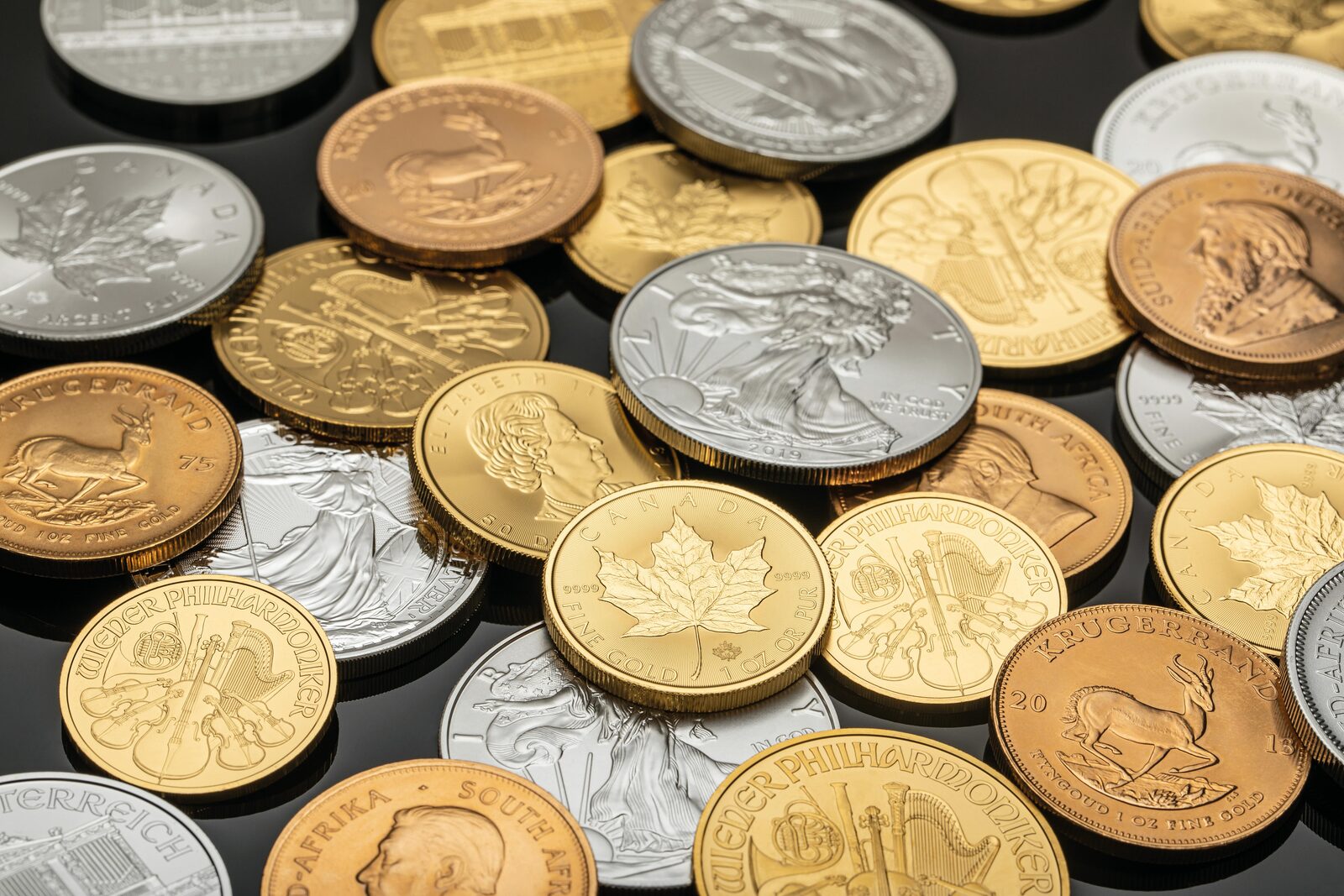
For gold and silver coins, the process shapes the difference between a bullion coin and a collector piece. The metal inside a Silver Eagle is the same whether it was struck once for bullion or twice as a proof. What changes is the finish, the handling and the packaging, which is why the two trade so differently. Melt value is the metal floor; the striking and finish are where collector demand comes in. You can see how we separate those two ideas on how FMV Gold works, and browse coin families on our coin pages.
The next time a quarter crosses the counter, give it a second look. Somewhere in Philadelphia or Denver, it went from a coil to your hand in a handful of steps, and every one of them left a trace you can learn to read.