

For eighty years the same face has looked left from the smallest coin in American pockets. That changed this spring. In April the U.S. Mint began shipping the 2026 Emerging Liberty dime, a one year design dated 1776 to 2026, and for the first time since 1946 a circulating dime left the presses without Franklin Roosevelt on it.
The ten cent piece is older than the Mint building it was struck in, it has carried six portraits, and for most of its life it was a silver coin people spent without giving the metal a thought. What follows is the history of the U.S. dime, from the first strike in 1796 to the design sitting in cash drawers right now.
A Tenth of a Dollar, Spelled Disme
The Coinage Act of April 2, 1792 created the Mint and the decimal system that came with it. It authorized a silver piece worth one tenth of a dollar and spelled it disme, from the French for a tenth part. The spelling did not survive contact with ordinary speech. The s fell away, and Americans wrote dime. Before the Mint even had a building, workmen struck copper dismes as patterns in a Philadelphia cellar, and the silver half disme of that year went into Thomas Jefferson’s pocket and out again on the road.
The History of the U.S. Dime Begins in 1796
Regular production waited until 1796, when Robert Scot’s Draped Bust design appeared on a small silver coin of .8924 fineness, the portrait traced to a Gilbert Stuart drawing of Ann Willing Bingham. The first reverse showed a thin, almost apologetic eagle inside a wreath, the type collectors call the Small Eagle. It lasted two years. From 1798 through 1807 a sturdier Heraldic Eagle, borrowed from the Great Seal, took over.
John Reich’s Capped Bust dime followed in 1809 and ran, with gaps, to 1837. It remains the only dime ever struck with the denomination given in figures, the 10 C. on the reverse. In 1828 William Kneass introduced the close collar, fixing the diameter of every coin struck in it.
Seated Liberty, Barber, and the Long Nineteenth Century
Christian Gobrecht finished the Seated Liberty design after Kneass was disabled by a stroke, and it ran from 1837 to 1891, the longest stretch any dime portrait has held. It wore flat quickly, which is why so many survivors are slick. The 1837 issue also moved the fineness up to .900 silver, the standard that held for 128 years and the same one on the quarter of the period.
Charles E. Barber, then chief engraver, replaced it in 1892 with the severe laurel wreathed head that carries his name. Barber dimes ran through 1916 and produced the most storied rarity in American coinage. In June 1894 the San Francisco Mint held a silver remainder that, as the records put it, would coin to advantage only into dimes. Twenty four were struck, three went for assay, and nine are accounted for today. The tale that superintendent John Daggett handed three to his daughter Hallie and she spent one on ice cream has been told for a century, though researchers who revisited the arithmetic find it does not add up. Neither that version nor its Ukiah rival can be proved, which is how a fair number of the best coin stories end.
The Mercury Dime, 1916 to 1945
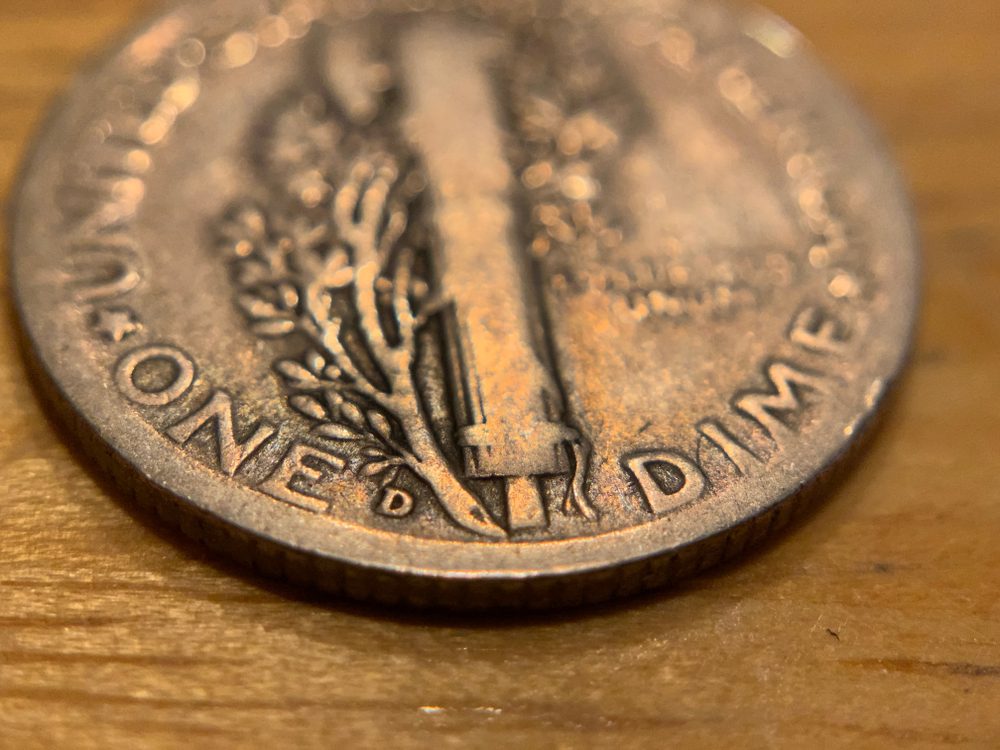
Adolph A. Weinman won the 1915 competition that replaced the Barber coinage, and his dime is the one people reach for to show a stranger that American money used to be beautiful. Liberty wears a winged cap. The wings stood for freedom of thought, but the public saw the Roman messenger god and called it the Mercury dime, and the nickname stuck so thoroughly that the official name, Winged Liberty Head, now survives mostly in catalogs. The reverse carries a fasces wrapped in an olive branch: ready for war, wanting peace. It was 1916, and the symbolism was not accidental.
The series key is the 1916-D, struck at Denver to a mintage of 264,000, and one of the most counterfeited American coins of the last century, which argues for buying that date certified. The 1942 over 1 overdate, spotted well after the fact, is the other famous variety. To tell where any Mercury dime was struck, look on the reverse beside the base of the fasces, the same logic covered in our guide to reading mint marks.
Roosevelt, the March of Dimes, and the End of Silver
Franklin Roosevelt died in April 1945, and within months the Mint was at work on a dime in his honor. The denomination was not an arbitrary choice. Roosevelt, who contracted polio at thirty nine, had backed the March of Dimes, the campaign that asked Americans to mail in ten cent pieces. John R. Sinnock’s design was released on January 30, 1946, Roosevelt’s birthday.
Sinnock signed the obverse JS. In the early Cold War a rumor went around that the initials belonged to Joseph Stalin, and the Mint ran a public information campaign to explain that they belonged to its own chief engraver, with roughly the success such campaigns usually have. On Sinnock’s 1948 Franklin half dollar the signature read JRS.
Silver ran out in 1965. Bullion prices had pushed the metal in a dime toward its face value, the coins were vanishing into dresser drawers, and the Coinage Act of 1965 removed silver from the dime and quarter outright, a break covered in our piece on when the U.S. stopped making silver coins. Since then the dime has been copper nickel clad: 2.268 grams, 17.91 millimeters across, 1.35 millimeters thick, 118 reeds on the edge. It is the smallest and thinnest coin the Mint strikes for circulation, and the only one in your pocket that never states its value in numerals. It just says ONE DIME.
What a Silver Dime Actually Holds
Every dime dated 1964 or earlier is 90 percent silver and 10 percent copper at 2.5 grams, roughly 0.0723 troy ounces of silver per coin. Ten dimes, one dollar of face value, carry a little under three quarters of an ounce. Bags of well circulated coins trade on a slightly lower assumed content, to allow for wear.
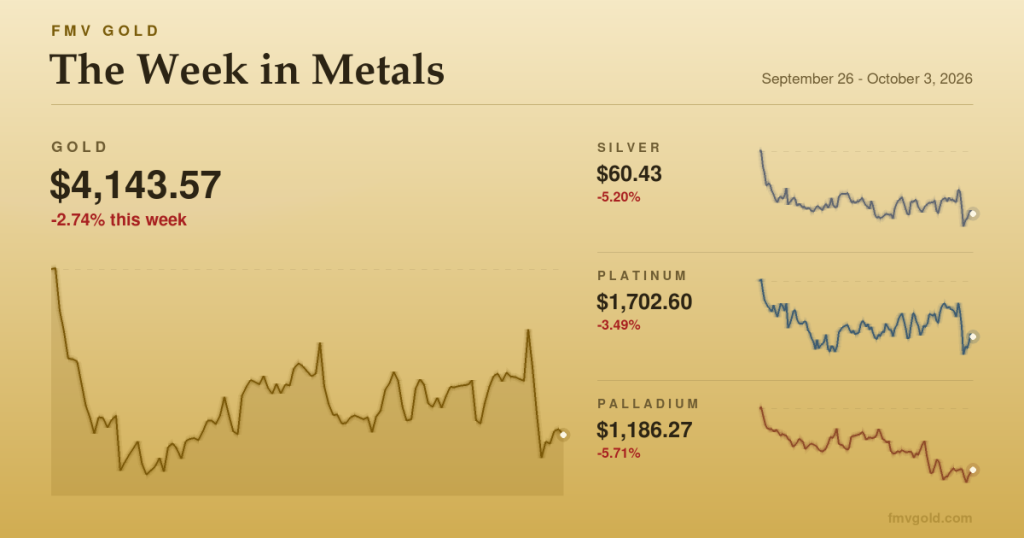
That is the whole reason pre-1965 dimes are bought in bulk rather than one at a time. With silver trading near 63 dollars an ounce in mid September 2026, a common date silver dime carries metal worth many multiples of its ten cent face, which is why the coins left circulation and why they now change hands as a metal product. Current spot is on our markets page. Keep one thing straight, though: silver content is a floor, not a price. A sharply struck Mercury dime in high grade, or a genuine key date, answers to collector demand and can sit well above what the metal alone would suggest.
Key Dates and Small Oddities
- 1894-S Barber. Twenty four struck, nine known, and a century of unprovable ice cream.
- 1916-D Mercury. 264,000 pieces, the series key, and a favorite of counterfeiters.
- 1942 over 1. An overdate found long after it was spent, in Philadelphia and Denver varieties.
- 1975 No S proof Roosevelt. A San Francisco proof that left without its mint mark. Two are known.
- 1982 No P Roosevelt. The first business strike U.S. coin to leave the Mint missing its intended mint mark. Perhaps 150,000 exist, many first found around Toledo, Ohio.
2026 and the Emerging Liberty Dime
Which brings the story back to the coin now arriving in rolls. The 2026 Emerging Liberty dime belongs to the Mint’s semiquincentennial program for the nation’s 250th anniversary. Esao Andrews designed the obverse and Craig A. Campbell sculpted it, a resolute Liberty in a cap of stars and stripes, her hair swept by what the Mint calls the winds of revolution. Eric David Custer’s reverse shows an eagle in flight clutching arrows, inscribed LIBERTY OVER TYRANNY alongside ONE DIME. Roosevelt returns in 2027.
Six portraits in 230 years, one composition change that ended an era, and now a seventh face for a single year. If you are sorting a jar or an inherited roll, check the date first and the mint mark second, then read the nickel’s history for the companion story of the denomination beside it. Our full coin listings show how the series are organized.