


Open any finance app and the price of gold sits there like a fact of nature: one number, updating by the second. It looks official, singular, and final. Then you go to buy a one-ounce coin and the figure on the invoice is higher. That gap confuses a lot of first-time buyers, and the confusion usually traces back to one misunderstood term. So it is worth slowing down on what the headline number really is.
What the spot price of gold actually means
The spot price of gold is the wholesale price for a troy ounce of pure metal available for immediate delivery, quoted in U.S. dollars. “Immediate” in the bullion trade usually means settlement in two business days, the convention traders call T+2. It is the price at which large players, banks, refiners, and funds agree to move metal right now rather than on some future date. That last part matters. Spot is a benchmark for the professional market, not a retail sticker price. Nobody at the wholesale level is buying a single coin. They are trading bars by the hundreds of ounces, and the number reflects their world, not yours.
Silver works the same way, on its own quote. When you see the two prices side by side on our markets page, you are looking at the same idea applied to two metals: the going rate for immediate wholesale delivery, nothing more.
Where the number comes from
Here is the part that surprises people. No single exchange or agency stamps the spot price of gold. It emerges from a few overlapping markets that keep one another honest.
The deepest of these is the over-the-counter market centered in London, where bullion banks, refiners, and central banks trade directly with one another. Metal that settles there is called loco London, meaning it is physically held in London vaults, and the daily flow is enormous. The clearing system that nets those trades moves something on the order of tens of billions of dollars in gold every single day. Because so much real metal changes hands this way, London prices carry weight.
Alongside the OTC market sit the futures exchanges, chiefly COMEX in New York. A futures contract is an agreement to deliver metal on a set future date, but the nearest contract, the front month, trades so actively that data providers often quote it as the live price you see ticking. Hundreds of thousands of gold contracts can change hands in a session, and that volume makes futures the fastest place to watch sentiment move.
The London auctions, in plain terms
Twice a day the market pauses to set a formal reference price through an auction. These are the numbers you will see cited as the LBMA Gold Price, and they are run by ICE Benchmark Administration, an independent body. Gold is auctioned at 10:30 in the morning and again at 3:00 in the afternoon, London time. Silver gets one auction, at noon.
The mechanism is worth picturing. A chair proposes an opening price. Around a dozen large bullion banks then enter how much they want to buy or sell at that level, aggregating orders for themselves and their clients. If buyers and sellers do not roughly match, the round ends, the price is nudged, and another thirty-second round begins. It repeats until supply and demand line up. As one methodology write-up put it, the price does not get picked, it gets discovered. The result becomes the day’s benchmark, used to value everything from central-bank reserves to the contracts written across the industry. You can see how that formal, rules-based process fits the broader picture on our how it works page.
Why spot and futures stay in step
With prices forming in London, New York, and a dozen trading desks at once, you might expect them to drift apart. They rarely do, and the reason is arbitrage. If the front-month future wandered a few dollars away from the OTC price, traders would buy the cheaper one and sell the dearer one until the gap closed. That constant pressure pins the two together, usually within a handful of dollars for gold. It is why the single figure on your screen can stand in for a sprawling global market without being wildly wrong.
Why you never actually pay spot
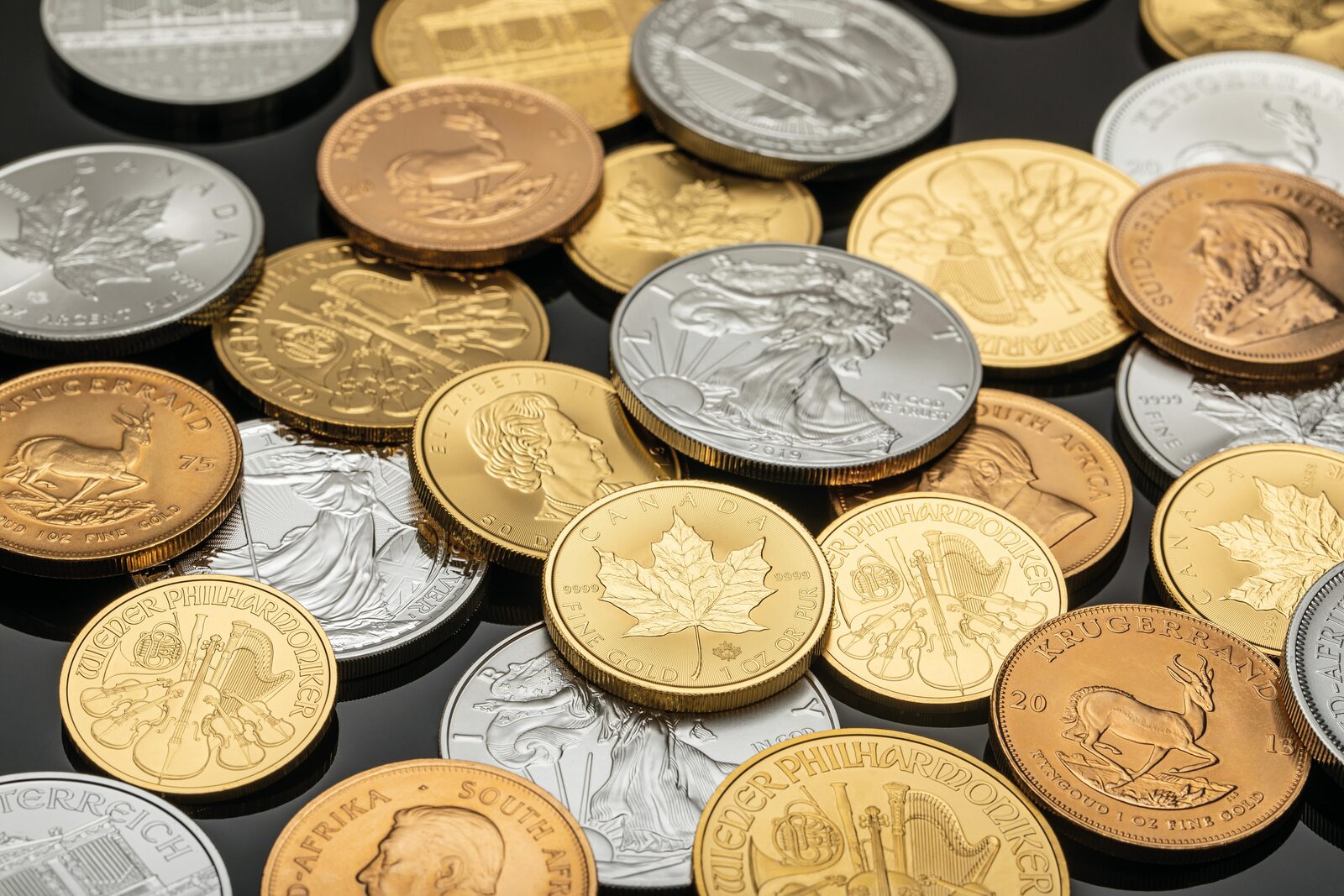
Now to the invoice that started all this. The spot price of gold is a metal value, the raw worth of the pure gold content. A finished coin costs more because someone had to refine the metal, strike the coin, package it, ship it, insure it, and make a living selling it. That difference above spot is the premium, and it exists on every physical product, from a plain bullion round to a graded rarity. Depending on the item and how tight the market is, premiums can run from a few percent on generic bullion to a good deal more on small, popular, or collectible pieces.
This is also why melt value and market price are not the same thing. Melt is the floor, the spot value of the metal inside a coin. A worn generic piece trades close to it. A proof American Gold Eagle, a low-mintage issue, or a well-preserved pre-1933 coin trades well above it, because collectors are paying for scarcity and condition on top of the gold. If you want to see how that plays out across a single family, browse the gold American Eagle listings or the silver Eagles and notice how the same metal carries different asking levels by finish and year. The reasoning behind that gap is laid out plainly in our rules of gold.
Using spot as a buyer
None of this makes the spot price useless to you. It makes it a yardstick. Once you know the metal value, you can judge whether a given product’s premium is reasonable or rich, and you can compare two sellers on equal footing by measuring each one’s markup over the same spot figure rather than staring at the final price alone. Watch the percentage moves rather than the last penny, since day-to-day wiggles of a few dollars are noise. And remember that the number is a snapshot of a fast market. It can move between the moment you lock an order and the moment you pay, which is exactly why sellers quote against live spot. When you are ready to shop, our dealers page and the full coin catalog are built around that same honest starting point.
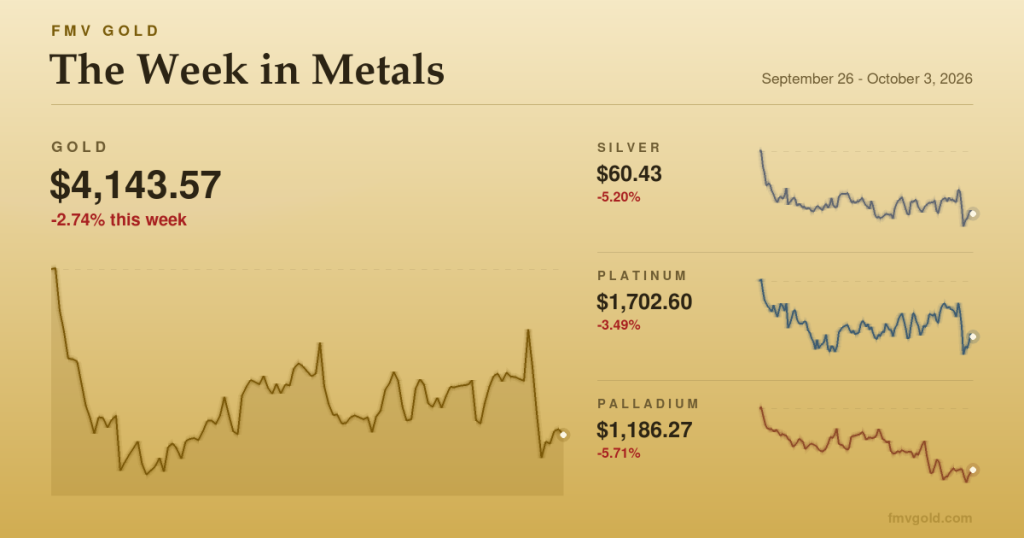
With gold trading in the neighborhood of $4,000 an ounce through the middle of 2026, the stakes of understanding that one figure have only grown. Learn what spot is, treat it as the metal floor it represents, and the space between the screen and the invoice stops being a mystery and becomes a tool.