

Most coins are worth roughly what the metal in them is worth, plus a little. A tiny handful are worth the price of a good house, or a very good one, and the reason has almost nothing to do with the silver or gold they contain. These are the famous rare U.S. coins: pieces whose stories, accidents, and narrow escapes turned them into legends. Understanding why they command the sums they do tells you a surprising amount about how coin value actually works, even for the coins sitting in your own drawer.
What makes a coin legendary
Rarity by itself does not crown a coin. Plenty of dates are genuinely scarce and still trade quietly. The famous rare U.S. coins tend to share three things: a very small surviving population, a story that reads like a heist or a diplomatic caper, and a pedigree collectors can trace back through named owners. When those line up, demand outruns supply by a wide margin, and the metal value (the melt floor) becomes a rounding error against what the market will pay.
The 1933 Double Eagle
The Mint struck nearly half a million twenty-dollar gold pieces dated 1933, using Augustus Saint-Gaudens celebrated design. Almost none of them ever legally left the building. That same year President Franklin Roosevelt took the country off the gold standard and recalled gold coin, so the entire run was ordered to the melting pot. A few slipped out anyway, and the government spent decades chasing them.
One example had a remarkable run of luck. It passed through a Philadelphia dealer, crossed the Atlantic, and landed in the collection of King Farouk of Egypt, who obtained a U.S. export license for it in 1944 before anyone at Treasury grasped what it was. Years later it resurfaced, was seized, and eventually became the subject of a settlement that made it the single 1933 Double Eagle a private citizen may legally own. When it sold at Sotheby’s on June 8, 2021, it brought $18.87 million, a world record for any coin. Of the roughly fourteen genuine examples known, two sit in the Smithsonian and eleven remain with the U.S. Mint. Only that one is legal to hold. The design itself outlived the recall: Saint-Gaudens’ standing Liberty was later revived for the obverse of the modern Gold Eagle.
The 1804 Dollar, King of American Coins
The nickname is old and well earned. Here is the part that surprises almost everyone: no silver dollar dated 1804 was actually struck in 1804. The dollars the Mint made that year carried an 1803 date. The coins we now call 1804 dollars were struck around 1834, three decades later, when President Andrew Jackson’s administration wanted handsome presentation sets of American coinage to send along with trade missions. Envoys carried them to rulers including the Sultan of Muscat and the King of Siam.
Eight of those original presentation pieces, known to collectors as Class I, are the aristocrats of the series. Later, Mint hands quietly produced a few more: a single Class II specimen struck over a Swiss shooting thaler, now in the Smithsonian, and six Class III restrikes. Fifteen are known in total. For a coin that began life as a diplomatic party favor, it has done rather well for itself.
The 1913 Liberty Head Nickel
By 1913 the Liberty Head nickel was supposed to be finished. The Mint had switched to James Fraser’s Buffalo design, and the official records show no Liberty Head nickels made that year. Five of them exist anyway.
All five trace back to Samuel Brown, a former Mint employee who ran advertisements in 1919 and 1920 offering to buy 1913 Liberty Head nickels, then conveniently produced five to sell. Most historians believe Brown struck them himself, off the books, while he still had access to the dies. However they were born, the coins picked up real glamour along the way: one turned up in a comic strip and a television episode, and the group scattered among famous collections. Today two are in private hands and three live in museums, one at the Smithsonian and two at the American Numismatic Association’s money museum in Colorado Springs. A coin the Mint insists never existed is now among the most recognized rarities in the country.
The 1794 Flowing Hair Dollar
This one matters for a different reason. It may be the very first silver dollar the United States ever struck. Working under the Coinage Act of 1792, the young Mint produced its first run of silver dollars in the fall of 1794, delivering 1,758 coins on a single October day. Somewhere between 125 and 150 survive today.
The finest known example is widely believed to be one of the first pieces off the press, possibly a special strike made to mark the occasion. In January 2013 it sold at a Stack’s Bowers auction for $10,016,875, the first coin ever to break ten million dollars at public sale. You are looking at the physical starting point of American money, which is a hard thing to put a number on. The market tried anyway. Its direct descendants are still minted today as the Silver Eagle.
The 1943 Bronze Cent
Not every legend was born in a treaty or a scandal. Some arrive by pure accident. During World War II copper was needed for shell casings and wiring, so in 1943 the Mint struck its cents in zinc-coated steel. Anyone who has found a silvery penny dated 1943 in a coffee can has held one of those wartime cents, and they are common as dirt.
The prize is the error. A few bronze blanks left over from 1942 stayed in the presses and were struck with the 1943 date across all three mints. Only a few dozen genuine bronze 1943 cents are believed to exist in total. Verified examples have changed hands for well over a million dollars, which is exactly why this is the most counterfeited error in American coinage, usually faked by copper-plating a steel cent or reshaping the date on a 1948 penny. A magnet gives a quick first check: a genuine bronze cent ignores it, while a steel cent, including the plated fakes, jumps right to it.
What the famous rare U.S. coins teach the rest of us
You will almost certainly never own a 1933 Double Eagle, and that is fine. The lesson these coins carry is still useful. Value at the very top of the market comes from story and scarcity, not from the metal, and the same logic runs all the way down to ordinary coins. A common coin is worth its melt value, the metal floor, and not much more. A coin becomes worth more than melt when something about it (a low mintage, a famous error, an unusual finish, a clean pedigree) makes collectors want it badly.
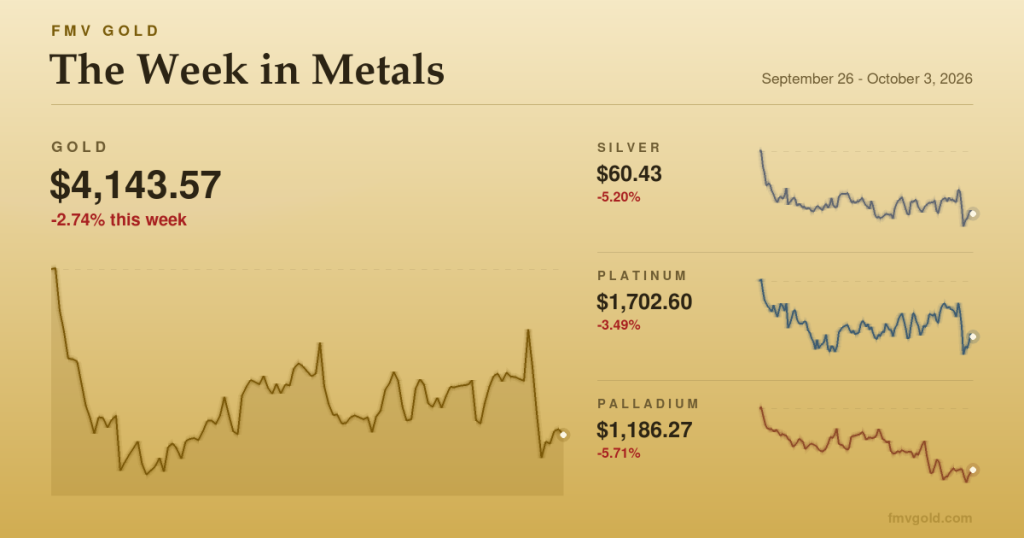
That gap between metal and market is worth understanding before you buy or sell anything. It is why a worn silver dollar and a pristine one can be miles apart in price, and why melt value is a floor rather than a fair offer. To see how these factors show up in real coins, you can browse the catalog, read how grading and provenance move value, or check current metal prices to anchor that floor. The famous rarities are the fireworks. The real collecting happens much closer to the ground.