

For most of American history, if you wanted a coin struck from pure gold, you had to look abroad. The United States alloyed its gold with copper for durability, from the Liberty Head pieces of the 19th century through the modern Gold Eagle. That changed in 2006, when the U.S. Mint released the American Buffalo, the first coin the federal government ever struck from 24-karat gold. It gave buyers a homegrown pure-gold option and a design older than almost anyone reaching for it.
If you have wondered whether gold Buffalo coins are a good investment, the honest starting point is what the coin actually is: a full troy ounce of .9999 fine gold wearing one of the most beloved images in American coinage.
A Pure-Gold Answer to a 22-Karat Question
The Buffalo owes its existence to the Presidential $1 Coin Act of 2005, which, alongside its better-known dollar-coin program, directed the Mint to produce a one-ounce, 24-karat gold bullion coin with a $50 face value. The Mint struck the first pieces on June 20, 2006, and put them on sale two days later. Its own announcement called it the first time the United States had ever minted pure .9999 gold coins for investors and collectors.
That “first” matters because it set the Buffalo apart from the American Gold Eagle, which had been the Mint’s flagship gold bullion coin since 1986. The Eagle is 22-karat, meaning it carries a small amount of copper and silver for hardness. The Buffalo answered a specific demand from buyers who wanted the same pure-gold content offered by the Canadian Maple Leaf and other world coins, but backed by the U.S. Mint.
Fraser’s Design, Borrowed From a Nickel
The Buffalo’s artwork is not new. It reaches back to 1913 and the sculptor James Earle Fraser, whose Indian Head nickel (better known as the Buffalo nickel) is widely considered one of the finest coin designs the country ever produced. The Mint lifted the Type 1 version of that design almost intact.
The obverse shows the profile of a Native American man, a composite Fraser built from three chiefs who sat for him: Big Tree, Iron Tail, and Two Moons. The reverse carries the American bison, standing on a mound with “E Pluribus Unum” arched above its back and “In God We Trust” tucked near its head. There is a quiet appropriateness to a pure-gold coin carrying a design meant to capture the American frontier rather than a classical allegory.
Two details help buyers read the market. Fractional Buffalos, in half-ounce, quarter-ounce, and tenth-ounce sizes, were struck in only one year, 2008. Since 2009 the bullion coin has come solely as the one-ounce piece, which makes the small 2008 fractionals genuinely scarce. And proof Buffalos, made for collectors, carry a “W” mint mark behind the portrait’s neck, while the plain bullion coins carry no mint mark at all.
The Buffalo Versus the Eagle
Buyers almost always weigh these two against each other, so it helps to be plain about the trade. Both are one troy ounce of gold and both carry a $50 face value that has nothing to do with their metal worth. The difference is what surrounds the gold.
Because the Buffalo is pure 24-karat gold, the whole coin weighs one troy ounce. The 22-karat Eagle has to weigh more than an ounce overall to hold a full ounce of gold, since part of its weight is alloy. Purists like the Buffalo for holding nothing but gold. The counterpoint is durability: pure gold is soft, so a Buffalo scratches and shows handling marks more readily than the harder, alloyed Eagle. For a coin you plan to seal away, that hardly matters. For one you like to handle, it might.
On cost, Buffalos have historically carried a slightly higher premium over spot than Eagles, reflecting their pure-gold content and typically smaller production. The gap is usually modest, and it moves with demand. Neither coin is the cheapest way to buy an ounce of gold, but both buy you the recognition and liquidity that come with a U.S. Mint product. If you want the fuller case for the alloyed option, our Gold Eagle buyer’s profile lays it out.
What Actually Drives the Coin’s Value
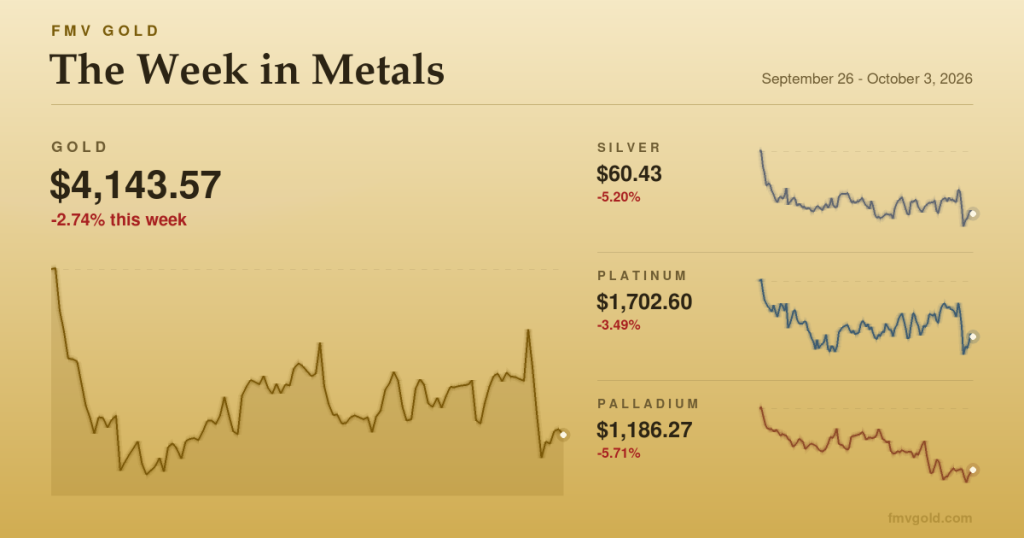
Nearly all of a bullion Buffalo’s worth is its metal. Hold one and you hold a troy ounce of gold, so its value rises and falls with the spot price, which sat around $4,000 an ounce through the middle of 2026. That metal value is the floor. It is why the coin’s fortunes track the gold market far more than any collector trend.
Two wrinkles sit on top of the metal. First, the Buffalo’s .9999 fineness clears the .995 minimum for gold held in a precious-metals IRA, so it qualifies without the statutory exception the 22-karat Eagle needs. Second, a handful of Buffalos carry real numismatic premiums beyond melt: the 2008 fractionals, low-mintage proofs, and pieces graded at the very top of the scale. Those trade on collector demand, not just gold content, and they behave differently from a standard bullion coin. Keeping the two categories separate is one of the basic rules of buying gold sensibly.
So, Are Gold Buffalo Coins a Good Investment?
For someone who wants pure U.S.-minted gold in a widely recognized, easily resold form, the Buffalo does its job well. You get a full ounce of .9999 gold, a design with real history behind it, and the liquidity of a coin dealers everywhere know on sight. The costs to weigh are a premium that usually runs a touch above the Eagle’s and a softer surface that asks for a bit more care.
Whether that adds up to a good investment depends on the same things it always does: the price of gold when you buy, how long you hold, and whether you paid a fair premium over the metal. A Buffalo is a clean, honest way to own an ounce of American gold. It is not a shortcut to a return, and no coin is. Compare it against the Buffalo listings and its rivals, look hard at the premium, and let the metal, not the marketing, make the case.