

On November 12, 2025, at the Philadelphia Mint, U.S. Treasurer Brandon Beach pressed the last circulating one-cent coin the United States will make. It closed a run of 232 years, longer than any other American coin has managed. The penny outlived the half cent, the trime, the twenty-cent piece, and every circulating gold coin, yet it was retired for the plainest of reasons: by 2025 it cost about 3.69 cents to make a coin worth one, up from roughly 1.42 cents a decade earlier.
A coin that lasted that long changed a great deal along the way. This is the full history of the U.S. penny, from the first big copper discs of 1793 to the zinc lightweight that rolled off the press for the final time.
The history of the U.S. penny begins in copper
The Coinage Act of 1792 authorized a cent, and in 1793 the young Mint struck its first ones. These were not the small coins we grew up with. They were large cents, heavy discs of pure copper far bigger than a modern penny. The very first, the Flowing Hair Chain cent, showed Liberty on the obverse and a chain of linked rings on the reverse meant to suggest the union of the states. Critics read the chain as a symbol of bondage instead, and within weeks it gave way to a wreath.
For the next six decades the large cent cycled through a parade of designs: the Liberty Cap, the Draped Bust, the Classic Head, and the long-running Coronet and Braided Hair Liberty types that carried the series to 1857. Collectors still note one quiet gap. No cents bear the date 1815, a casualty of the copper shortage that followed the War of 1812.
The small cent and the Indian Head
By the 1850s copper had grown expensive and the big cent was unpopular to carry. The Coinage Act of 1857 shrank the coin to roughly its present size, ended the half cent, and pulled foreign coins from legal-tender use. (That housecleaning is part of a larger story told in our look at discontinued U.S. coin denominations.) The replacement was the Flying Eagle cent, struck as a pattern in 1856 and for circulation in 1857 and 1858. Made of 88 percent copper and 12 percent nickel, it was pale, hard, and difficult to strike cleanly.
James B. Longacre solved the striking trouble with the Indian Head cent in 1859. The portrait is Liberty in a feathered headdress, not a Native American, a bit of artistic license that stuck in the popular name. The coin kept the pale copper-nickel alloy until 1864, when wartime pressures pushed the Mint to a thinner bronze of 95 percent copper with 5 percent tin and zinc. That bronze recipe would define the cent for well over a century.
Lincoln arrives, and so does controversy
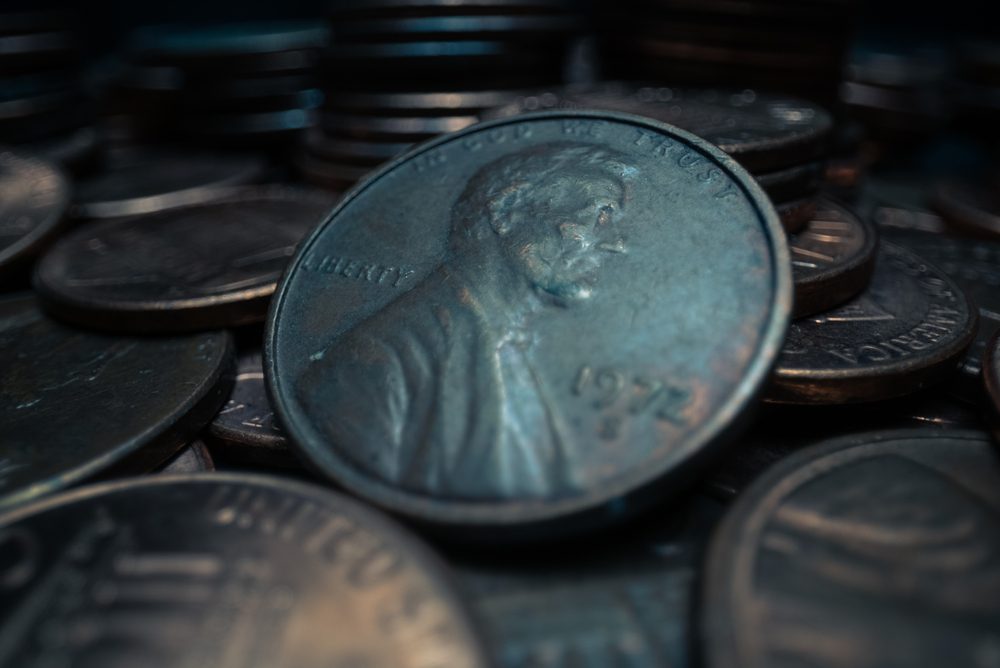
In 1909, for the hundredth anniversary of Abraham Lincoln’s birth, the cent received the portrait it still wears. The Lincoln cent was the first regular United States coin to carry the likeness of a real person rather than an allegorical Liberty, a break with long tradition. Sculptor Victor David Brenner designed it, and President Theodore Roosevelt, who admired a Lincoln plaque Brenner had made, backed the choice.
Brenner placed his initials, V.D.B., prominently at the bottom of the reverse. When the coin debuted that August, the initials drew loud complaints that they amounted to free advertising for the artist. The Mint halted production and ground them off within days. That short window created one of the most famous keys in American numismatics: the 1909-S V.D.B., struck at San Francisco to the tune of only 484,000 coins, against nearly 28 million of the Philadelphia V.D.B. issue. Brenner’s initials returned in 1918, tucked discreetly on the obverse below Lincoln’s shoulder, where they remained.
Wheat ears and a wartime detour
From 1909 to 1958 the reverse showed two wheat ears framing the words ONE CENT, giving collectors the beloved “wheat penny.” The series holds several scarce dates worth knowing, among them the 1914-D, the 1922 plain (a Denver-only year where a worn die erased the mint mark), and the low-mintage 1931-S at 866,000 coins. Mint-mark quirks like these are exactly the kind of detail our guide to reading mint marks on U.S. coins helps sort out.
The oddest chapter came in 1943. Copper was needed for shell casings and wiring, so that year the Mint struck cents on zinc-coated steel, producing a silvery coin that people still mistake for a dime. A handful of bronze planchets left over from 1942 were struck with 1943 dies by accident, and a few steel blanks slipped into 1944 production. Both errors are genuine rarities, and both feature in our roundup of famous rare U.S. coins. The everyday 1943 steel cent, by contrast, is common.
The Memorial, the switch to zinc, and the modern cent
In 1959, marking 150 years since Lincoln’s birth, Frank Gasparro’s Lincoln Memorial reverse replaced the wheat ears. Look closely at a well-struck example and you can see a tiny Lincoln seated inside the building, making it one of the few coins to show the same person on both sides. This design ran to 2008. The 1955 doubled-die obverse, where the date and lettering appear visibly doubled, remains the era’s most celebrated error.
The next great change was chemical. Copper prices climbed through the late 1970s until the metal in a cent threatened to cost more than a cent. In 1982 the Mint switched from solid bronze to a core of zinc with a thin copper plating, a coin that is 97.5 percent zinc and 2.5 percent copper. The weight dropped from 3.11 grams to 2.5 grams, and because both versions were struck during 1982, that single year is a favorite hunting ground for variety collectors.
The cent’s design stayed put until Lincoln’s bicentennial in 2009, when four reverses traced his life across the year: the Kentucky log cabin of his birth, his rail-splitting youth in Indiana, his years before the Illinois State Capitol in Springfield, and the half-finished Capitol dome of his presidency. In 2010 a permanent reverse arrived, the Union Shield designed by Lyndall Bass and sculpted by Joseph Menna, its thirteen vertical stripes standing for the original colonies bound into one nation. That shield cent, still copper-plated zinc, is the coin that reached the end of the line.
The end of a 232-year run
The final strike was ceremonial, but the decision was economic. With roughly 300 billion pennies already sitting in jars, drawers, and cash registers, the Treasury judged that halting production would save around 56 million dollars a year. The penny remains legal tender, and the Mint will still produce collector versions in small numbers, so the design does not vanish overnight. What ends is the ordinary cent as a thing the Mint keeps making. For the fuller story of that sendoff and the auction that followed, see our report on the final U.S. penny.
For collectors, the retirement changes little in the near term. Wheat cents, Indian Heads, and the classic keys were always the interesting ground, and they still are. If anything, the cent now joins the quarter as a denomination whose whole arc can be read in a single line of coins on a desk. You can trace that companion story in our history of the U.S. quarter, and see where every cent was actually made in our guide to the U.S. branch mints. If the next question is what a coin is really worth, our how it works page and the coin listings are a good place to start. Two and a third centuries is a long life for any coin, and the penny spent almost all of it in the humblest job in American money. That, more than any rarity, is what makes its history worth keeping.