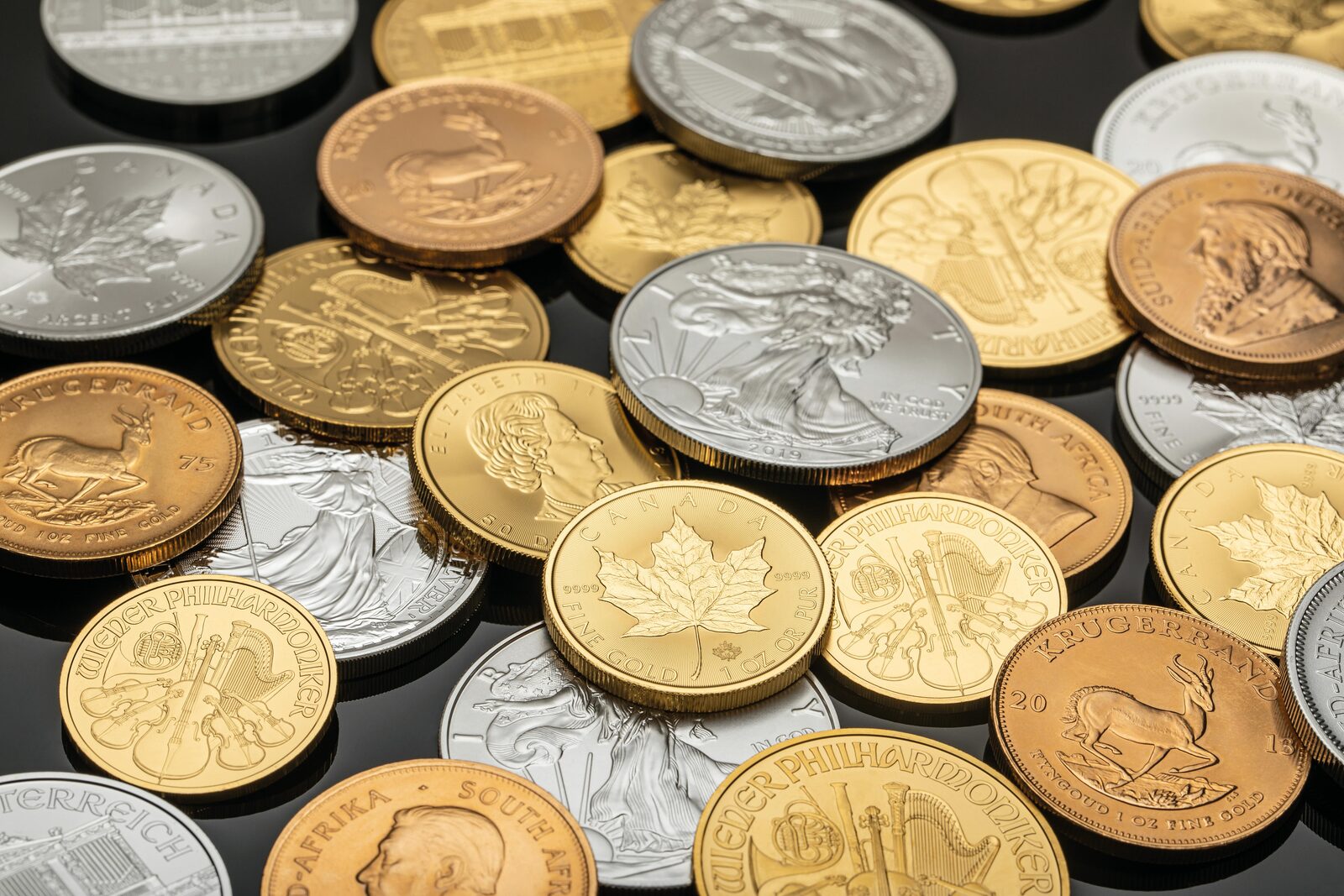

Put a one-ounce American Gold Eagle and a one-ounce Krugerrand side by side on a scale and they will read the same, give or take a hair. Both are 22-karat gold, both weigh about 33.93 grams, and both contain exactly one troy ounce of pure gold. Ask a dealer for a quote on each, though, and the Eagle will almost always come back higher. Buyers notice this, and a fair number of them assume they are being taken for a ride on the American coin.
They usually aren’t. Gold Eagles cost more than Krugerrands for real reasons, most of which have nothing to do with the gold itself, and once you understand them you can decide whether the extra premium on the Eagle buys you anything you care about.
Same Gold, Different Price Tag
The metal in both coins is identical in quantity. The Eagle, first struck in 1986, is alloyed with silver and copper, which gives it a slightly warmer, paler color. The Krugerrand, introduced by South Africa in 1967, is alloyed with copper alone, so it looks a shade redder. Diameters and thicknesses differ by fractions of a millimeter. None of that changes the melt value, which for either coin is simply one ounce times the spot price.
So whatever separates their prices lives in the premium, the amount a buyer pays above the metal. If that term is new, our explainer on the premium over spot covers what it pays for. The short version: minting, distribution, dealer overhead, and plain supply and demand. Each of those works a little differently for the two coins.
Why Do Gold Eagles Cost More Than Krugerrands?
Start at the source. The U.S. Mint does not sell bullion Eagles to the public. It sells them only to a short list of large wholesalers called authorized purchasers, who pay the spot price plus a manufacturer premium the Mint sets. In the Mint’s 2025 schedule that charge was about 3 percent over spot for the one-ounce coin and climbed to roughly 9 percent for the tenth-ounce. Every layer below the authorized purchasers adds its own margin. We walk through that structure in how the U.S. Mint prices its gold coins.
That is a sizable floor before a single retail dealer touches the coin. The Krugerrand comes from a different tradition. South Africa built it in the late 1960s as a way to sell the country’s gold to ordinary investors around the world, and a slim premium was part of the pitch from the beginning. By 1979 it was the most popular gold bullion coin on the planet.
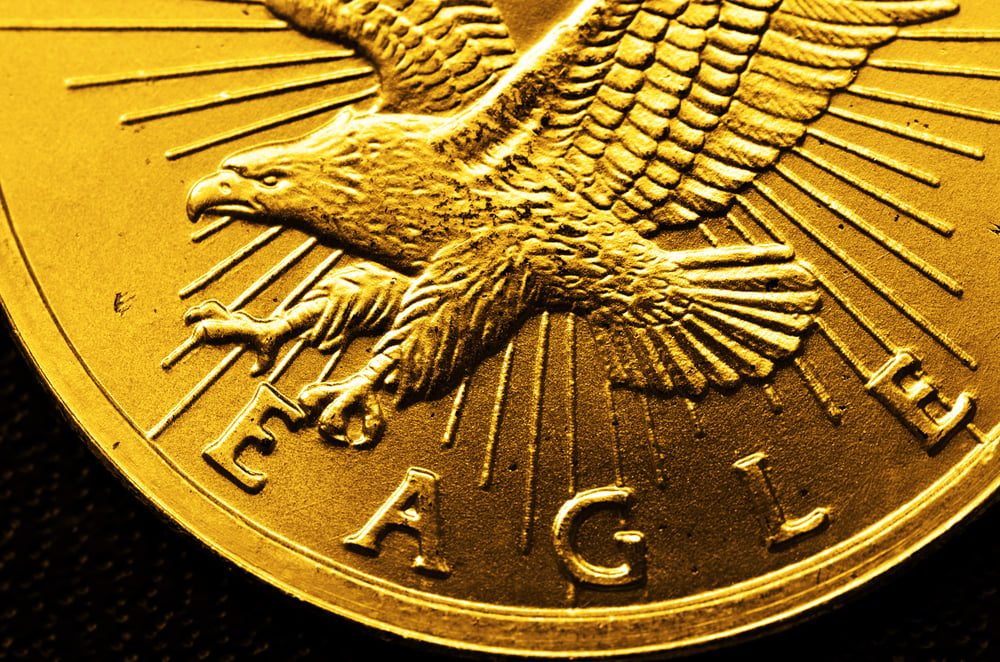
The second cause is demand at home. American buyers know the Eagle, trust it, and in many cases prefer it. The design carries Augustus Saint-Gaudens’s striding Liberty, the coin carries a $50 face value as U.S. legal tender, and it is the coin a lot of first-time buyers ask for by name. Several dealer guides attribute the Eagle’s pricing edge in the U.S. market chiefly to that steady domestic demand. When more people want one coin over an equivalent one, its premium settles higher. Nobody planned it that way; the market just prices preference.
The third cause is a quirk of tax law. Under the Internal Revenue Code, gold held in a self-directed IRA generally has to be at least .995 fine. The 22-karat Eagle fails that test on purity but qualifies anyway, because Congress named the American Eagle coins in the statute itself. The Krugerrand, at the same .9167 fineness and without a congressional carve-out, does not qualify. That shuts the Krugerrand out of a large and steady channel of American buying, which keeps its premium in check.
The Supply Side Nobody Mentions
There is also a lot of Krugerrand out there. South Africa struck the coin in enormous numbers through the 1970s and early 1980s, when it dominated the world market for gold coins. Then, in October 1985, President Reagan banned their import into the United States as part of the sanctions against apartheid, and Krugerrand mintage collapsed from over two million coins in 1984 to around 21,000 in 1986. The ban was lifted in the early 1990s. Our Krugerrand buyer’s profile tells that story in full.
What matters for premiums is what happened to the coins already sold. Decades of older Krugerrands sit in American safes and drawers, and they flow back to dealers steadily as estates settle and holders cash out. A dealer who can buy plenty of secondhand Krugerrands at close to melt has room to sell them at a slim markup. Older Eagles come back too, but they meet a deeper pool of domestic buyers waiting for them.
You Often Get Some of It Back
A higher purchase premium is only half the story. The other half is what a dealer will pay you when you sell. Because domestic demand for Eagles stays firm, American dealers will often bid a bit more for an Eagle than for a Krugerrand on the same day, so a portion of the extra premium tends to come back at resale. The Krugerrand’s lower entry cost is often matched by a lower exit price.
That is why the more useful comparison is the round trip: what you pay going in plus what you give up coming out. On that measure the gap between the two coins is usually narrower than the sticker difference suggests. Our piece on which gold and silver coins are easiest to sell goes deeper on buyback spreads and why recognition tightens them.
Where Purity Fits, and Where It Doesn’t
It is tempting to think a purer coin should cost more. In practice purity barely moves the premium. The Canadian Gold Maple Leaf has been .9999 fine since late 1982, and the American Buffalo, the Mint’s 24-karat coin, matches that fineness. Neither holds more gold per ounce than an Eagle or a Krugerrand. They are simply softer, and they scratch and ding more easily, which is the trade-off of pure gold.
What purer coins do get is the IRA eligibility the Krugerrand lacks, since .9999 clears the .995 bar on its own. The Royal Canadian Mint has also layered on anti-counterfeiting features, including a laser micro-engraved maple leaf added in 2013 and radial lines on both faces from 2015. Features like those help a coin earn trust in a market where it lacks the home-field advantage the Eagle enjoys in the United States.
Sorting Out Which Premium Is Worth Paying
None of this makes one coin the right answer for everyone, and we are not in the business of telling you which to buy. It does suggest some questions worth asking yourself before you pay the extra few percent on an American Gold Eagle:
- Is the coin going into a retirement account? If so, the Krugerrand is off the table, and the comparison is between the Eagle, the Buffalo, and eligible foreign .9999 coins.
- Will you, or your heirs, sell to an American buyer? The Eagle’s domestic demand tends to make it the easiest coin to sell quickly in the U.S., which is worth something to people who value a clean exit.
- Are you simply accumulating ounces? A buyer focused on the most gold for the money may reasonably prefer whichever recognized coin carries the slimmest premium that day.
- How long will you hold? Over a long holding period, the premium difference shrinks as a share of the coin’s total value, especially if part of it comes back at resale.
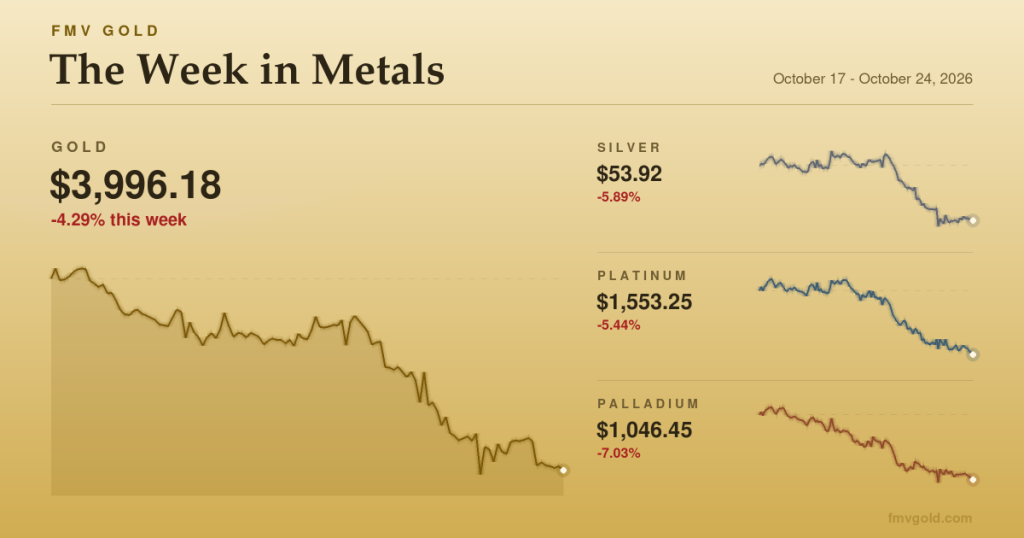
Premiums also move. They widen when demand spikes or supply tightens and narrow in quiet markets, so the gap between an Eagle and a Krugerrand today may not be the gap next spring. Before you buy, it’s worth checking where gold itself stands on our live markets page, then comparing what each coin costs over that figure rather than comparing their prices to each other.
The Eagle costs more because of how it is made and sold, who wants it, and what the tax code lets it do. The gold inside is the same. Whether those advantages are worth the difference depends on where your coins are headed, and that is a question only you can answer. If you want to see how we track the metal floor under any coin, here is how FMV Gold works.