

The United States Mint has offered an annual proof set in most years since 1936, and for long stretches of that run the contents were predictable enough that a collector could order one sight unseen. The set that goes on sale Tuesday, October 6 at noon Eastern is not predictable. Two of its coins carry obverse designs that did not exist two years ago, five of them mark the nation’s 250th birthday, and one is a cent that will never ride around in anybody’s pocket.
Proof sets are usually a quiet annual purchase, the sort of thing a grandparent buys for a grandchild’s birth year. This one is likely to be remembered.
What is in the 2026 US Mint proof set
The set holds ten coins, all struck at the San Francisco Mint and all carrying the S mint mark:
- Five Semiquincentennial quarters, with reverses depicting the Mayflower Compact, the Revolutionary War, the Declaration of Independence, the U.S. Constitution, and the Gettysburg Address.
- The Emerging Liberty dime, which puts Liberty back on the obverse of the ten cent piece.
- The Enduring Liberty half dollar, featuring the Statue of Liberty in place of the Kennedy portrait.
- The Native American dollar, showing Polly Cooper holding a basket as she shares the Oneidas’ gift of corn with General Washington.
- The Jefferson nickel, inscribed 1776 ~ 2026.
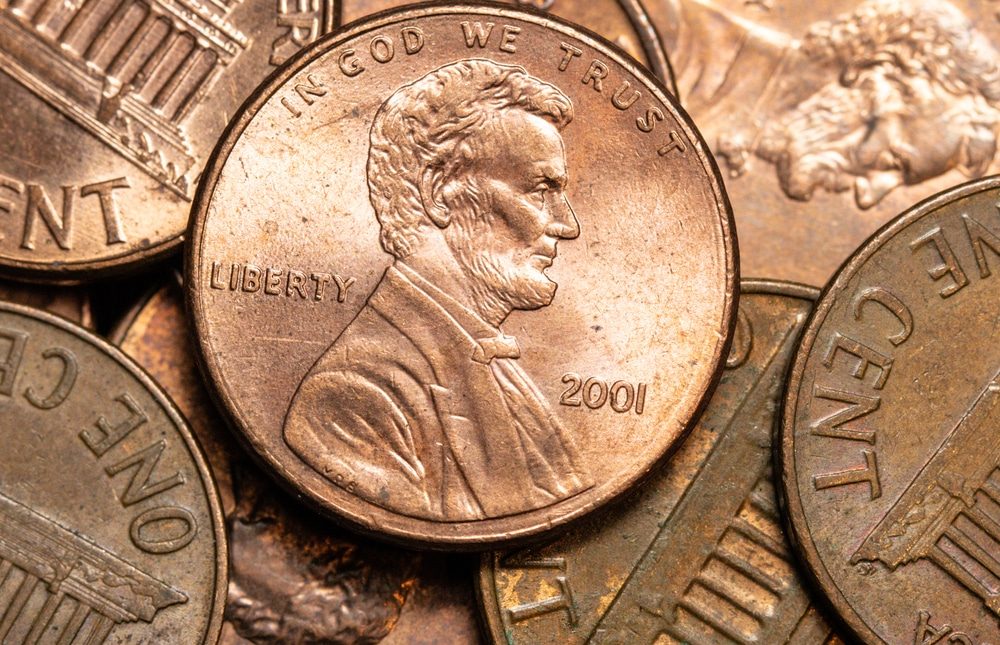
- The Lincoln cent, also inscribed 1776 ~ 2026.
The Mint houses the coins in two clear lenses inside a display package, and lists the issue price on the product page when ordering opens. If you have been following the five new quarter reverses as they were released, our guide to the 2026 Semiquincentennial coins covers the designs in more depth than a set listing can.
The cent that will not reach a cash register
Here is the part that makes this set unusual. The Mint struck its last one cent coins for circulation in the fall of 2025, closing out a denomination that had been in production since 1793. Commerce no longer gets new pennies. Collectors still do.
So the Lincoln cent in the 2026 US Mint proof set exists only inside collector products. It was never destined for a till, a tip jar, or the bottom of a washing machine. That is a genuinely new condition for the cent, and it is worth understanding before deciding whether to buy one set or several. A coin that is produced in collector formats alone has no circulating population to draw from later, which is a different situation from, say, the America the Beautiful quarters, where billions of pieces went into circulation alongside the collector versions.
None of which tells you what the coin will be worth. Mintage figures for the 2026 collector sets will not be final until the Mint closes sales and publishes them, and a low mintage on its own has never guaranteed anything.
Liberty returns to the dime
The Emerging Liberty dime is the quieter headline, and for anyone who likes classic American coin design it may be the better one. According to the Mint, Liberty appears on the obverse of the dime for the first time since 1945. That year is the clue: 1945 was the final year of the Winged Liberty Head dime, the coin almost everyone calls the Mercury dime, and the Roosevelt portrait took over in 1946 and stayed there for eighty years.
Eighty years is a long tenure for one obverse. Whatever you make of the new design, a Liberty figure on a circulating American dime is something no living collector has bought new from the Mint.
The half dollar steps aside for the Statue of Liberty
The Enduring Liberty half dollar replaces the Kennedy obverse with the Statue of Liberty. Half dollars have not circulated in any real sense for decades, so most people will encounter this coin in a set rather than in change, but it continues a pattern worth noticing: the 2026 coinage leans on Liberty imagery rather than on portraits of individuals. The desk covered the other new 2026 half dollar earlier this year in our look at the 2026 9/11 half dollar.
What proof actually means here
Proof is a method of manufacture, not a grade. The Mint polishes the dies and the blanks, strikes each coin more than once at lower speed and higher pressure, and handles the finished pieces individually rather than letting them tumble into a bin. The result is the mirrored field and frosted raised design that makes a proof coin look nothing like the same coin out of a roll.
Two practical consequences follow. Proof coins show fingerprints and hairlines easily, so the sensible approach is to leave the lenses sealed. And proof sets are sold at a premium over the face value and the metal content of the coins inside them, because what you are paying for is the striking, the packaging, and the limited availability. Our explainer on how melt value and collector premium combine walks through that distinction.
Where a set like this fits
It helps to be honest about categories. The clad 2026 US Mint proof set is a collector product, not a way to own precious metal. The dime, quarters, and half dollar in it are base metal, and their value rests entirely on collector demand for the designs, the finish, and the anniversary year. Buyers who want metal content should look at a different shelf, whether that is the Mint’s separate 2026 silver proof set (where the dime, quarters, and half dollar are struck in 99.9 percent silver) or at bullion and classic U.S. coins priced off their metal.
Demand for 2026 products has already been brisk, and recent Mint offerings have taught collectors not to assume a set will sit on the shelf indefinitely. Our piece on what the Best of the Mint sales figures revealed is a useful reminder of how quickly the sales picture can change once a program closes.
If the 2026 US Mint proof set interests you, the thing to put in your calendar is the date and the hour: October 6, noon Eastern. Popular 2026 products have moved fast, and ordering in the first hours has been the difference between a set at issue price and a set bought later on the secondary market. If it does not interest you, that is a reasonable answer too. A proof set is a keepsake of a particular year, and this year happens to have more to keep than most.