
Every bullion coin has an origin story, and the Canadian Gold Maple Leaf’s is unusually specific. By the late 1970s the South African Krugerrand had the private gold market mostly to itself, and then politics caught up with it. Boycotts and sanctions aimed at South Africa’s apartheid government made the Krugerrand awkward to buy through ordinary channels in North America and Europe. Canada, sitting on a serious gold mining industry and a mint with capacity to spare, saw the opening and took it.
The Royal Canadian Mint struck the first Gold Maple Leaf in 1979, the second gold bullion coin ever aimed squarely at private buyers. Forty-seven years on, it is one of the most widely traded gold coins in the world, and the reasons people buy it now have almost nothing to do with 1979 politics.
What the Coin Actually Is
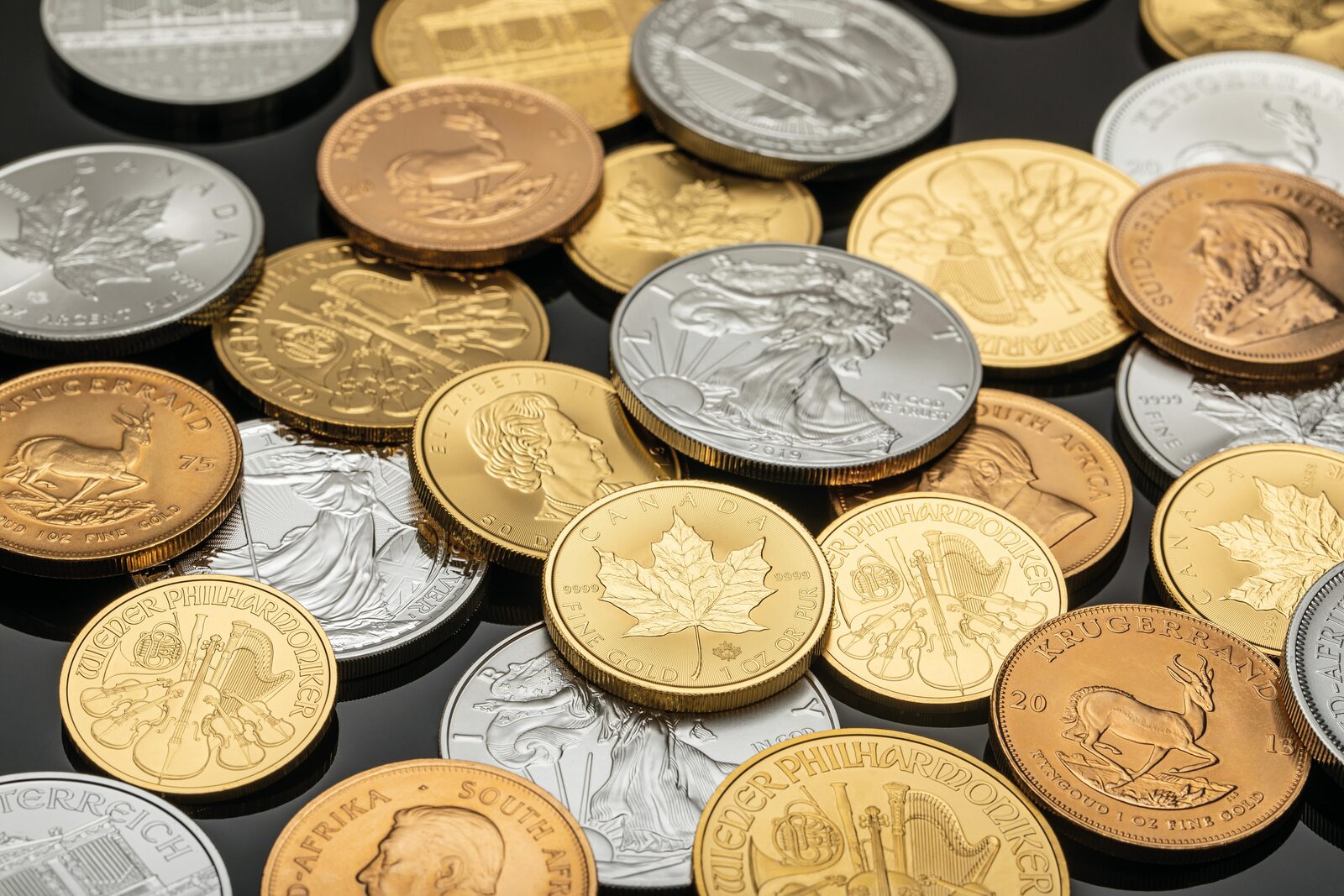
The one ounce Maple Leaf carries a legal tender face value of 50 Canadian dollars, which is a formality rather than a valuation. It weighs 31.11 grams, measures 30 millimeters across, and has a serrated edge. The reverse has shown the same sugar maple leaf since the beginning, designed by Walter Ott, framed by the words CANADA, FINE GOLD, and OR PUR.
Purity is where the coin made its name. The first issues, from 1979 through late 1982, were .999 fine. In November 1982 the Mint moved to .9999, the four nines standard that made the Maple Leaf the first 24 karat gold bullion coin offered to the public. A handful of special issues have gone further still, to .99999.
The obverse carries the reigning monarch. Queen Elizabeth II appeared through three successive effigies, the last of them Susanna Blunt’s uncrowned portrait introduced in 2005. Following the Queen’s death in 2022, the Mint moved to an effigy of King Charles III by Canadian artist Steven Rosati, which is what current bullion issues carry.
Fractional sizes arrived over time rather than all at once:
- 1 oz, from 1979, face value C$50
- 1/4 oz and 1/10 oz, from 1982, face values C$10 and C$5
- 1/2 oz, from 1986, face value C$20
- 1/20 oz, from 1993, face value C$1
Smaller formats have since joined the lineup, including a 1/25 oz piece and a one gram coin. As with any bullion series, the smaller the unit, the higher the premium per ounce of metal you are buying, because the minting cost is spread across less gold. That trade off sits behind our rules of gold.
Pure Gold Versus Alloyed Gold
Here is the thing new buyers usually misread. A .9999 Maple Leaf and a 22 karat Krugerrand both contain exactly one troy ounce of gold. The Krugerrand is not shortchanging anyone. It simply adds copper on top of that ounce, which is why it weighs 33.93 grams gross against the Maple Leaf’s 31.11. Same gold, different packaging.
What the copper buys is toughness. Pure gold is soft, and a .9999 coin picks up hairlines, rim nicks, and handling marks far more readily than an alloyed one. Some dealers have long grumbled about striations on Maple Leaf bullion finishes that look like scratches to an untrained eye. For a coin whose value is the metal inside it, cosmetic wear rarely matters much. It matters more than zero, though, because a visibly banged up coin can slow down a sale or invite a wider spread. Leave them in their tubes or flips and handle them by the edge.
The American answer to this question went both ways. The American Gold Eagle is 22 karat and durable, while the American Gold Buffalo is .9999 and soft. Both sell well. Purity is a preference, not a verdict.
Security Features and Why They Matter at Resale
The Maple Leaf is probably the most technically defended common bullion coin in circulation, and that is worth understanding before you buy.
Coins dated 2013 and later carry a laser micro-engraved maple leaf bearing the last two digits of the year, invisible without magnification. From 2015 the Mint added precise radial lines across both faces, which throw a light-diffracting pattern that is difficult to reproduce convincingly. Underneath both sits Bullion DNA, an authentication system built with Signoptic technology: the micro-engraving on each die is captured, encrypted, and registered in the Mint’s database, and an authorized dealer with a reader can scan a coin and confirm it in seconds. Gold Maple Leafs dated 2014 and later are covered.
None of that makes a coin worth more metal. It does make a coin faster to verify, and speed of verification is quietly one of the biggest drivers of how tight a buyback offer comes back. A piece a dealer can authenticate in thirty seconds tends to price better than one that needs a specific gravity test and a conversation. If you want the mechanics of that, see how valuations are built.
Are Gold Maple Leafs a Good Investment?
Answered honestly, a Maple Leaf is a way to own gold, not a way to beat gold. A one ounce coin holds one full troy ounce, so its floor is the metal, which traded near $4,300 an ounce in mid-September 2026. Above that floor sits a premium that reflects minting, distribution, and whatever the market is doing to supply that week. Nobody should expect a common date bullion Maple Leaf to develop a collector premium. It is not built for that, and pretending otherwise is how people overpay.
Where the coin genuinely earns its keep is liquidity. It is recognized in every serious bullion market on the planet, it comes in useful fractional sizes, and its authentication story is strong. Those qualities show up as a narrower round trip, the combined cost of buying above spot and selling below it, which is the number that actually decides how a holding performs.
One practical detail that catches people out: the Maple Leaf clears the .995 minimum fineness the IRS sets for gold in a precious metals IRA, so it qualifies. The Krugerrand, at .9167 and not named in the statute, does not. The Gold Eagle is the odd exception, ineligible on fineness but written into the law anyway. If retirement account eligibility is part of your plan, that distinction is worth more than any argument about four nines versus two.
A Hundred Kilogram Footnote
In 2007 the Royal Canadian Mint decided to show off, striking six coins of 100 kilograms each at .99999 purity. One of them was on display at Berlin’s Bode Museum until a March morning in 2017, when four young men, one of whom worked museum security, removed it. Three were convicted and given sentences of three to four years. The coin has never been found, and the working assumption is that it was cut up and melted, which is a strange fate for an object whose entire point was that nobody would ever need to melt it.
Who It Suits
The Maple Leaf fits a buyer who wants recognized, liquid, internationally tradable gold and does not mind treating it gently. It suits IRA holders. It suits anyone who wants fractional gold from a mint with a long production record.
It fits less well if you handle your coins often, keep them loose in a drawer, or want something with numismatic upside baked in, in which case a pre-1933 piece such as the Indian Head eagle is a different conversation entirely. Bullion and collectibles answer different questions.
Whatever you settle on, price the coin against the metal before you price it against the story. Current spot and premium context sit on our markets page, and if you are comparing where to transact, start with the dealer basics.