


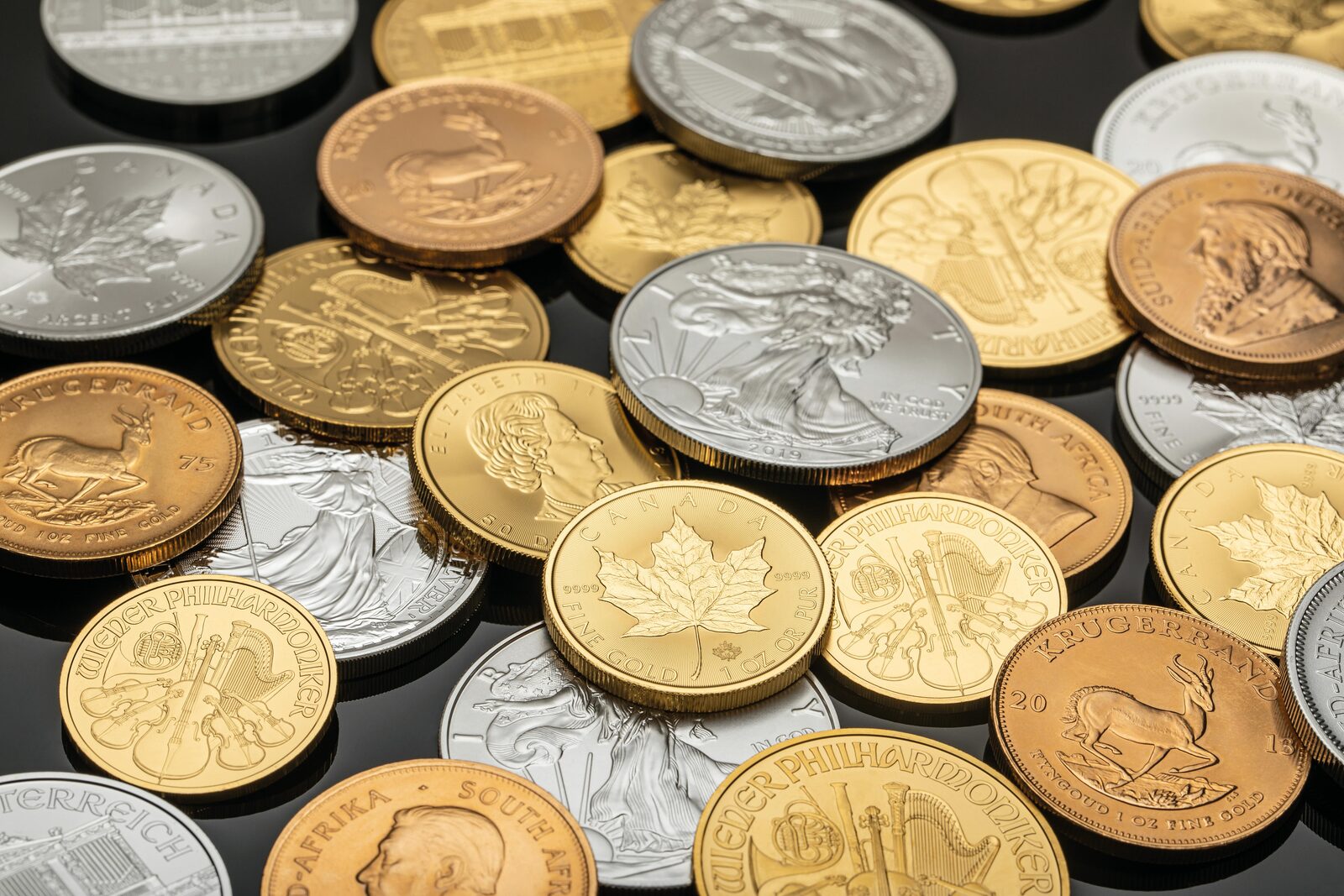
Set a Gold Eagle next to a Gold Buffalo on the kitchen table and the difference jumps out before you read a word on either coin. The Eagle has a warmer, slightly deeper color and it is a touch heavier in the hand. The Buffalo looks almost buttery. Both are sold as one-ounce gold coins, both come from the same U.S. Mint, and new buyers reasonably ask whether one of them is shortchanging them.
It isn’t. The two coins are made to different purity standards, 22 karat and 24 karat, and each standard has a long history and a practical reason behind it. If you are weighing 22k vs 24k gold coins for a holding, here is what the numbers on the label actually mean and what they don’t.
What karat means on a gold coin
Karat (spelled carat in Britain) measures purity in 24 parts. Pure gold is 24 karat. A 22 karat coin is 22 parts gold and 2 parts something else, which works out to 91.67 percent gold. Bullion dealers and mints usually express the same idea as fineness, a decimal: .9167 for 22 karat, .999 or .9999 for 24 karat.
That second number is worth a second look. A coin marked .9999 is “four nines” fine, 99.99 percent gold. In practice the bullion world treats .999 and .9999 alike as 24 karat, and a handful of special Canadian issues have pushed it to .99999. For a buyer, anything with three or four nines is the pure-gold camp, and .9167 is the alloyed camp.
22k vs 24k gold coins: the gold content is the same
Here is the point that trips up most first-time buyers. A one-ounce 22 karat bullion coin does not contain less gold. The mint simply adds the alloy on top of a full troy ounce of fine gold, so the coin weighs more.
The American Gold Eagle shows how this works. According to APMEX, it is struck from .9167 fine gold, with the remainder made up of 3 percent silver and copper for the balance. The coin weighs 33.931 grams and holds exactly one troy ounce of gold (about 31.1 grams). The extra 2.8 grams or so is silver and copper. The South African Krugerrand follows the same recipe with copper alone: Chards lists it at 33.93 grams total, with 31.1035 grams of fine gold inside.
A one-ounce 24 karat coin like the Gold Buffalo, by contrast, weighs right about one troy ounce because there is almost nothing in it except gold. Put the Eagle and the Buffalo on a scale and the Eagle wins, but put them in a refiner’s crucible and they come out even. The melt value, which is the metal floor rather than the price you will see on any dealer’s screen, is identical for the two coins. If you want to run that math yourself, our guide on how FMV Gold works explains how we separate metal value from what the market adds on top.
Why mints add alloy at all
Pure gold is soft. It dents and scratches easily, which matters very little for a coin that lives in a capsule and a great deal for one that rattles around in a purse or a cash drawer. A small dose of copper or silver hardens the metal noticeably. British dealer Chards describes 22 carat as “tougher and more durable” than 24 carat, while 24 carat is purer, softer, and shinier.
That logic is centuries old. England adopted 22 karat “crown gold” in 1526 under Henry VIII, replacing the softer 23 karat gold of earlier coins. The standard spread wherever coins were meant to circulate. When South Africa’s Rand Refinery began striking Krugerrands in 1967, APMEX notes, copper was added to make the coins resistant to scratches and damage, and the result is the coin’s distinctive reddish, orange-gold color.
The United States has its own chapter in this story. Early American gold coins were 22 karat, but from 1837 until gold was pulled from circulation in 1933, U.S. gold coins were struck at .900 fine, which is 21.6 karat. That is why a Saint-Gaudens double eagle or an Indian Head half eagle looks and feels more like a Gold Eagle than a Buffalo. If you collect Saint-Gaudens double eagles, you already own a coin in the alloyed tradition, just one notch below crown gold.
Which popular bullion coins fall on each side
On the 22 karat side, the best-known coins are the American Gold Eagle, issued since 1986 under the Gold Bullion Coin Act of 1985, the Krugerrand, and the British gold Sovereign. They share a heritage of coins built to be handled.
The 24 karat side is younger and more crowded. Canada’s Gold Maple Leaf arrived in 1979 at .999 fine, and the Royal Canadian Mint moved it to .9999 in 1982, according to APMEX. Austria’s Philharmonic and Australia’s Kangaroo are .9999 as well. The U.S. Mint joined in 2006 with the American Gold Buffalo, the first .9999 fine gold coin from the Mint. And Britain’s Gold Britannia, which debuted in 1987 as a 22 karat coin, switched to .9999 with its 2013 issues; Coin World reported at the time that its silver sister moved from .958 to .999 fine in the same change.
That Britannia switch says something about the market. Buyers in recent decades have increasingly favored the look and the clean “four nines” label of pure gold, and several mints have responded. The older 22 karat coins have not gone anywhere, though, and they remain among the most widely recognized gold coins in the world.
Practical differences for a holder
Since the gold inside is the same, the choice comes down to handling, appearance, and the rules around how you hold the coin.
- Handling: A 24 karat coin is more likely to pick up marks if it is handled carelessly. Keep pure-gold coins in their capsules or tubes, and pick them up by the edges. Our guide to flips, capsules, albums and slabs covers the options. A 22 karat coin is more forgiving, though no gold coin enjoys being dropped.
- Appearance: Copper warms the color. Some buyers like the richer tone of a Krugerrand or Eagle; others want the bright yellow of a Maple Leaf. Neither changes the metal value.
- Weight checks: If you verify coins with a scale or calipers, use the published specification for that coin, not a generic “one ounce” figure. A genuine Gold Eagle should weigh about 33.9 grams. One that weighs 31.1 grams deserves a much closer look.
- Retirement accounts: IRS rules generally require gold to be .995 fine for IRA purposes, yet the Gold Eagle qualifies anyway because the law names it specifically. Other 22 karat coins such as the Krugerrand do not get that exemption. Our explainer on which gold and silver coins are IRA eligible walks through the details.
Premiums are a separate question from purity. Two coins with identical gold content can trade at different markups over metal value because of mint costs, demand, and how easy they are to resell, and that gap moves over time. Purity alone does not make a coin cheaper or dearer to own.
So which should you own?
For most people building a holding, the honest answer is whichever coin you can buy, store, and later sell most comfortably. A 22 karat coin is a sturdy, well-known format with centuries of practice behind it. A 24 karat coin gives you the purest metal and the brightest look, at the cost of a bit more care. Plenty of collectors keep both, and there is something satisfying about owning an Eagle and a Buffalo side by side and knowing the same ounce of gold sits inside each.
If you are also deciding between sizes, the same karat logic applies to the smaller coins in our look at fractional gold coins. And when you are ready to compare current metal values, the markets page shows live spot prices for gold and silver.