
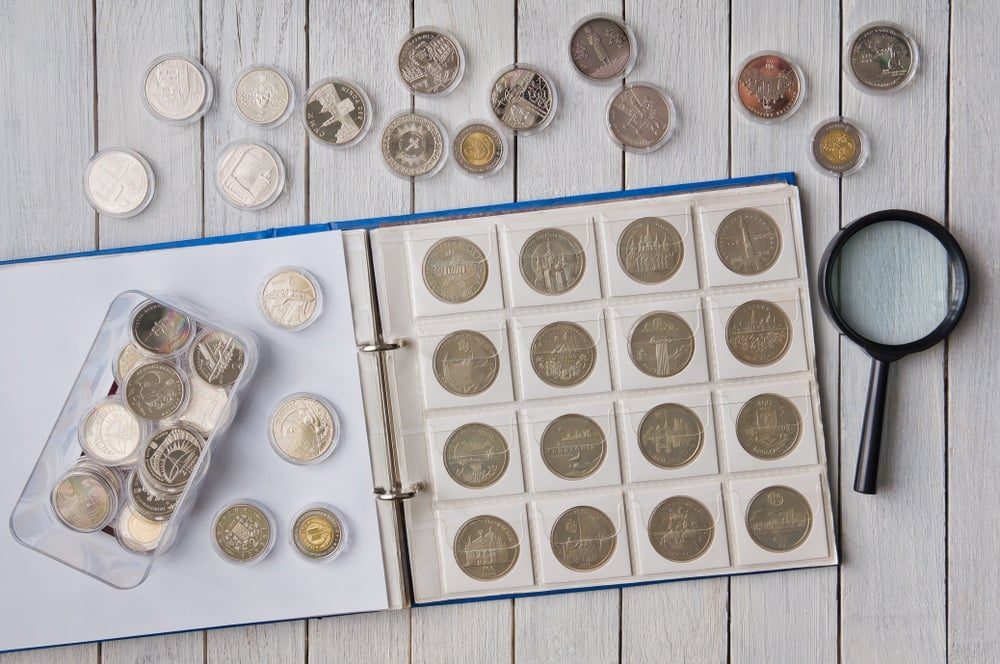
Most people do not decide to become collectors. A cigar box turns up in a parent’s closet, or a cashier hands back a quarter with a worn eagle on the reverse, and a question arrives on its own: is this worth anything, and what am I supposed to do with it?
That is a better beginning than it sounds. The collectors who stay with the hobby usually started from curiosity. The ones who drift away usually bought first and read second, then discovered that the purchase they were proudest of was the one they understood least. If you want to know how to start a coin collection that you will still enjoy in ten years, the order of operations matters more than the size of your first check.
Begin with the coins already in the house
The U.S. Mint’s own advice to beginners is blunt about this: you can begin with coins you already have on hand. Pocket change, a jar on the dresser, and rolls from the bank teller cost you nothing beyond face value, and they teach you to look at a coin closely before money is on the line.
There is still silver hiding in American change, and the dates are easy to memorize. Dimes, quarters, and half dollars struck before 1965 are 90 percent silver. Kennedy half dollars from 1965 through 1970 are 40 percent silver. Wartime nickels from 1942 through 1945 are 35 percent silver, and you can spot them by the oversized mint mark sitting above Monticello on the reverse, a placement used on no other nickel.
Copper is worth a glance too. Wheat cents ran from 1909 to 1958, and Lincoln memorial cents struck before the 1982 composition change are mostly copper rather than copper-plated zinc. One caution that surprises new collectors: melting U.S. cents and nickels is illegal, so their metal content is a matter of interest rather than a way out.
Pick a lane before you pick a coin
The American Numismatic Association puts specialization second in its ten rules of collecting, and the reasoning is practical. It is too hard to build a collection without goals and boundaries, and a narrow focus lets you become genuinely knowledgeable in months instead of drifting for years.
The Mint lists seven honest ways to draw that boundary: country of origin, historical period, finish, denomination, mint mark, design theme, and artist. Any of them works. A run of Morgan dollars by mint and date is a classic project with plenty of published material behind it, and you can see the Morgan dollar series laid out before you commit to it. So is a twentieth-century type set, one example of each design, which teaches you more about American coinage per dollar spent than almost anything else.
Whatever you choose, write it down. Anyone asking how to start a coin collection is really asking what to say no to, and a want list answers that for you. A collector holding one buys differently than a collector browsing a case.
Buy the book before the coin
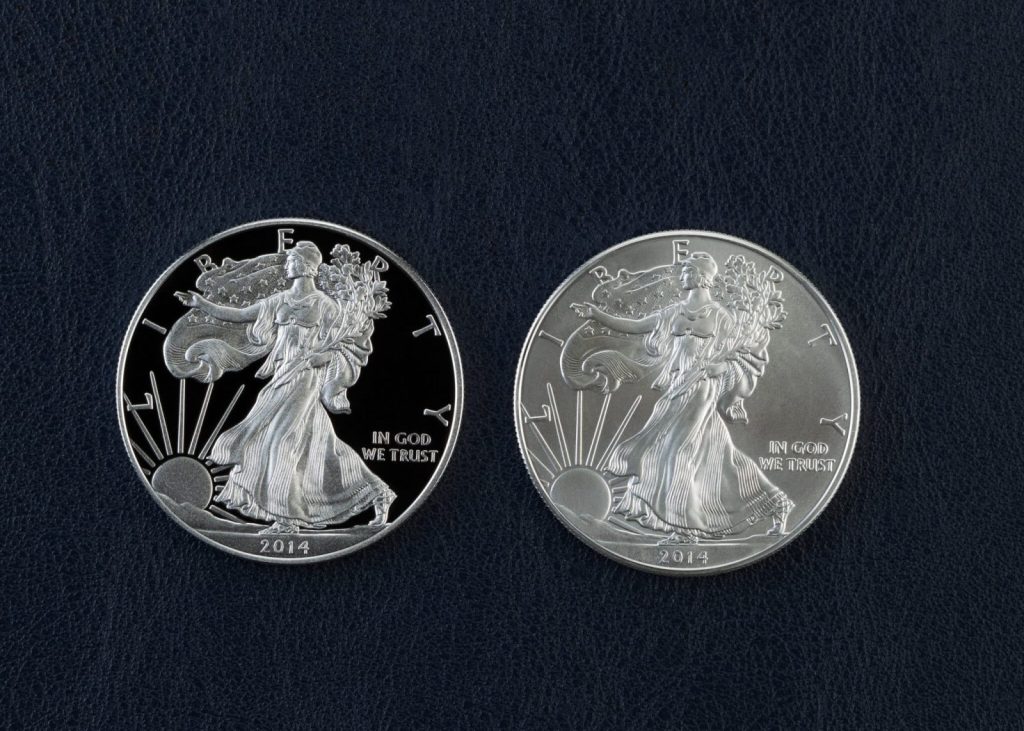
That old piece of counter wisdom has outlasted the dealer who coined it, and it is still the cheapest advice in the hobby. Richard S. Yeoman’s A Guide Book of United States Coins, the Red Book, first appeared in November 1946 with a 1947 cover date and has been published annually by Whitman ever since. It catalogs U.S. issues from colonial pieces through modern commemoratives, mint and proof sets, and bullion coins, and it lists retail values, meaning roughly what a collector would expect to pay rather than what a dealer would pay you. The companion Blue Book, older by four years, approaches values from the wholesale side.
Treat both as orientation rather than a quote. Printed guides are annual, collector demand shifts, and for anything whose value leans on metal content the underlying metals market moves daily. Melt value is the floor under a bullion coin, not the price of a collectible one, a distinction worth internalizing early and one we lay out in our rules of gold.
How to start a coin collection without overspending
The ANA’s rules get uncomfortably direct on money. Coins are a terrible short-term investment, the organization says, because retail markup takes years to work off, so plan on holding at least a decade. New collectors are advised to start modestly and study for three to six months before buying anything expensive.
Quality beats quantity, too. A few carefully chosen pieces at the top of your budget tend to hold interest and value better than a drawer full of mediocre ones bought quickly. Patience is doing most of the work in that sentence. The best collections are assembled over many years, and the coin you skip this month will come around again.
One more rule deserves repeating: do not buy what you cannot grade. Experienced collectors will pass on an entire series rather than bid on coins they are not comfortable evaluating. Learning to grade is slow, unglamorous, and the single best defense against paying a premium for a problem coin.
Holders either protect a coin or quietly destroy it
Here is the beginner mistake that costs real money. Soft, floppy vinyl flips are usually PVC, and PVC does not sit still. The plasticizer that makes the flip bendable leaches out over time, leaving an oily film on the coin and a pale green outline where the coin sat. Given moisture and enough time, those deposits can form hydrochloric acid and permanently scar the surface.
Grading services offer a simple field test: twist the flip. If it bends easily without creasing or cracking, assume PVC and assume a deadline. Short-term display is tolerable, but six months is about the limit.
Safer materials exist and cost about the same:
- Acetate or polystyrene flips. Chemically inert, rigid, and meant for single use.
- Mylar. Very safe chemically, though brittle at the seams, which makes it a poor choice for shipping.
- Cardboard 2×2 holders. Fine for the coin inside, but the staples scratch neighboring coins in a box. Flatten every staple and file the edges.
The Mint counts scratches, bag marks, staple marks, and corrosion among the things that reduce a coin’s value, and wear is the largest factor of all. Handle by the edges, over a soft surface, and resist the urge to improve anything. Our guides on storage options compared and cleaning coins without destroying their value go deeper, and the short version of the second one is that most cleaning is damage with good intentions.
Where to buy, and who to ask
The ANA argues that real market information comes from dealers and collectors who actually attend shows and auctions, not from newsletters. That is worth acting on. Local coin clubs are free or nearly so, the ANA maintains a club directory and a dealer directory, and a single afternoon at a show will teach you more about grading and pricing than a month of reading.
When you do move to buying, vet the seller before the coin. A dealer who explains why a piece is priced where it is, and who will take it back, is worth more than a slightly better number from a stranger. Our dealer directory and the wider coin catalog are a reasonable place to start comparing.
What to leave for year two
Certification can wait. Third-party grading makes sense for coins where the grade carries most of the value, and it is an expense with no payoff on common material, a calculation we work through in is it worth getting your coins graded. Counterfeits are a real risk in gold and silver, though far less so in the circulated pocket change where most collectors begin, and spotting fakes is a skill to build before you need it.
Mostly, give yourself permission to collect slowly. Buy coins you want to look at. Read more than you spend for the first year. The hobby rewards people who treat it as a long conversation with American history rather than a position to be sized, and the collectors who figure that out early tend to be the ones still at it decades later.