
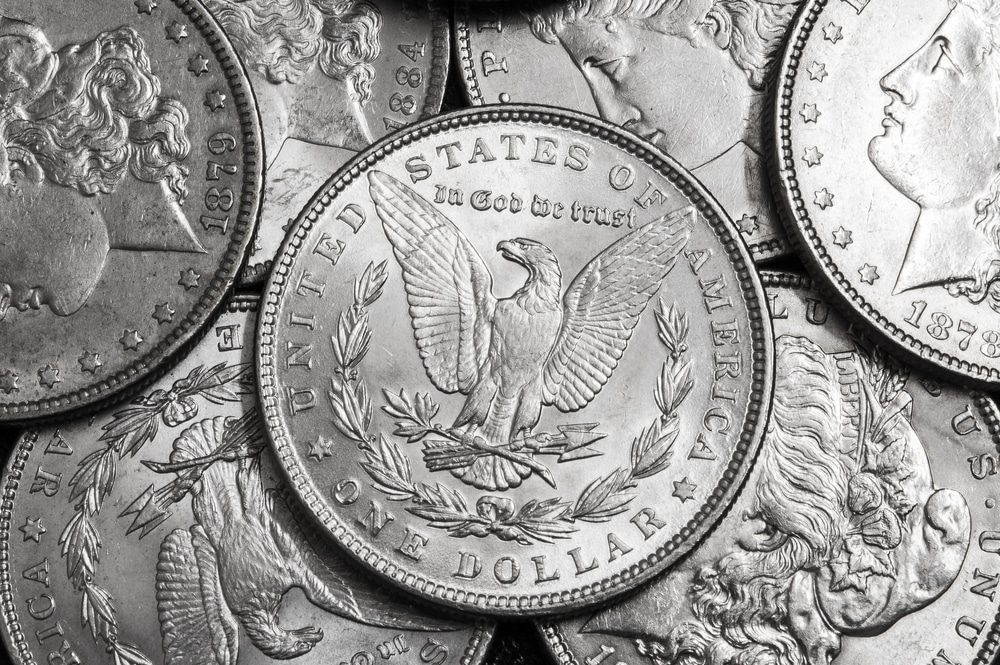
One coin in the American series was actually disowned by the government that made it. In the summer of 1876 Congress stripped the trade dollar of its legal tender status and left it circulating anyway: a silver dollar from the U.S. Mint that the Treasury would no longer take at face value. It stayed in that limbo until the Coinage Act of 1965 restored legal tender status to every U.S. coin ever issued. No other American coin carries that on its record, and the story explains most of what a buyer needs to know today.
A dollar designed for Canton, not Chicago
The Coinage Act of 1873, signed by President Grant on February 12 of that year, is mostly remembered for what it did to the standard silver dollar. Silver partisans spent the next two decades calling it the Crime of ’73. The same law created something new in the same breath: a dollar meant to be spent overseas.
The logic was commercial. American silver output was climbing, Germany had just demonetized silver, and Pacific coast merchants kept losing Chinese business to the Mexican peso, which carried slightly more silver than an American dollar and was trusted accordingly. Congress answered with arithmetic. The trade dollar got 420 grains of .900 fine silver against the 412.5 grains in a standard silver dollar, and the Mint stamped the terms on the coin itself: 420 GRAINS, 900 FINE. A merchant in Canton could read the deal without taking anyone’s word for it.
William Barber, the Mint’s chief engraver, gave the obverse a seated Liberty on a bale of merchandise, facing out to sea with an olive branch extended and wheat behind her. The reverse eagle holds three arrows and an olive branch. Business strikes ran from 1873 through 1878 at Philadelphia, San Francisco and Carson City. After that the series continued as proofs only, through 1883 in the record books and, as collectors learned decades later, in 1884 and 1885 outside them.
What is actually in one
A trade dollar weighs 27.22 grams, runs .900 fine, and measures 38.1 mm with a reeded edge. The pure silver works out to roughly 0.7875 troy ounces, against about 0.7734 in a Morgan or a Peace dollar. That is roughly two percent more metal, which mattered enormously to a shroff weighing coins in a Chinese counting house and matters almost not at all today, since scarcity and condition set the price on nearly every surviving example.
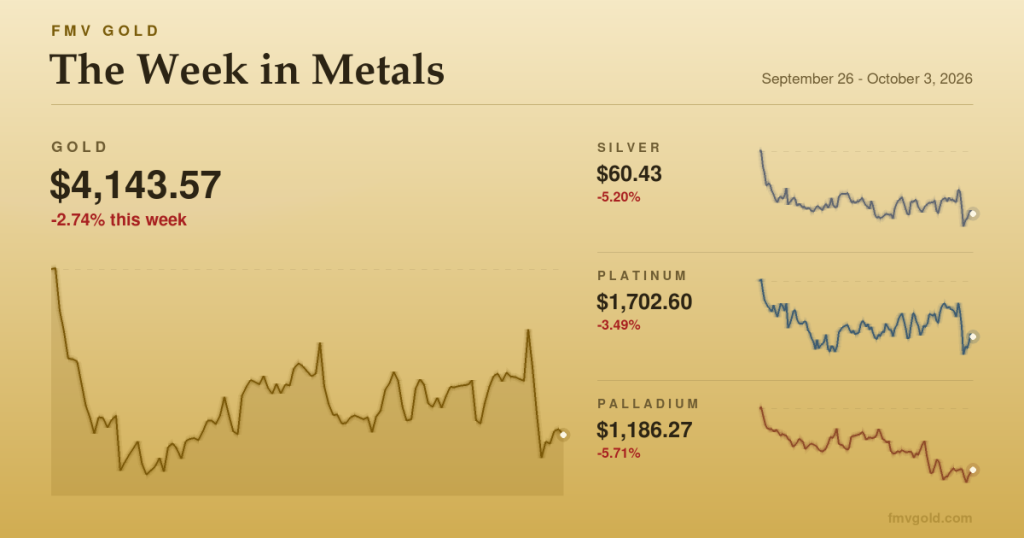
Worth keeping straight: this is a 90 percent silver coin, the same alloy as the dimes, quarters and halves in a junk silver bag, but it is not junk silver. Almost no trade dollar trades at its metal value. Silver spot has been running in the mid-60s per ounce in late September 2026, which sets a floor under the coin and nothing more.
How it lost its legal tender
The trade dollar was legal tender at home only up to five dollars, and it was never really supposed to come home at all. It did anyway. The coins turned up in circulation around the Comstock Lode almost immediately. Then the silver price fell, the metal in the coin became worth less than a dollar, and trade dollars flowed back into the United States in volume. Congress revoked the domestic legal tender status in July 1876.
What followed is the ugly part of the story. With the coins no longer obligatory anywhere, employers bought them at a discount, reportedly around 80 to 90 cents on the dollar, and paid them out at full face value to foreign-born and illiterate workers who were in no position to argue. The trade dollar spent a decade as a tool for shorting payroll.
Redemption finally came in 1887, eleven years late and limited to six months. Only unmutilated coins qualified, which excluded anything chopped or holed, and roughly a fifth of the more than 35 million struck came back. The rest stayed abroad or went into the melting pot, much of it in China, recast as sycee ingots. That is why a series with a large mintage has a modest surviving population.
Chopmarks: damage, or the whole point?
Chinese merchants and the silver specialists known as shroffs stamped incoming coins with small private countermarks to vouch for their content, a practice already two centuries old by the time the trade dollar arrived. Those chopmarks are the physical proof that a given coin did the job it was made for.
Collectors once treated them as defacement and priced them accordingly. That has shifted. Chopmarked trade dollars are now collected on their own terms, partly because no two are alike and partly because the marks are documentary. Grading services still treat chops as damage, which caps the grade a chopped coin can earn, and common San Francisco dates with chops generally trade under their unmarked equivalents. A scarce Philadelphia date with authentic chops can run the other way, because it is evidence of a coin that went east and came back.
Are trade dollars a good investment?
So, are trade dollars a good investment? Not in the way a Silver Eagle is. With a modern bullion coin the metal carries the position and the premium is a cost of entry. Here the silver is a backstop sitting well below the asking price, and what you are actually buying is survivorship, condition and a story. That is a numismatic purchase with a metal floor, and it should be sized like one.
Two separate markets sit inside the series. Common circulated business strikes from Philadelphia and San Francisco are the entry point, available in quantity and priced on grade. Above that sit the genuine rarities: the 1878-CC, with a mintage near 97,000 and heavy Mint melting on top of that, and the 1884 and 1885 proofs, ten and five pieces respectively, struck without appearing in any official record and unknown to the hobby until 1907. Those trade in a world of their own.
For most buyers the practical question is narrower than the abstract one. It is whether a single problem-free, honestly graded example belongs in a holding that already runs to Morgan dollars and Peace dollars. It is a different animal from either, and it fills a gap those two cannot.
The counterfeit problem is real
This is the part to take seriously. The trade dollar is among the most heavily counterfeited United States issues, and the fakes are not crude. Many are made by transferring detail from a genuine coin onto a working die, which gets the lettering and spacing right and leaves subtler evidence behind: small raised lumps and depressions in the date, raised lines crossing the design, granular pits near devices, incuse marks through letters. Grading services report counterfeit trade dollars regularly, including well-made 1878-CC and 1878-S pieces struck from the same false die and submitted as coins from different mints.
Weight and diameter are the first screen and a cheap one, since a coin that misses 27.22 grams or 38.1 mm is settled before you look further. Beyond that, the sane approach on a coin this heavily faked is to buy examples already certified by a major grading service, or from a seller who will stand behind authenticity in writing. Certification on this series buys something concrete.
Where it fits
The trade dollar is not a stacking coin and never will be. It is a piece of American commercial history that happens to be made of silver, a coin the government built to win an argument overseas and then abandoned when the argument came home. Are trade dollars a good investment on those terms? For a buyer who wants history with a metal floor under it, one genuine, honestly graded example does more for a collection than three mediocre ones. The counterfeit risk simply makes patience worth more here than almost anywhere else in the American silver series.
For how condition and scarcity translate into what a coin actually brings, see how our valuations work and the Rules of Gold. Classic American silver is in the Morgan dollar listings and the full coin catalog.